

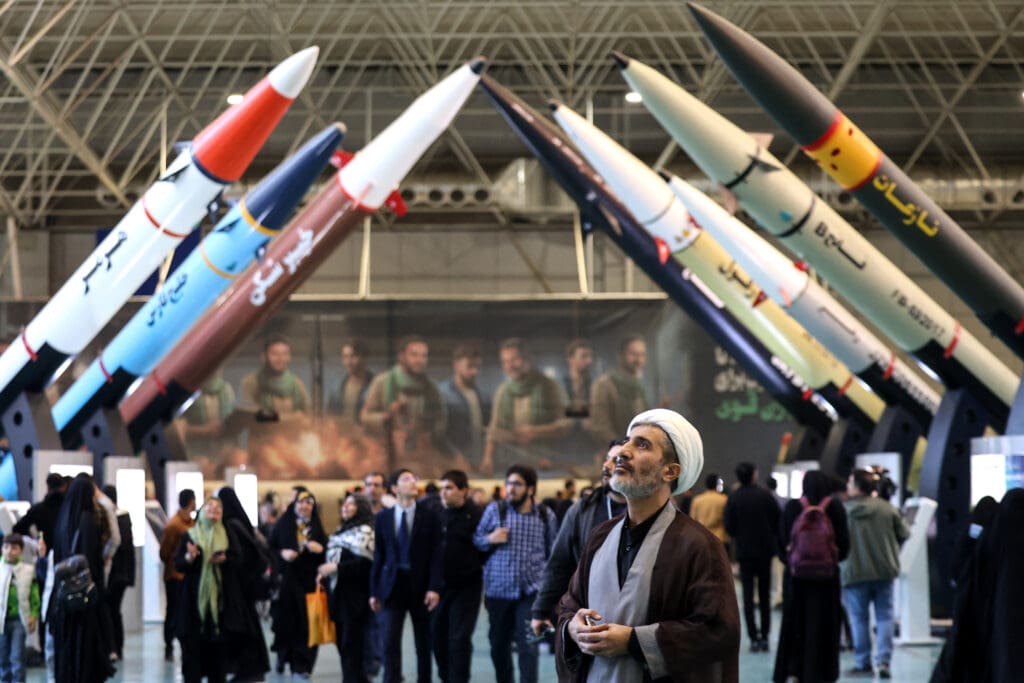
On January 6, Iran’s newly established Defense Council issued a short but controversial statement. While reaffirming Iran’s long-standing claim that it does not seek war, the council declared that Tehran no longer considers itself limited to responding after an attack and would treat “objective signs of threat” as part of its security calculus. The phrasing is deliberately cautious, avoiding explicit reference to pre-emption. However, it subtly widens the boundaries of how Iran defines legitimate defense.
The statement comes amid renewed American and Israeli signaling about possible future strikes, voiced publicly during Israeli Prime Minister Benjamin Netanyahu’s visit to Washington in late December. At the same time, Iranian security circles have been alarmed by the recent capture of Venezuelan President Nicolas Maduro, which has sharpened fears in Tehran about decapitation or abduction scenarios targeting senior leadership. These external pressures coincide with persistent protests at home, deepening concerns in Tehran that internal instability could intersect with external military action.
For decades, Iran has grounded its deterrence in a second-strike logic based on missile forces and regional escalation capabilities, while insisting it would not initiate conflict. Therefore, the recent statement raises questions of whether Iran is changing its defense doctrine and whether this recalibration strengthens deterrence or increases the risk of escalation.
Parsing the statement
The Defense Council’s statement is brief, but it does several things at once; some explicit, others embedded in legal and conceptual framing. Its most consequential line is also its most carefully worded: Iran, it declares, “does not consider itself limited to reaction after an action,” and will treat “objective signs of threat” as part of its security equation. In other words, Tehran is signaling that it may not wait for a strike to occur before it deems defensive force legitimate. Yet it does so without using the vocabulary that would make the shift unmistakable.
What the council is saying is consistent with Iran’s established approach to signaling its red lines. It reaffirms that Iran’s security, independence and territorial integrity are non-negotiable; it warns that any aggression—or the continuation of hostile behavior—would be met with a response described as “proportionate, decisive and determining.” And it introduces a broader trigger threshold: not only materialized attacks but also discernible threat indicators are now framed as relevant provocations for Iranian action.
Equally important is what the statement avoids. It does not announce “pre-emption,” promise a first strike or specify targets, thresholds or timelines. It does not even define what constitutes an “objective sign.” This seems to be a deliberate ambiguity that leaves Tehran room to calibrate responses case by case. The result is best understood as an effort to provide broader leeway for defensive action, rather than an operational directive. It is a strong but deliberately ambiguous message, intended to expand Iran’s room for maneuver while preserving the appearance of restraint.
Why Now?
The timing of the Defense Council’s statement can be best understood as the product of accumulating strategic stress. Three interconnected pressures, all sharpened over the past year, help explain why Tehran is now stretching the language of defense.
First is the legacy of the June 2025 war with Israel. Iran’s long-standing deterrence model rests on the credibility of a second strike, absorbing an initial blow and responding with calibrated but painful retaliation. That logic was tested during the war. Although Iran launched waves of missiles and drones, its response remained phased and bounded relative to its theoretical capabilities, reflecting both operational constraints and a deliberate effort to avoid uncontrolled escalation. At the same time, Israeli and U.S. strikes exposed weaknesses in Iran’s air defenses and elements of its strike infrastructure. Whether these vulnerabilities are overstated or not, they have fed internal perceptions in Tehran that waiting for a first blow could carry higher costs than before.
Second, American and Israeli bellicosity toward Iran is on the rise again. After protests erupted across Iran in recent days, Donald Trump warned the Iranian leadership that he might consider U.S. military involvement in response to violent repression. Israeli Prime Minister Benjamin Netanyahu reiterated on January 5 that he would not allow Iran to renew its ballistic missile and nuclear weapons programs. These statements have reinforced the sense in Tehran that its adversaries may be gearing up for another round of strikes. Amid such tensions, Iranian strategists worry that their deterrence is insufficient if the other side believes it can seize the initiative at an acceptable cost.
Finally, Iran’s domestic instability has become an additional strategic constraint. The persistence of public protests, coupled with severe economic strain, has heightened fears that an external shock timed to coincide with internal unrest could overwhelm the system. This has compelled Iranian decision-makers to try and restore deterrence by jettisoning their previously cautious approach to defense and signaling a readiness to adopt a more aggressive posture.
Competing logics in Iranian strategic discourse
The Defense Council’s language has not produced a single, uniform interpretation inside the Iranian expert community. Instead, it has surfaced competing logics about what deterrence requires under conditions of vulnerability, and what risks Tehran can afford to run in the current moment.
One strand is realist and explanatory, not advocative. Analysts such as Mohsen Solhdoost and Mohsen Reyhani have framed the debate through the lens of crisis instability: When leaders believe a first blow could blind command-and-control, degrade air defenses, or decapitate decision-makers, waiting can appear more dangerous than acting. In this “use-it-or-lose-it” environment, broadening the definition of actionable threat indicators becomes a way to gain time and initiative without necessarily embracing preemption as doctrine or signaling a desire to strike first.
A second strand is more explicitly doctrinal and legal. Mansour Barati, for example, argues that in fragile post-war conditions, states often shift toward what he calls “defense from the source of threat”—the idea that self-defense may involve acting against an emerging threat at its point of origin. Tabnak News Agency has similarly framed the Defense Council’s message as grounded in “legitimate defense,” invoking the language of Article 51 of the UN Charter to suggest that anticipatory action can be framed as self-defense rather than aggression.
The third strand is cautionary and diplomatic. Former diplomat Kourosh Ahmadi warns that invoking anticipatory defense risks helping adversaries build an international consensus for retaliation, eroding Iran’s long-standing argument that it acts only in response to aggression. Hamid Aboutalebi, a former official in Hassan Rouhani’s administration, has taken the critique further, arguing that expanding the definition of legitimate defense may not stabilize deterrence but instead compress decision-making timelines, normalize worst-case assumptions, and make escalation more likely even in the absence of deliberate provocation.
Strengthening deterrence or inviting escalation?
The most consequential—and potentially destabilizing—element of the Defense Council’s statement lies in its reference to “objective signs of threat.” While legally defensible and deliberately vague, the phrase introduces structural ambiguity into an already compressed crisis environment. Once the other side’s preparations, posture shifts, or intelligence indicators are framed as actionable threats, the distinction between defensive precaution and offensive intent becomes harder to sustain.
In such settings, misinterpretation is not an anomaly but a feature. When multiple actors operate in contested intelligence domains, measures taken to enhance protection or readiness can easily be read by the other side as preparations for attack. This dynamic does not require bad faith or aggressive intent; it emerges from uncertainty, time pressure, and the fear of being caught unprepared. Expanding the category of what counts as a legitimate trigger for defensive action may therefore reduce reaction time while increasing the risk of inadvertent escalation.
At the same time, it would be a mistake to read the Defense Council’s language as a definitive doctrinal shift toward first-strike logic. What Tehran has issued is better understood as a strategic signal about thresholds, not a declaration of a new operational doctrine. It reflects a reactive adjustment under conditions of vulnerability, the erosion of deterrence and the escalation of political risk. It is an attempt to widen the space for defensive action without formally abandoning Iran’s long-standing defensive posture.
Whether this adjustment ultimately stabilizes or destabilizes the environment will depend less on the statement itself than on how its ambiguity is interpreted, operationalized and reciprocated. This risk is compounded by the fact that Israel has long operated with a far more permissive, openly pre-emptive use-of-force doctrine, giving it the initiative while showing little concern for appearing as the first mover. In the absence of direct strategic communication and de-escalation channels, ambiguous threat definitions and reciprocal signaling significantly increase the risk of miscalculation and unintended consequences.