

The ongoing war waged by the United States and Israel against Iran aims to weaken the Iranian regime and destroy its military infrastructure, including both its existing and potential weapons capabilities. At the outset of the conflict, some observers expected that military pressure might trigger internal unrest in Iran and eventually lead to regime change. However, developments during the early phase of the war suggest that such an outcome is unlikely, at least in the short term. Contrary to those expectations, the Iranian population has not revolted against the government. As a result, the practical objective of the war now appears to be the creation of a strategically weakened Iran that would eventually accept the terms imposed by the U.S. and Israel.
It remains unclear which side will be forced to step back first as the costs of the conflict mount, although Iran appears more likely to suffer greater losses. Regardless of the outcome, the war is already producing serious consequences for neighboring countries.
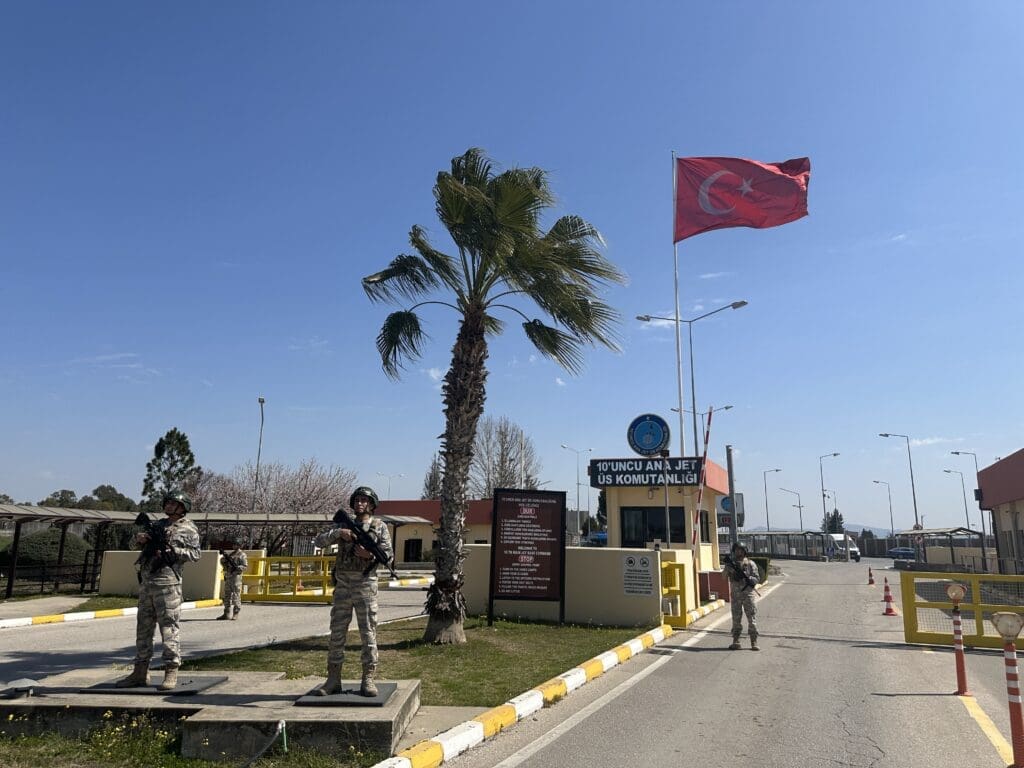
Several Gulf states have already become direct targets of Iranian retaliation. Türkiye, by contrast, has not been directly struck by the Islamic Revolutionary Guard Corps (IRGC), with the exception of an Iranian missile that reportedly crossed over Hatay province in southern Türkiye before being intercepted by a NATO air-defense system. After Ankara warned Tehran not to target NATO bases on Turkish territory, Iranian authorities denied firing missiles toward Türkiye.
The Turkish government strongly opposes the U.S.–Israeli military campaign against Iran. This position does not stem from political alignment with Tehran. On the contrary, Ankara would prefer an Iran that is weaker and more confined within its own borders. Like many states in the region, Türkiye has long been disturbed by Iran’s efforts to expand its influence through Shiite proxy organizations. These groups have frequently used violence to advance Tehran’s strategic objectives. The activities of Iranian-backed militias in Syria, which contributed to regional instability that also affected Türkiye, remain a vivid example for Turkish policymakers.
The primary concern for Ankara now, however, is that the war’s consequences may harm Türkiye more than the countries actually fighting it. In other words, Türkiye risks becoming one of the indirect losers of a conflict in which it is not a participant.
One of Ankara’s most serious fears is the possibility that Iran could fragment along ethnic or sectarian lines. If the Iranian state collapses or loses control over parts of its territory, a civil war involving multiple ethnic groups—including Persians, Azerbaijanis, Kurds, Lors, Baluchis, Turkmen and Arabs—would become highly likely. For Türkiye, the potential role of Kurdish militant organizations in such a scenario represents a particularly serious concern. The Party for Free Life in Kurdistan (PJAK), the Iranian branch of the Kurdistan Workers’ Party (PKK), could seek to exploit the resulting instability. Turkish officials believe that PJAK may already be receiving external support from the U.S. and Israel.
Although the PKK has recently announced its intention to dissolve, that process has not yet been completed. Türkiye has also managed to significantly pressure the PKK’s Syrian branch, the People’s Defense Units (YPG), largely through its support of Syria’s central government. Nevertheless, Ankara fears that instability in Iran could create a new arena for PKK-related activity through PJAK. In such a scenario, once the U.S. and Israel conclude their military campaign, Türkiye could find itself forced to intervene against PJAK militants operating across the Iranian border. In practice, this would mean confronting the PKK once again, but in a different geographical setting.
Another major concern for Türkiye is the possibility of a new refugee crisis. If Iran were to descend into civil war, millions of people could attempt to seek refuge in neighboring countries. Türkiye is already hosting large numbers of migrants and refugees from Afghanistan, Iraq, and especially Syria. Under current economic conditions, the Turkish state has limited capacity to absorb another massive influx of displaced people.
Even if Türkiye were able to accommodate such a wave, the political consequences could be severe. Anti-immigrant sentiment has risen sharply within Turkish society, including among some supporters of President Recep Tayyip Erdogan’s government. A new migration crisis could therefore have serious implications for domestic political stability and future elections.
Historical experience reinforces these concerns. During the first and second Gulf Wars, Türkiye received large numbers of Iraqi refugees. The collapse of central authority in northern Iraq also allowed the PKK to establish bases in the Qandil Mountains, from which it launched attacks against Turkish security forces. Those mountainous areas continue to serve as a key stronghold for PKK militants today.
The Syrian civil war created another major security and humanitarian challenge. As millions of Syrians fled the regime of Bashar al-Assad, approximately five million crossed into Türkiye. At the same time, the PKK-affiliated YPG gained control over roughly one-third of Syrian territory, while ISIS carried out attacks both in Syria and inside Türkiye. These developments eventually forced the Turkish military to conduct several operations in northern Syria. Although the most immediate threats were largely contained, the continued presence of millions of Syrian refugees remains a politically sensitive issue in Türkiye and is frequently exploited by far-right groups to pressure the government.
If Iran were to collapse into a similar state of chaos, Turkish policymakers expect comparable dynamics to reemerge. Türkiye could face renewed Kurdish militant activity, large-scale migration pressures, and substantial economic losses.
Economic considerations also play an important role in Ankara’s calculations. Iraq, Syria, and Iran are among Türkiye’s most important regional trade partners, importing considerable amounts of Turkish goods. However, prolonged instability in Iraq and Syria, as well as international sanctions on Iran, has already disrupted trade relations and incurred significant losses for Turkish companies. During certain periods, commercial activity with these markets nearly collapsed. In this sense, Türkiye has repeatedly borne the economic costs of wars taking place in its immediate neighborhood.
Public opinion represents another dimension shaping Turkish perceptions of the conflict. Many people in Türkiye interpret the war not only as a geopolitical confrontation but also through a religious lens. Although Turkish society generally does not sympathize with the Iranian regime, references by some actors involved in the conflict to religious themes such as the “promised land,” Amalek, Armageddon, or crusader narratives have led many people to believe that the war may ultimately target the broader Muslim world rather than Iran alone. Consequently, the Turkish public is deeply critical of the United States—and especially Israel—even if it is not necessarily pro-Iran.
Finally, relations between Türkiye and Israel have deteriorated significantly in recent years. Following the collapse of the Bashar al-Assad regime in December 2024, some Israeli officials have increasingly described Türkiye as a potential adversary. Ankara’s strong criticism of Israel’s actions in Gaza has further deepened tensions. Some Israeli analysts even argue that Türkiye represents a greater long-term strategic challenge than Iran, owing to its relatively strong military capabilities and its rapidly developing defense industry.
From Ankara’s perspective, however, Türkiye does not pose a threat to other countries unless its own security is directly targeted. Turkish policymakers frequently point out that Israel has carried out military operations in numerous countries in recent years and has expanded its territorial control in several cases. In their view, such actions signal a broader strategy aimed at enlarging Israel’s sphere of influence while aggressively discouraging opposition from regional actors.
For Türkiye, these developments cannot be ignored. Although Ankara does not fear Israel’s threats, it takes them seriously. Israeli strategists are aware that Türkiye possesses the military capability to respond effectively. Some analysts, therefore, argue that if Israel ever intended to confront Türkiye militarily, it would likely require a sudden and pre-emptive strike similar to operations carried out against other regional actors.
Much will ultimately depend on the outcome of the war with Iran. If Iran manages to prolong the conflict and impose significant costs on its adversaries, Israel may hesitate to confront a stronger regional power such as Türkiye. However, if Iran is rapidly weakened, particularly with direct U.S. involvement in the conflict, Türkiye may find itself facing a more uncertain regional security environment.
For now, Ankara is carefully monitoring the course of the war while preparing for potential scenarios that could emerge in its aftermath. In Turkish strategic thinking, the possibility of future confrontation cannot be dismissed. Hence, Türkiye increasingly treats Israel’s hostile rhetoric seriously and is preparing itself for a likely war that, in the eyes of many policymakers in Ankara, would no longer come as a surprise.