

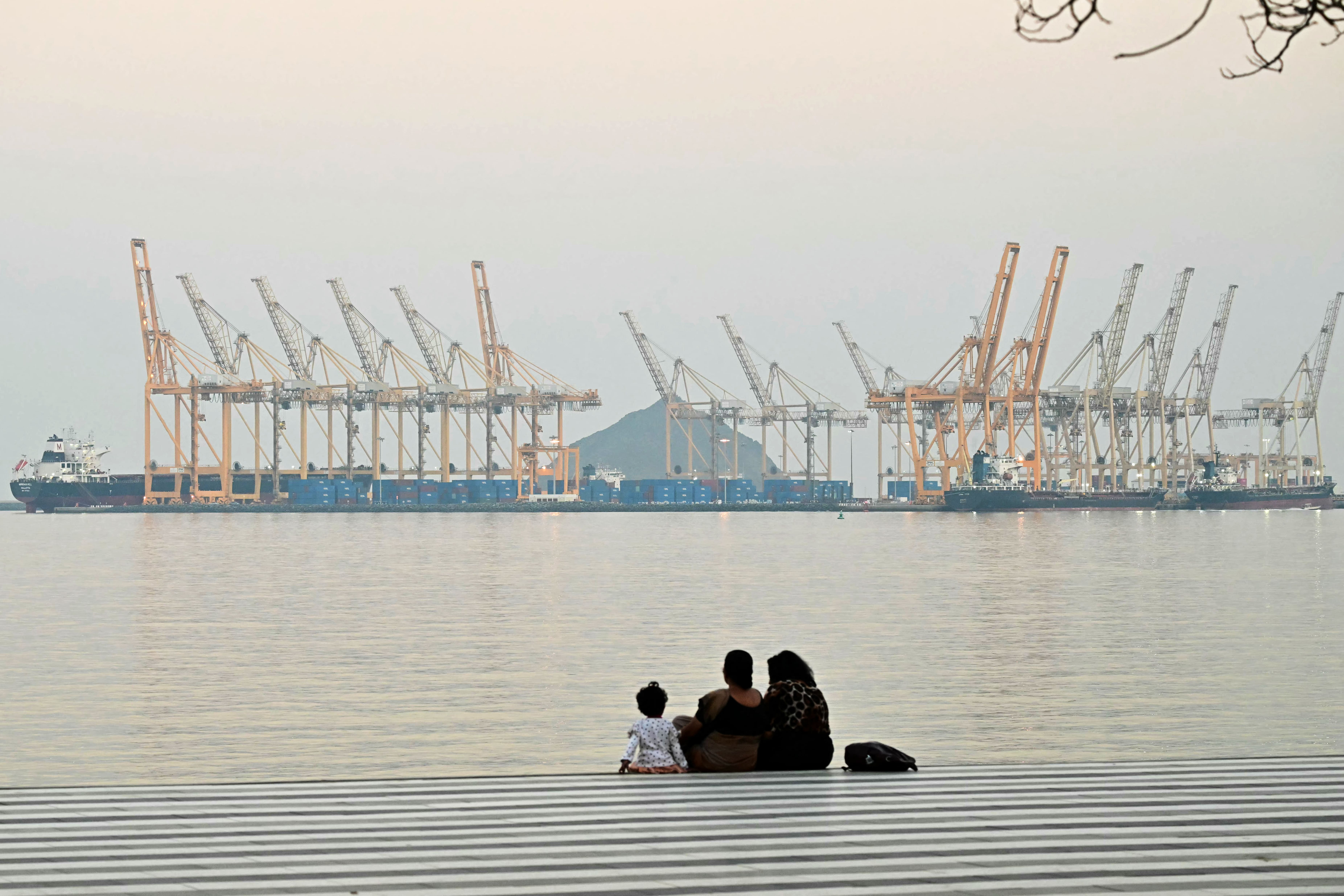
As the war between the United States, Israel and Iran enters its third week, its consequences are continuing to spread well beyond the battlefield. Missile strikes have hit critical infrastructure across the Gulf, while threats against commercial shipping have effectively shut down normal maritime traffic through the Strait of Hormuz for the first time since the latter part of the Iran-Iraq War in the 1980s. The commodity pricing agency S&P Global Platts has already suspended bids and offers for several Middle Eastern crude oil and refined products amid fears that the maritime traffic in the Gulf would be closed for the foreseeable future. Oil prices have surged above $100 per barrel, yet Gulf economies—mostly cut off from global energy markets—are unable to benefit from the favorable spike in prices.
These developments point to a deeper problem. The current escalation is not simply posing short-term challenges to security and economies of Gulf states; the conflict is rapidly becoming a structural stress test for the GCC-led regional order, which is built on the principles of managed deterrence, strategic restraint, and the uninterrupted flow of global trade.
From Missiles to Markets
The immediate challenge facing the Gulf is no longer limited to preserving state security and sovereignty. According to Qatar’s prime minister, Iranian asymmetric retaliation has already targeted energy facilities, military sites, and civilian structures across the region. Yet intercepting Iranian missiles and drones is only one dimension of the crisis. The systemic risk lies in the conflict’s economic consequences. In the long term, economic vulnerability may become as consequential for Gulf states as the physical damage caused by missile and drone strikes.
The war is already threatening economic resilience across the region. Air traffic at the GCC’s major transport hubs remains far below normal levels as airlines reroute their flights to avoid Gulf airspace. For local carriers, these disruptions undermine their decade-long efforts to position Gulf cities as global transport hubs for long-haul travel. Nearly 40,000 flights were canceled in the first two weeks, and some international airlines are exploring alternative transit routes to avoid similar disruptions in the future.
The Gulf aviation sector is not alone in sustaining heavy losses. The Gulf property market has also been affected, as foreign investors—who have driven real estate demand in recent years—seem increasingly reluctant to purchase assets that could be exposed to potential escalation. Regional stock markets are also under mounting pressure as investors move to divest from high-risk assets, potentially weakening financial stability in the Gulf. The Qatari QE index, for example, fell by 5 percent on March 2, reflecting wider investor caution. Tourism and hospitality, long positioned as central pillars of the Gulf’s post-oil economic diversification strategies, are also beginning to absorb the impact of prolonged regional uncertainty through weaker visitor flows and delayed travel decisions.
A sustained closure of the Strait of Hormuz would pose even deeper challenges. Restricted access to imported materials, components, and equipment would disrupt industrial activity throughout the Gulf. If prolonged, the crisis could undermine not only short-term economic resilience but also the broader effort to attract foreign capital on which Gulf economic diversification strategies depend.
The Deterrence Dilemma
The conflict with Iran presents Gulf leaders with a difficult strategic dilemma. On one hand, overt retaliation risks amplifying investor anxiety and undermining economic stability. Foreign capital tends to respond cautiously when states are perceived to be entering prolonged military engagements. Any direct military response by GCC states could therefore place wider economic transformation agendas under pressure.
Moreover, retaliation is unlikely to expedite the opening of the Strait of Hormuz. On the contrary, it may encourage Iran to ramp up attacks on the limited maritime traffic that continues to pass through the waterway, compounding the Gulf’s economic losses.
On the other hand, excessive restraint carries high reputational and strategic costs. If not accompanied by clear political signaling, restraint may foster the perception that Gulf states are incapable of defending their own borders or protecting critical infrastructure. In regional politics, perceptions matter because they can influence how states are positioned within wider strategic calculations. Such perceptions could undermine more than three decades of diplomatic and strategic efforts by Gulf States to position themselves as influential middle powers in the international system.
Restraint as Strategy
For GCC states, calibrated restraint is not a sign of weakness but an adaptive form of deterrence aimed at minimizing the economic and security costs of the conflict.
By avoiding escalation, Gulf leaders signal that they are not seeking to widen or deepen the conflict or fundamentally reshape their relationship with neighboring Iran. In a highly interconnected geopolitical environment, restraint itself can function as a form of strategic signaling rather than an absence of response.
This approach also reflects a clear Gulf preference not to be drawn directly into the confrontation despite close strategic ties with Washington. By emphasizing the principles of international law and diplomatic engagement—as evidenced by the recent decision to turn to the United Nations Security Council—regional leaders are attempting to preserve a framework of managed deterrence rather than allowing the conflict to escalate into a wider regional conflagration. Regional diplomacy therefore remains central to de-escalating the tensions and protecting maritime security by activating the diplomatic channels with both Washington and Tehran.
Governance under Pressure
The central question ahead is not whether the Gulf States possess the political, economic, and diplomatic tools to manage regional crises, but whether those tools can deliver effective results with sufficient speed under escalating pressure.
Previous regional crises—particularly the upheavals of the Arab Spring—demonstrated that the GCC states can coordinate effectively when shared strategic interests are threatened. The GCC Ministerial Council’s extraordinary session on March 1 to coordinate a unified response to the crisis shows the bloc’s willingness to mobilize collective political and economic resources when most needed. Diplomatic initiatives led by Qatar and Oman are particularly significant. Both countries are working not only to find a potential offramp to the conflict, but also actively seeking to manage expectations in Tehran and Washington about what further escalation might realistically achieve.
Global dependence on Gulf energy also shapes the international response. Rather than encouraging a broader intervention, it has created strong incentives for international mobilization to end the conflict with Iran in order to stave off a global economic recession.
The deeper issue is whether the stability model the Gulf has constructed over the past two decades can withstand sustained regional escalation. That model—built on open trade, economic connectivity, and carefully managed deterrence—depends fundamentally on the perception that the Gulf remains a stable hub linking global markets.
The current crisis undoubtedly places the GCC stability model under significant strain. Ongoing diplomatic efforts and the strategy of strategic restraint reflect a recognition that preserving stability is now the region’s overriding strategic priority. What is ultimately at stake is not only regional security, but the economic and political framework that has allowed the Gulf to transform itself into one of the most interconnected regions of the global economy.