

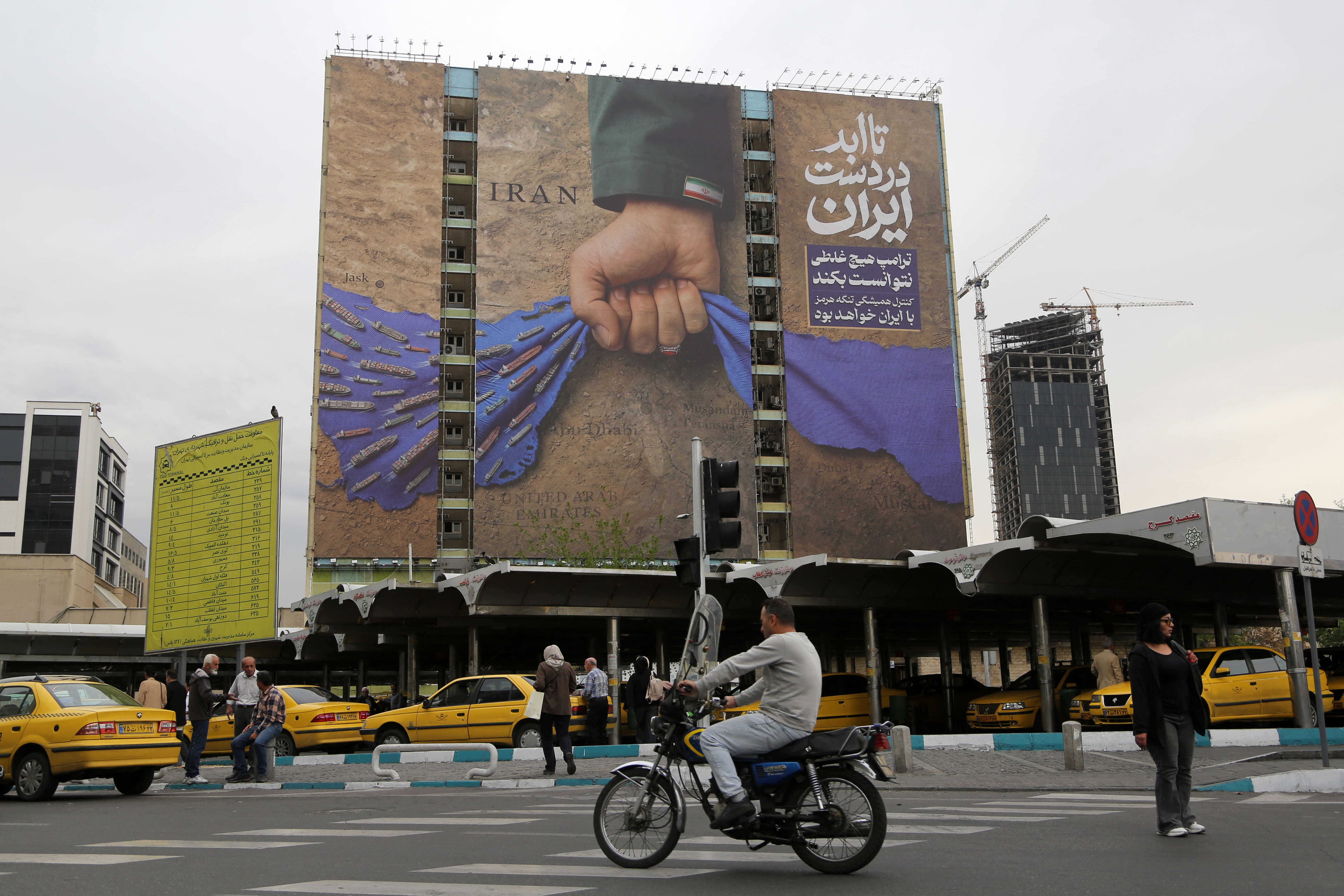
The United States and Iran departed from high-level, direct talks in Pakistan without a peace deal. According to the American side, it was their continued disagreement over the nuclear question that ultimately stood in the way. Yet conspicuously absent from the table were the Arab Gulf states, which have absorbed five weeks of strikes on their territories in a war they had tried to prevent. Although their presence in Islamabad would not have altered the dynamics on the nuclear issue, their exclusion from talks that would have determined their security environment over the next decade was a structural flaw at the heart of the negotiation framework. After all, it is the Gulf states which control the compliance environment—the ports, bases, energy infrastructure, and maritime corridors—that will determine whether any settlement actually holds.
The Gulf states’ conduct during this war deserves to be stated plainly. Every Gulf Cooperation Council (GCC) state was struck by Iran within the first week of the war. Yet every one of them had publicly refused at the outset to permit their territory or airspace to be used for offensive operations against Iran. They blocked offensive use of their bases. They maintained a defensive posture throughout, intercepting Iranian projectiles without retaliating. The Emir of Kuwait, Sheikh Mishal al-Ahmad al-Sabah, described the attacks as coming from a country “to which we did not allow the use of our land, airspace, or waters for any military action against it.” None of it mattered. Iran treated the mere presence of U.S. military installations as sufficient grounds for retaliation, striking Gulf states not for what they did but for what sat on their soil.
The strategic term for what happened is security inversion: when alignment with a patron transforms a state from a protected partner into a legitimate target in the eyes of the patron’s adversary. The Gulf states did not activate their alliances offensively. They did not launch a single sortie. They absorbed over $120 billion in economic losses, including damage to Qatar’s Ras Laffan LNG facility that will take three to five years to repair, and depleted 75 percent of UAE and Kuwaiti Patriot interceptor stocks and 87 percent of Bahrain’s. Alignment with the U.S. was supposed to deter this. Instead, it is what made them targets.
The Problem After the War
Much has been written, compellingly, about the limits of Gulf neutrality during the war, the tactical options available to GCC states, and whether six separate countries can meet a challenge that demands one strategic bloc. These are necessary arguments. But the ceasefire has introduced a different, more consequential problem: the Gulf states were not included in the diplomatic process that may well have determined their security environment for the foreseeable future.
The two-week ceasefire was brokered through a Pakistani-mediated channel. Vice President JD Vance led the U.S. delegation, accompanied by special envoy Steve Witkoff and presidential adviser Jared Kushner. Tehran presented a 10-point plan, which President Donald Trump accepted as the basis for negotiation. Every GCC member state welcomed the ceasefire and immediately presented conditions of their own: a permanent reopening of the Strait of Hormuz, cessation of attacks on their territory, reparations paid by Iran, and—in the UAE’s case—a settlement that addresses the full range of Iranian threat capabilities, including nuclear, ballistic, drone, proxy, and maritime coercion. Egypt stated explicitly that U.S.-Iran talks “must take into account the legitimate security concerns” of Gulf nations.
These are the demands of countries watching a bilateral deal negotiated over their heads and trying to write their interests into its terms before it is finalized.
Gulf Exclusion Is Strategically Unsound
From a realist’s point of view, the Gulf states are not at the table because they have nothing to trade. They did not fight, and they do not control the variables that Washington or Tehran care about most: nuclear material, enrichment capacity, and the rhythm of escalation. By this logic, the settlement is a great-power affair, and the Gulf is a bystander with grievances.
This is wrong, and it is wrong on strategic, not moral, grounds.
Every settlement requires a compliance environment: the physical, economic, and political infrastructure that determines whether agreed terms hold or collapse. In the Gulf, that environment is almost entirely controlled by the GCC states themselves. Hormuz cannot function without Gulf port authorities, coast guards, and maritime coordination. Basing arrangements that underpin U.S. force posture in the region require Gulf consent that can be expanded, restricted, or revoked. Reconstruction of damaged energy infrastructure, which global markets depend on, requires Gulf capital and Gulf decisions about pace and priority. Intelligence-sharing arrangements that monitor Iranian missile activity run through Gulf systems. Sanctions enforcement in the maritime domain depends on Gulf cooperation.
A bilateral U.S.-Iran deal can set terms. Only the Gulf can make those terms operational. Excluding the countries that control the compliance environment from the negotiation is not pragmatism; it is a structural deficiency that will produce an agreement incapable of sustaining itself. This is the difference between a ceasefire and a settlement. Ceasefires require two parties willing to stop fighting. Settlements require including everyone whose behavior the agreement depends on.
What This Means in Practice
The failure of initial talks in Islamabad was not the greatest risk to long-term peace. If they had succeeded narrowly, producing a bilateral bargain on nuclear constraints and Hormuz access in exchange for sanctions relief, while leaving every Gulf-facing threat unaddressed, the outcome would have been worse. Trump’s suggestion that the U.S. and Iran could jointly manage tolls in the Strait of Hormuz should concentrate minds. It signals a willingness to treat the Gulf’s most vital strategic corridor as a bilateral U.S.-Iran matter, formalizing great-power condominium over the waterway that six other sovereign states depend on for their economic survival.
What the Gulf requires is not a gesture of inclusion but a structural role in any settlement architecture. First, this means having a negotiating framework that treats missiles, drones, and maritime coercion as categories in their own right, not subpoints under a nuclear bargain. Every GCC state that issued a response to the ceasefire made some version of this demand: Saudi Arabia called for an end to attacks on regional states and the permanent reopening of Hormuz; Kuwait urged a “comprehensive and permanent settlement;” the UAE demanded that any agreement address the full spectrum of threats including nuclear capabilities, ballistic missiles, drones, proxies, and maritime coercion. These are the minimum conditions for an agreement the region can live with.
Second, a structural role means having a monitoring and enforcement mechanism in which Gulf states participate as institutional parties, not as observers briefed after the fact. And third, it means initiating a serious reassessment of the military basing model. The war has demonstrated that hosting foreign military assets can produce security inversion—exposure without representation—turning bases designed for deterrence into strategic liabilities. If peacetime access is to continue, a new compact is needed that contractually binds wartime protection and postwar diplomatic participation as conditions of the basing arrangements themselves.
No existing Gulf institution is adequate for this role. The Peninsula Shield Force and GCC joint operations were designed for a different threat environment, and their operational record reflects it. The GCC has historically resisted the kind of supranational security architecture that a durable settlement would require, but the cost of that resistance is now measurable in depleted interceptor stocks, damaged LNG trains, and a negotiating table with no direct Gulf representation. The question is no longer whether collective security mechanisms are politically comfortable. It is whether their absence is survivable.
The Question That Matters
The Gulf states earned their claim to this role—through restraint under fire, the defense of their own skies, and the price they absorbed for a war they tried to prevent, refused to join, and could not stop. The question now is not whether the U.S.-Gulf alliance endures—it will because the alternatives are worse for both sides. The question is on what terms. An alliance in which small states provide bases, buy weapons, defer diplomatically, and absorb wartime damage, but hold no contractual stake in how wars end, is an alliance whose terms will be renegotiated, not by choice but by the weight of what this war revealed.
The Islamabad talks did not fail because the Gulf states were excluded. But any successful outcome would certainly have been constrained in the long term by omitting the parties who uphold the compliance environment for the agreement. If the next round of talks produces a bilateral bargain that leaves Gulf-facing threats unaddressed and Gulf states unrepresented, the agreement will not hold—and the states that paid an intolerable price for this war will have no standing to say so. That is the structural flaw that must be corrected before the next round begins, not after it ends.
The opinions expressed in this article are those of the author and do not necessarily reflect the views of the Middle East Council on Global Affairs.