

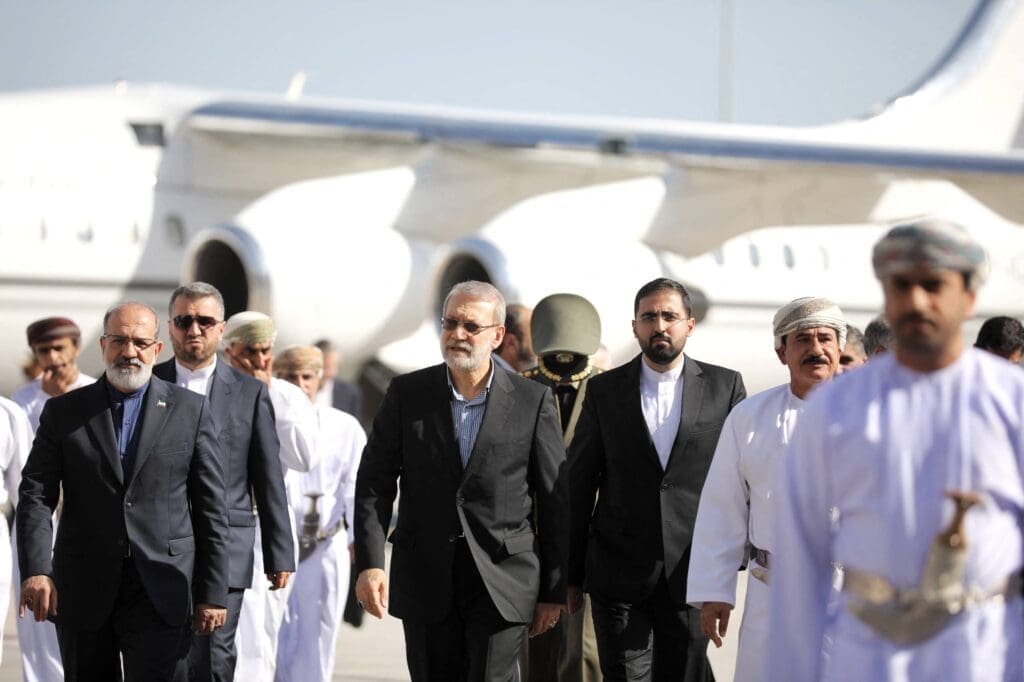
Eight months after the U.S.-backed Israeli war on Iran in June 2025—which ended after an American strike on Iranian nuclear facilities—negotiators convened in Oman to discuss possible avenues for an agreement. The short but intense 12-day conflict triggered a reassessment by Iran’s strategic establishment about the value and limits of diplomatic engagement with Washington. Three conclusions have emerged clearly from those debates.
First, negotiations can yield a balanced outcome only when backed by a credible willingness for military confrontation. Second, diplomacy should never hinder Iran from being ready to escalate militarily if necessary. Third, Iran’s ability to impose meaningful costs in response to any attack increases prospects for a diplomatic breakthrough while discouraging U.S. enthusiasm for a confrontation. This logic echoes the Roman maxim attributed to Vegetius: if you want peace, prepare for war. Some analysts have described this as an evolution in Iran’s defense doctrine.
During Donald Trump’s first year back in office, Washington sought to test—and erode—Iran’s multifaceted resilience. The coordinated June 2025 campaign targeted Iran’s military and security infrastructure, inflicting serious damage. Despite enduring heavy blows, however, Tehran stood its ground and retaliated forcefully against Israel. Iran’s social resilience was also tested, and as expected, produced a nationalistic rally-around-the-flag effect.
The sources of its resilience became the targets of subsequent U.S. policies toward Iran. Washington ratcheted up economic and financial pressures, per the U.S. Secretary of the Treasury, to destabilize Iran internally by weakening the economic foundations that sustain its social and military strength. But this attempt also failed, and even the January 2026 demonstrations—amplified by supportive messages from Trump—did not bring about the desired systemic collapse.
For its own part, Tehran concentrated on strengthening its deterrence after the June war. The most pressing need was to restore its defensive capabilities, which received heavy investment and, reportedly, expanded cooperation with Russia and China. Both countries rejected the legality of the E3’s October 2025 snapback sanctions mechanism and, therefore, saw no legal barriers to military collaboration with Iran.
A second track, in line with the first, has been reshaping U.S. strategic calculations towards war. Iranian officials signaled that the next conflict would not be geographically contained or operationally limited. American bases, personnel and naval assets—which have now amassed in and around the Middle East—would no longer be off limits, and any war on Iran would lead to a wider regional conflagration. Iran clearly prefers a diplomatic settlement over conflict, but the message to Washington is unmistakable—the era of calibrated restraint has ended, and any U.S. hope of a limited war is off the table.
The massive U.S. military build-up in the Middle East through January and February, along with the accompanying rhetorical threats from Trump, were expected to force a revision in Tehran’s policy. This was evident in a recent interview given by Trump’s special envoy, Steve Witkoff, who remarked that the U.S. president was “curious” why Tehran had not “capitulated” at the negotiation table in the face of the overwhelming American naval power now on its doorstep. Instead, the threat of the U.S. military presence has reinforced the logic of Iran’s new military posture. As Supreme Leader Ali Khamenei put it, “An aircraft carrier is a dangerous device, yet more dangerous is the weapon that can sink it to the bottom of the sea.”
Historical precedent informs this outlook. During the post-2003 U.S. occupations of Afghanistan and Iraq, Iran faced encirclement by large American forces while possessing a far weaker military than it has today. In response, Tehran sought to bog down U.S. forces in protracted campaigns aimed at raising the costs and accelerating their withdrawal. Similar deployments of U.S. carrier groups have been dispatched to add weight to American diplomatic pressure against Iran, but produced defiance, not concession. In fact, there is ample reason to suggest that Tehran will go further than before in pushing back against the U.S. presence in its vicinity. According to Iran’s foreign minister, the belief is that any retreat by Iran will be met by its adversaries with even greater pressure.
For Iran’s strategic community, the country is ready for a war, and its new defensive posture and capabilities are fit to face U.S. and Israeli threats. Iran’s messaging aimed at altering U.S. calculations is in line with that reading, and although the risk of escalation remains high, it is nothing new. This confidence may overestimate Iran’s abilities, but its options are rather limited. In a somewhat strange reflection, Iran’s posture entering negotiations mirrors that of the United States: ready for war, but preferring a diplomatic settlement.
Against this backdrop, Washington agreed to meet halfway and restart talks based on Tehran’s terms: indirect negotiations focused narrowly on the nuclear file and sanctions relief. While the implicit bargain is familiar—nuclear limits and transparency in exchange for sanctions relief—the same weaknesses persist, especially the risk that Washington may change its mind down the road. Although the Trump administration has accepted the nuclear-only agenda now, it may decide to expand the parameters to include Iran’s missile programs and regional relationships, which are considered by Tehran as non-negotiable. Not only are its missiles the foundation of its deterrence strategy, Foreign Minister Abbas Aragchi argues that Iran’s military capabilities and its diplomacy are inseparable, with its leverage at the negotiation table stemming from the power its missiles provide. Absent that power, the country would be dealt with more forcefully. Even agreeing to discuss its defensive capabilities would amount to shooting itself in the foot and invite more coercion for concessions.
Israel, meanwhile, is seeking the very stalemate that a widening of negotiation parameters would bring about. At this point, there seems to be a consensus among experts that Israel prefers any outcome other than an accommodation between Tehran and Washington. Yet reports on the latest meeting between Israeli Prime Minister Benjamin Netanyahu and Donald Trump suggest diminishing U.S. receptivity to Israeli arguments, particularly after earlier predictions of an “easy war” and imminent Iranian collapse proved unfounded. Even still, it would be unwise to underestimate Israel’s lobbying effort—which is working around the clock to dissuade Trump from inking a deal.
For Iran, the central question is whether Washington will prioritize its own strategic calculus or align more closely with Israeli preferences. If the former prevails, then a détente with the U.S. is quite possible. To give more substance to such an outcome, Tehran has resumed talks with the International Atomic Energy Agency and has raised possible economic projects for U.S. firms in Iran’s energy, minerals and other sectors. The presence of Iran’s deputy minister for economic affairs in talks with U.S. interlocutors underscores Iran’s willingness to go beyond the security logic in its relations with Washington. Still, Iranian officials know that any breakthrough would require Trump to shelve the maximalist demands of Israel and the Iran hawks in Washington.
At present, both parties are sticking to their guns while negotiating. Washington relies on coercion to shape diplomacy, and Tehran seeks to prove it cannot be forced into submission while pushing for a balanced deal. The distance between the two approaches is vast, and it can be bridged by words at the table or by confrontation on the battlefield.
The mere fact that the two sides opted for more rounds of negotiation suggests that words retain precedence over force. Whether that remains the case depends on Washington and whether it allows Israel to determine its choices. Donald Trump has already issued an ultimatum, giving Tehran days to strike a deal or “bad things happen.” It remains to be seen whether this is just part of the broader gunboat pressure policy or a serious deadline.
One thing remains clear: Tehran will not accept an “unbalanced deal” imposed under such threats. An ultimatum, in this view, is not negotiation but surrender—or capitulation according to Steve Witkoff. If diplomacy is framed that way, Iranian strategists appear prepared to treat war—not compromise—as the lesser risk.