

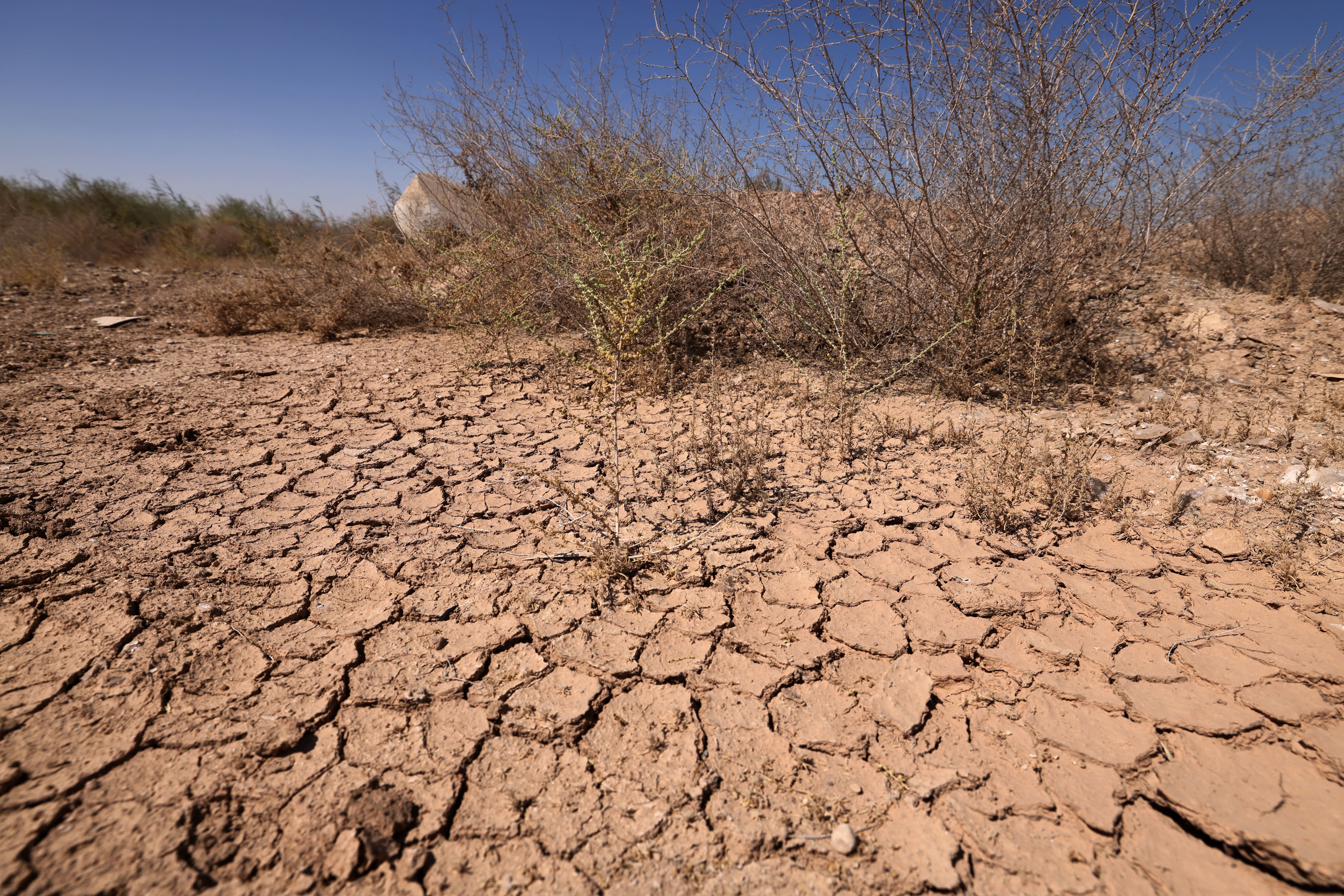
The Middle East and North Africa (MENA) are among the regions most vulnerable to climate change. The Intergovernmental Panel on Climate Change (IPCC) has long identified the region as a climate hotspot, pointing to severe water scarcity, rising temperatures, and the vulnerability of coastal areas and major river systems, including the Nile and Tigris-Euphrates. Yet climate vulnerability is not distributed equally across MENA states, nor are the financial and institutional resources available to address it.
This disparity has produced a paradox at the heart of climate governance in the region: A state’s vulnerability creates the greatest need for climate finance, but its institutional and fiscal capacity often determines the ability to obtain and deploy it. International climate frameworks are intended to help vulnerable states mitigate and adapt to climate change. In practice, however, accessing finance requires governments to formulate credible strategies, develop bankable projects, navigate complex funding mechanisms, administer resources, and demonstrate successful implementation. States that already possess these capabilities are therefore better positioned to attract additional climate investment.
The result is a widening gap between the wealthy Gulf states and more vulnerable countries across Mesopotamia and the Levant driven more by capacity than vulnerability. Saudi Arabia and the United Arab Emirates possess the fiscal resources, state institutions, and investment capital to pursue renewable energy, carbon capture, and other large-scale climate initiatives alongside their economic diversification programs. Iraq and Jordan, by contrast, face acute climate pressures while lacking many of the financial and institutional resources required to respond effectively.
This distinction is particularly visible in the countries’ commitments under the 2015 Paris Agreement. On paper, Nationally Determined Contributions (NDCs) place MENA states within the same international climate architecture. In practice, their ability to fulfill those commitments differs dramatically. For states with significant fiscal and administrative capacity, climate commitments can be incorporated into broader national development strategies and financed domestically. For countries with severe fiscal constraints, political instability, conflict, or major resource insecurity, meeting those commitments often depends on external support that remains difficult to procure.
The MENA Capacity Divide
The Gulf states illustrate the advantages that fiscal and institutional capacity provide. Saudi Arabia has pledged to reach net-zero by 2060, while the UAE has repeatedly raised its climate ambitions and submitted increasingly comprehensive emissions-reduction targets. Both countries have also invested heavily in renewable energy and low-carbon technologies as part of broader economic diversification programs.
Their climate strategies remain closely connected to their hydrocarbon economies. Saudi Arabia continues to resist international efforts to phase out fossil fuels, while the UAE is simultaneously pursuing emissions reductions and expanding oil and gas production. These contradictions raise legitimate questions about the extent of their climate ambitions. But they also demonstrate something more relevant to the regional divide: neither country must depend primarily on international climate finance to translate its climate strategy into projects. Both possess the domestic capital, institutions, technical expertise, and state-backed companies necessary to pursue large-scale investments.
Iraq and Jordan reveal the opposite side of the equation. Their circumstances differ considerably—Iraq is a major oil producer while Jordan is resource-poor—yet both struggle to translate climate commitments into implementation. Their shared problem is therefore not simply access to hydrocarbons but limited fiscal and institutional capacity combined with extreme exposure to environmental pressures.
Iraq’s NDC commits the country to reducing emissions by 22 percent by 2035, but only 5 percent of that reduction is unconditional, leaving the overwhelming majority dependent on international assistance. Jordan’s NDC similarly commits to substantial emissions reductions while making much of its implementation contingent on external support.
Both countries also face climate pressures that they cannot resolve through domestic policy alone. Around 60 percent of Iraq’s water originates outside its borders, principally in Türkiye, where upstream dams and declining flows have intensified Iraq’s water crisis. Jordan faces even more severe structural water scarcity, while most of the historic flow of the Jordan River is diverted before reaching the country.
These cases expose a flaw in the prevailing international climate architecture built around national commitments. Iraq and Jordan can set ambitious targets, but their governments do not fully control either the resources needed to meet them or the political and stability conditions that exacerbate their vulnerability and reduce their ability to turn pledges into projects.
The comparison also demonstrates why the regional divide cannot be reduced to oil wealth. Iraq possesses enormous hydrocarbon resources, yet remains far less capable than Saudi Arabia or the UAE of financing and implementing climate policy. Jordan has almost none. Despite their different economic structures, both face similar obstacles. What separates the Gulf from much of Mesopotamia and the Levant is therefore not simply resource ownership, but the state capacity to convert resources and external support into climate action.
When Vulnerability Is Not Enough
The same capacity gap shapes access to climate finance. International mechanisms such as the Green Climate Fund and the Loss and Damage Fund are intended to direct resources toward developing countries facing severe climate impacts. Yet formal eligibility for assistance does not automatically translate into obtaining it or deploying it effectively.
Accessing international climate finance typically requires governments and implementing institutions to identify projects, prepare technical assessments, satisfy funding requirements, establish monitoring systems, coordinate among ministries and international partners, and demonstrate that money can be effectively spent. Those requirements are understandable: donors and investors want evidence that projects will succeed. But they create an inherent disadvantage for states with weaker institutions.
This produces a self-reinforcing cycle. Countries with stronger institutions can develop credible and investable projects, attract financing, successfully implement them, and establish track records that make future investment easier. Countries with weaker institutions struggle to develop projects and absorb financing, making funders more reluctant to commit additional resources. Vulnerability may establish the need for climate finance, but capacity often determines whether that need becomes actual investment.
The imbalance is even more pronounced in private climate finance. Commercial investors naturally favor markets offering predictable regulation, credible counterparties, bankable projects, and acceptable returns. These conditions overwhelmingly benefit stronger economies and better-governed states. Climate-vulnerable countries facing political instability, fiscal weakness, or uncertain regulatory environments therefore struggle to attract precisely the private investment increasingly expected to finance the global climate transition.
This distinction between public and private climate finance is important. Private investors cannot be expected to allocate capital according to vulnerability alone. But international climate mechanisms exist partly because market forces cannot adequately address climate vulnerability. If those mechanisms ultimately reproduce similar preferences for states with proven implementation capacity, they risk reinforcing the inequality they were designed to mitigate.
Closing the Capacity Gap
Addressing this problem requires climate finance to do more than fund climate projects. It must also help build the institutional capacity necessary to develop and implement them. For countries such as Iraq and Jordan, this means greater support for project preparation, technical expertise, administrative institutions, monitoring systems, and cross-government coordination, alongside financing for infrastructure and mitigation.
It also requires financial instruments capable of absorbing risks that commercial investors will not. Concessional and blended finance can lower the cost of capital, provide guarantees, and make projects viable in markets that would otherwise struggle to attract investment. Rather than treating weak implementation capacity simply as a reason to withhold financing, climate mechanisms should treat strengthening that capacity as part of the investment itself.
Here, the Gulf states have an opportunity to play a greater regional role. Gulf sovereign wealth funds—including Abu Dhabi Investment Authority, Kuwait Investment Authority, Saudi Arabia’s Public Investment Fund, and Qatar Investment Authority—control enormous pools of capital, but their commercial mandates naturally direct investment toward opportunities offering competitive returns. Simply asking these institutions to redirect commercial investments toward Iraq, Jordan, or other vulnerable neighboring states would therefore reproduce the same problem confronting private climate finance.
A more viable approach would be to use Gulf resources alongside multilateral institutions to create concessional and blended-finance mechanisms specifically designed for regional climate resilience. Gulf-backed guarantees, project-preparation facilities, concessional lending, or dedicated regional climate funds could absorb some of the political and implementation risks that currently deter investment while simultaneously strengthening local institutions.
Such an approach would also represent a more consequential form of regional climate leadership than increasingly ambitious pledges alone. The Gulf states possess something many of their neighbors lack: not merely financial resources, but the institutional capacity to mobilize capital, develop projects, and manage large-scale investment. Deploying some of that capacity regionally could help close one of MENA’s most consequential climate divides.
The fundamental problem is not that international climate frameworks ignore vulnerability. Many explicitly recognize it. The problem is that the pathway from vulnerability to financing still depends heavily on institutional capacity. Unless climate governance addresses that contradiction, the countries most capable of responding to climate change will continue to be best positioned to attract the resources to do so, while some of the countries facing the gravest consequences remain the least able to secure the support they need.