

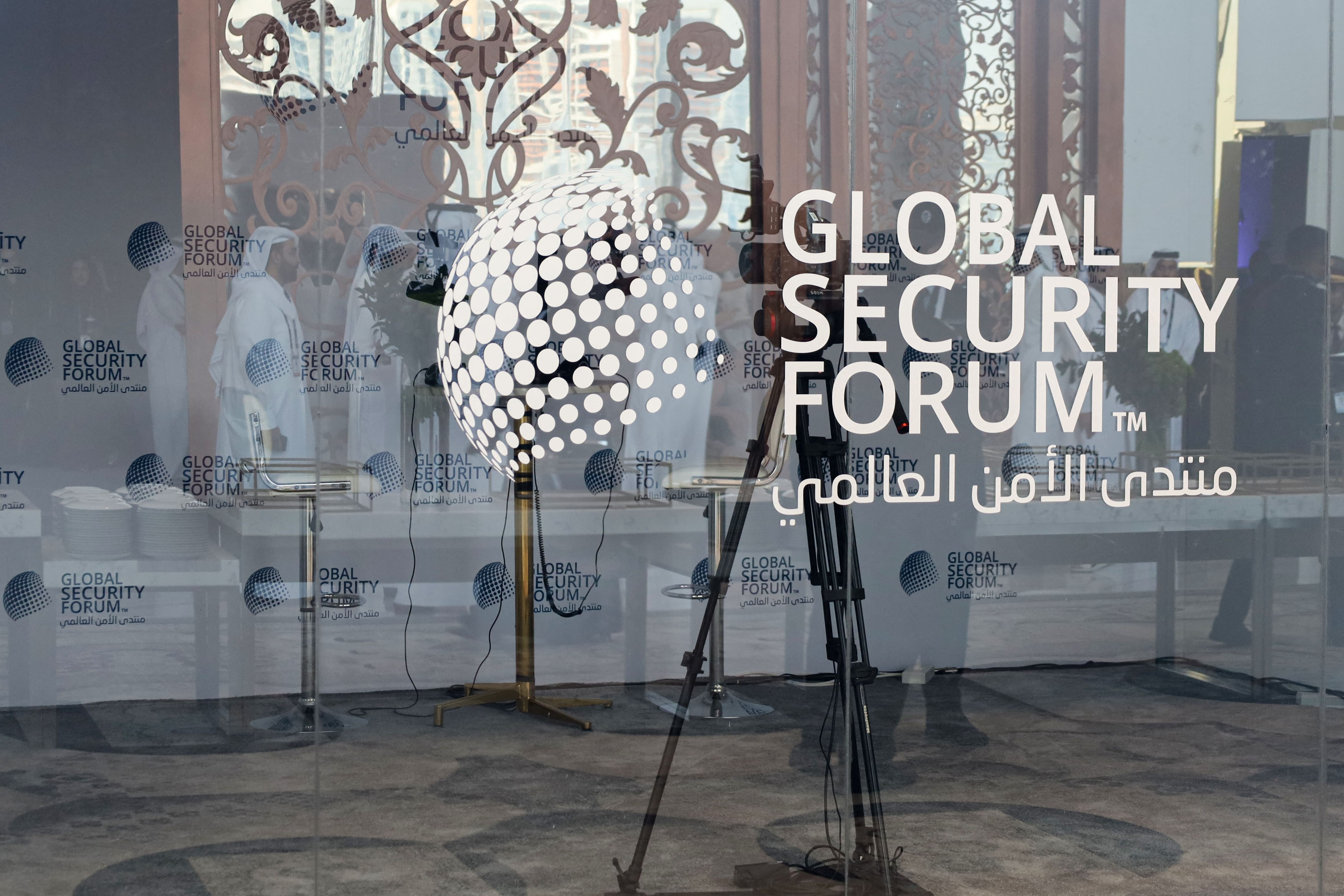
Gulf states today face a security dilemma that is less about their advanced arsenals or the foreign military bases on their soil than about the authority to make security-related decisions. Who holds the power to decide when to wage war, when interests diverge and external guarantees are subject to the calculations of major powers? For… Continue reading The Global Security Forum: From Protective Guarantees to Self-Reliance
Afkar Country: Qatar
Can Gulf Investors Make Sustainable Mining Their Edge in Africa?

Critical minerals took center stage in global diplomacy this September. At the BRICS summit in New Delhi, whose 11 members include the United Arab Emirates, leaders called for “reliable, responsible, diversified, resilient, fair, sustainable, and just” critical mineral supply chains that preserve the sovereign rights of resource-rich countries. Ten days later, at the United Nations… Continue reading Can Gulf Investors Make Sustainable Mining Their Edge in Africa?
Who Gets to Write the Gulf’s Postwar Navigation Rules?

In mid-September, Saudi officials postponed a meeting that was set to be held with their Iranian counterparts in Salalah, Oman, to discuss reopening transit through the Strait of Hormuz. Oman’s foreign minister said the meeting had been postponed “in the interest of consensus,” as the focus of ongoing talks between Muscat and Tehran has shifted… Continue reading Who Gets to Write the Gulf’s Postwar Navigation Rules?
Facing the AI Challenge in Journalism

Media outlets face a challenge that goes beyond simply choosing between adopting or rejecting Artificial Intelligence (AI). Outlets are faced with designing a system that integrates digital infrastructure with professional standards. Qatar appears well-positioned for this task, thanks to its digital infrastructure, research investments, and the regional and international presence of its media. Qatar launched… Continue reading Facing the AI Challenge in Journalism
Diplomacy Cannot Work with Mediators Under Fire

One of the most dangerous developments in the contemporary Middle East is not the proliferation of conflicts but the deliberate erosion of the diplomatic space required to end them. Wars eventually require negotiations, and even governments committed to maximalist positions seek intermediaries to convey messages they cannot exchange directly. Yet the region is witnessing a… Continue reading Diplomacy Cannot Work with Mediators Under Fire
How the Middle East Became Trapped in a War of Attrition

Just a few months ago, experts were predicting that Israeli-American strikes on Iran would create a new reality in the Middle East, shifting the regional balances of power and deterrence against Iran. This hypothesis was based on a clear premise: Either Tehran would be forced to retreat under the weight of its losses, or the… Continue reading How the Middle East Became Trapped in a War of Attrition
Is the Gulf Buying AI Sovereignty—or Renting It?

When the chief executive of Saudi Arabia’s state-backed Artificial Intelligence start-up HUMAIN vowed earlier this year to compress two decades of national progress into a single year of AI development, he captured the mood of a region on the move. Within weeks, Washington approved the export of tens of thousands of Nvidia’s most advanced processors to HUMAIN and its… Continue reading Is the Gulf Buying AI Sovereignty—or Renting It?
With Hormuz Blocked Again, How Effective Are the Gulf’s Bypass Routes?

To the great dismay of Gulf energy exporters and global markets alike, the Strait of Hormuz is once again blocked due to hostilities between the United States and Iran. After a brief opening of the critical commercial waterway following a memorandum of understanding signed on June 17 to end the war, Tehran ordered the strait… Continue reading With Hormuz Blocked Again, How Effective Are the Gulf’s Bypass Routes?
A U.S.-Iran Deal That Does Not Address Gulf Concerns Will Not Bring Stability

Although the memorandum of understanding (MoU) between the United States and Iran has been faltering since the moment it was signed, there is no longer a question for the Gulf states over whether an agreement can be reached, but rather the nature of such an agreement. That includes not just its nuclear program but its… Continue reading A U.S.-Iran Deal That Does Not Address Gulf Concerns Will Not Bring Stability
Why the Gulf’s Oil Export Future Lies in Southeast Asia

Despite a resumption in hostilities between the U.S. and Iran, and the resulting re-closure of the Strait of Hormuz, Tehran and its major Gulf oil-producing rivals are in a race to boost their respective oil exports and restore or carve out their share of critical markets. This can be seen in Iran’s bid to export… Continue reading Why the Gulf’s Oil Export Future Lies in Southeast Asia
Rethinking Gulf Security on the Threshold of a New World Order

The U.S.-Iran war has so far failed to produce any decisive strategic outcome or end the threat hanging over the Gulf. Instead, it has ushered the region into a new phase of managed instability, characterized by cycles of escalation and de-escalation, with no clear political or military resolution in sight. The war has placed the Strait… Continue reading Rethinking Gulf Security on the Threshold of a New World Order
The 2026 World Cup and the Politics of Selective Outrage

The 2026 men’s FIFA World Cup was always going to be historic. This round of the world’s most-watched single-sport tournament was spread across three host countries and expanded to 48 participating nations for the first time. After two World Cups—Russia 2018 and Qatar 2022—which were heavily criticized by the Western media on human rights grounds and allegations of “sportswashing,” FIFA President Gianni Infantino may have hoped for… Continue reading The 2026 World Cup and the Politics of Selective Outrage
The Hormuz Blockade Experience Is Forcing Food Security Adaptation

Media coverage of the closure of the Strait of Hormuz during the U.S.-Israeli war against Iran has focused overwhelmingly on the disruption of energy supplies to global markets. Yet this narrow waterway also connects Gulf fertilizer producers with farms across Africa, Asia, and beyond. The disruption of these agricultural inputs threatens to increase global hunger… Continue reading The Hormuz Blockade Experience Is Forcing Food Security Adaptation
Pakistan and Qatar’s Emergence as Key Mediators in Iran-U.S. Diplomacy

The American-Israeli war on Iran has not only reshaped the Middle East’s security landscape; it has also accelerated an important shift in regional diplomacy. Qatar has emerged from the conflict with its position as one of the region’s—and increasingly the world’s—most consequential diplomatic brokers further strengthened, while Pakistan has made a surprising but significant entry into the mediation… Continue reading Pakistan and Qatar’s Emergence as Key Mediators in Iran-U.S. Diplomacy
Can the GCC Lead in Environmentally Responsible Solar Development?

Amid the wartime focus on the Strait of Hormuz and the disruption of critical hydrocarbon supplies to global energy markets, another major transformation in the Gulf has received far less attention: the rapid expansion of renewable energy. Over the past decade, the Gulf Cooperation Council region has emerged as one of the world’s fastest-growing solar energy markets. Solar power now accounts for roughly half of the GCC’s energy mix, up from less than 10 percent in… Continue reading Can the GCC Lead in Environmentally Responsible Solar Development?
Gulf Confederation: From Cooperation to a Shared Destiny

In the moments of calm that follow major crises, states are not measured solely by their capacity to endure, but by their ability to redefine their roles and revive deferred strategic projects before new crises engulf them. A ceasefire is not the end of a conflict; rather, it is a critical juncture for reassessment: what has been achieved, and… Continue reading Gulf Confederation: From Cooperation to a Shared Destiny
A Gulf NATO: The Strategic Necessity of a Collective Deterrence System

The term “Gulf NATO” is often used in political discussions as a slogan or a theoretical concept, but its roots go much deeper. The idea would not be to create a new military alliance from scratch, but rather to develop the region’s existing security structure, which emerged with the establishment of the GCC in 1981 and developed over subsequent years with the creation of the Peninsula Shield Force, the first institutional attempt to translate the concept of… Continue reading A Gulf NATO: The Strategic Necessity of a Collective Deterrence System
Gulf Digital Sovereignty in the Age of AI Warfare

Governing an Ungovernable Space For much of modern history, a state’s global influence was measured through military power, territorial reach, international alliances, and financial clout. Today, however, the influence of states extends through digital media that shape how societies absorb information, interpret political events, and manage crises. Algorithms embedded within social media platforms and search engines… Continue reading Gulf Digital Sovereignty in the Age of AI Warfare
U.S. Bases in the GCC: A Security Model Under Attack

The U.S.-Israel war against Iran, and Tehran’s subsequent missile and drone retaliation against the Gulf Cooperation Council (GCC) states hosting American forces, has revived a longstanding strategic question regarding the nature of U.S. military bases abroad, and whose interests they ultimately serve. It has also reopened a lively debate among Gulf analysts, policymakers, and commentators over whether the continued U.S. military footprint remains the most effective… Continue reading U.S. Bases in the GCC: A Security Model Under Attack
How the Iran war could reshape EU–Gulf relations

The war in Iran marks a major inflection point in the security outlook and external partnerships of Gulf countries. In many ways, it mirrors the geopolitical awakening that Russia’s invasion of Ukraine triggered for Europeans after 2022. Like their European counterparts, Gulf Cooperation Council (GCC) states now face the dilemma of relying on a security partner—the United States—that remains indispensable yet increasingly… Continue reading How the Iran war could reshape EU–Gulf relations
Has Anyone ‘Won’ the Iran War?

The US-Israel-Iran war has reshaped the Middle East’s balance of power, but it has not produced a strategic resolution for any of the actors involved. While both sides traded escalation with containment, Europe and China kept their focus firmly on the economic risks, managing their own exposure to the war rather than seeking to alter the course… Continue reading Has Anyone ‘Won’ the Iran War?
The Costs of the Iran War Ceasefire for the Gulf States

More than two months into the U.S.-Israel war with Iran, the Gulf states keep paying for a conflict they did not start, cannot control, and cannot afford to end on the wrong terms. A conditional ceasefire reached between the United States and Iran on April 8 is holding, but the Strait of Hormuz remains functionally closed by both countries, and the costs behind the… Continue reading The Costs of the Iran War Ceasefire for the Gulf States
The Gulf States’ Defense-Industrial Base is a Priority of the Post-War Future

The U.S.-Israeli war on Iran has done much more to the Arab Gulf than inflict material and economic damage. It has shattered the foundational assumptions of the regional security order and forced a reassessment of the defense-industrial policies of the Gulf Cooperation Council (GCC) member states. From the war’s zero hour on February 28,… Continue reading The Gulf States’ Defense-Industrial Base is a Priority of the Post-War Future
The Iran War and the Rise of Controlled Escalation

The U.S.–Israel Iran war reflects a broader transformation in contemporary conflict, where success is defined less by decisive military victory than by the ability to control escalation. In this evolving strategic environment, the “eye for an eye” principle continues to shape deterrence and reciprocity, but in more calibrated forms. Retaliatory actions are increasingly symbolic and… Continue reading The Iran War and the Rise of Controlled Escalation
Qatar Foreign Policy in a Changing Region: Preserving Balance and Strategic Autonomy

Despite its relatively small size, Qatar has forged an ambitious foreign policy in a volatile region often characterized by tension and instability. Doha has focused on strategies that prioritize its sovereignty, enable it to influence and adapt to regional developments through proactive diplomacy, expand its spheres of engagement, and maintain its political independence, all while… Continue reading Qatar Foreign Policy in a Changing Region: Preserving Balance and Strategic Autonomy
Gulf Diplomacy with Iran Is More Important Than Ever

The Iran war has catapulted the Gulf region into a new era of conflict and fragmentation, with Gulf capitals reassessing how best to defend their countries and stabilize the region amid unprecedented threats to their national security. Despite precarious ceasefires in Iran and Lebanon, the region remains on edge as tensions between the United States… Continue reading Gulf Diplomacy with Iran Is More Important Than Ever
The Hidden Risks of Declaring Early Victory over Iran

The ongoing military confrontation in the Persian Gulf region—pitting the United States and Israel against Iran—has spilled far beyond the confines of its direct combatants. Iran’s neighbors, including the Gulf states, Iraq, and Jordan, though not architects of this conflict, have nonetheless emerged as its primary victims. Facing the targeting of energy infrastructure, the disruption… Continue reading The Hidden Risks of Declaring Early Victory over Iran
The GCC Will Not Unify on Iran

The war that has unfolded across the Gulf has done more than shatter the region’s security architecture. It has also underscored a long-standing reality: the Gulf Cooperation Council (GCC) has never operated as a unified actor in its approach toward Iran, and it is unlikely to do so after the conflict ends. The GCC is… Continue reading The GCC Will Not Unify on Iran
Talks in Pakistan Failed. Why the Gulf Must Be There Next Time

The United States and Iran departed from high-level, direct talks in Pakistan without a peace deal. According to the American side, it was their continued disagreement over the nuclear question that ultimately stood in the way. Yet conspicuously absent from the table were the Arab Gulf states, which have absorbed five weeks of strikes on their territories in a war… Continue reading Talks in Pakistan Failed. Why the Gulf Must Be There Next Time
Gulf Security Beyond Guarantees

Since late February, when the United States and Israel launched joint strikes against Iran under Operation Epic Fury and Operation Rising Lion, respectively, the Gulf states have been drawn into a war not of their making and not in their interests. For years, the Gulf states carefully diversified their security strategies, deepening ties with the U.S., expanding diplomatic… Continue reading Gulf Security Beyond Guarantees
Gulf States in the Crossfire of a War They Tried To Prevent

When the United States and Israel launched their war on Iran in late February, Tehran responded, in large part, by attacking military installations and civilian infrastructure in the Gulf states. The Islamic Republic’s strategy was to immediately raise and disperse the cost of the war by destabilizing the global economy and pressuring the Gulf states… Continue reading Gulf States in the Crossfire of a War They Tried To Prevent
How the War is Redefining Gulf Economic Power and Energy Strategy

The Gulf Cooperation Council (GCC) states are confronting the greatest threat to their economic security and energy strategy since their formation. The economic fallout of the U.S.-Israeli war with Iran is severe, but uneven across the Gulf. So too is each state’s ability to sustain energy exports and protect critical infrastructure—both of which have been targeted unequally by Iran. The war has produced the largest disruption to global oil and liquefied natural gas (LNG) supplies in modern history. Before… Continue reading How the War is Redefining Gulf Economic Power and Energy Strategy
Why the Gulf Must Build Its Own Economic Playbook

The Arab Gulf region stands at a pivotal moment. After more than five decades of economic planning largely shaped by imported models, external expertise, and prescribed solutions, the Gulf Cooperation Council (GCC) countries are moving into a new phase, one that calls for locally driven economic thinking, greater regional self-reliance, and the confidence to forge an independent path.… Continue reading Why the Gulf Must Build Its Own Economic Playbook
Who Pumps the Oil… and Who Controls It?

Iran’s announcement that “non-hostile vessels” will be allowed to pass through the Strait of Hormuz is the latest—and perhaps clearest—illustration of how oil has become a weapon of war. In a letter to the International Maritime Organization, Tehran framed the restriction of certain vessels as a lawful act of self-defense, explicitly linking access to the world’s most critical… Continue reading Who Pumps the Oil… and Who Controls It?
GCC Air Defense Between Challenge and Transformation

The Arab Gulf has entered a critical phase in which its security architecture is being actively reshaped. The expansion of the U.S.–Israeli confrontation with Iran, and the resulting spillover across the region, has moved the Gulf from a peripheral theater to a central arena of escalation. Cross-border attacks targeting vital infrastructure—using ballistic missiles such as… Continue reading GCC Air Defense Between Challenge and Transformation
To Protect Its Strategic Interests, the Gulf Must Form a More Cohesive Bloc

The gravity of war in the Middle East cannot be measured by the depth of depleted arsenals or the number of sorties that streak across its skies, but by the structural imbalances it exposes and the truths it lays bare—truths that have long been hidden behind facades of alliances, agreements, and hollow slogans. The open confrontation unfolding today between the United States and Israel on one… Continue reading To Protect Its Strategic Interests, the Gulf Must Form a More Cohesive Bloc
Israel’s Strike on North Field–South Pars: Energy War and Global Risk

On March 18, 2026, an Israeli air raid targeted treatment facilities at Asaluyeh, the onshore processing hub for Iran’s largest natural gas field and a bedrock of domestic supply. The governor of Asaluyeh confirmed the facilities were “taken offline” to control fires, with no immediate disclosure of production losses. Israeli military sources acknowledged that the… Continue reading Israel’s Strike on North Field–South Pars: Energy War and Global Risk
The Gulf’s Diplomatic Counterstrike at the UNSC

There are no silver linings for the Gulf in the current war, where the human toll and economic disruption are front and center. Yet on the global diplomatic front, the Gulf states leveraged their investments and influence at the United Nations to deliver an historic outcome in support of their security. Bahrain presented Security Council resolution 2817 on behalf of the Gulf Cooperation Council (GCC) and Jordan, adopted… Continue reading The Gulf’s Diplomatic Counterstrike at the UNSC
How the Gulf States Can Navigate the Middle East’s New Alliance Politics

Alliance politics is returning to the Middle East in ways that recall earlier eras of regional competition, but with a far more complex geometry. Recent remarks by Israeli Prime Minister Benjamin Netanyahu suggesting that a broader network of alliances is emerging around Israel, linking partners such as India, Greece, and Cyprus alongside other regional actors, reflect a wider reconfiguration of regional alignments accelerated… Continue reading How the Gulf States Can Navigate the Middle East’s New Alliance Politics
The Gulf Stability Model is Under Pressure

As the war between the United States, Israel and Iran enters its third week, its consequences are continuing to spread well beyond the battlefield. Missile strikes have hit critical infrastructure across the Gulf, while threats against commercial shipping have effectively shut down normal maritime traffic through the Strait of Hormuz for the first time since the latter part of the Iran-Iraq War in the 1980s. The commodity pricing agency S&P Global Platts has already suspended… Continue reading The Gulf Stability Model is Under Pressure
Six, or One Bloc of Six?

At first glance, readers might wonder about the meaning of this title and its implications. However, the answer will become clear in the lines that follow, which aim to provide an interpretation that clarifies the title’s significance. As the US–Israeli war against Iran passes its sixteenth day, and despite the uncertainty around its end, it… Continue reading Six, or One Bloc of Six?
Water Must Not Become A Target in the Region’s Wars

In the arid lands of the Arab Gulf, water is often said to be more precious than oil. Over the past half-century, oil revenues have driven rapid population expansion and the construction of modern metropolises. However, freshwater resources are limited, requiring Gulf states to increasingly rely on desalination to survive and thrive. The primacy and scarcity of water have… Continue reading Water Must Not Become A Target in the Region’s Wars
How Gulf Defense Capabilities Are Preventing Further Escalation with Iran

The joint U.S.–Israeli strikes against Iran that began February 28—culminating in the killing of Supreme Leader Ali Khamenei—sent shockwaves through the Middle East and immediately raised fears of a wider regional war. Within hours, those fears appeared justified. Tehran retaliated not only against the United States and Israel but broadened its battlefield to include the… Continue reading How Gulf Defense Capabilities Are Preventing Further Escalation with Iran
How the War in Iran Is Shaping Gulf Collective Consciousness

The Israeli-U.S. war on Iran has thrown Gulf societies into a complex state of anxiety and emotional vigilance. This reaction is not merely a response to rapid military developments. It reflects a mindset shaped over decades by historical experience and repeated security crises. As regional tensions escalate and threaten the Gulf’s vital interests, public sentiment… Continue reading How the War in Iran Is Shaping Gulf Collective Consciousness
The Costs of the Iran Conflict for the Gulf

In short order, the U.S.-Israeli war against Iran has expanded across the region, with Gulf states bearing the brunt of Tehran’s retaliatory campaign aimed at dispersing the costs of the war and pressuring Washington to halt its offensive. This has included targeting energy infrastructure, shipping routes and aviation networks, threatening not only regional stability but… Continue reading The Costs of the Iran Conflict for the Gulf
Avoiding War with Iran Is the Gulf’s Only Winning Move

In the months following Israel’s overwhelmingly disproportionate response to the October 7 attacks, diplomats and international observers repeatedly warned that the war risked expanding beyond Gaza and destabilizing the wider region. Governments and international organizations cautioned that unless the violence was halted, it would inevitably spill across borders and draw neighboring states into confrontation. Israel’s… Continue reading Avoiding War with Iran Is the Gulf’s Only Winning Move
Iran’s Regional Gamble and Its Implications for the Future of Gulf Security

The Iranian leadership made two major strategic mistakes. The first was failing to seize the opportunity to reach an agreement with the United States while the window for negotiations was still open — a step that could have spared the region further tension and instability. The second mistake was targeting the Gulf states, which had… Continue reading Iran’s Regional Gamble and Its Implications for the Future of Gulf Security
Qatar Emerges as an LNG Hedge Against Trade Policy Instability in the U.S.

The Trump administration’s trade policy has become a prominent source of global economic anxiety. Over the past year, the administration has turned tariffs and trade threats into blunt transactional instruments of foreign policy, demanding allies purchase more U.S. commodities—especially liquified natural gas (LNG)—in exchange for market access and political favor. What Washington calls “rebalancing,” many… Continue reading Qatar Emerges as an LNG Hedge Against Trade Policy Instability in the U.S.
Between War and Dialogue: Can a U.S.–Iran Confrontation Be Prevented?

As tensions rise between the United States and Iran, international attention has once again turned toward the Gulf. From maritime security incidents in and around the Strait of Hormuz, to renewed sanctions and nuclear threats, this rising escalation between the two actors exposes the region’s fragility. The Gulf is central to global energy flows… Continue reading Between War and Dialogue: Can a U.S.–Iran Confrontation Be Prevented?
Why the Gulf States Share in the AI Governance Dilemma

When regulators began discussing adjustments to the European Union’s Artificial Intelligence Act of 2024, mere months after its passage, it was a clear sign of the regulatory challenges in this sector. The comprehensive legislation was the first of its kind, and even seasoned regulators like the EU were struggling amid political and corporate pressure, unable to… Continue reading Why the Gulf States Share in the AI Governance Dilemma