

Israel Between Elections and Open Fronts
Situation Assessment, October 2026
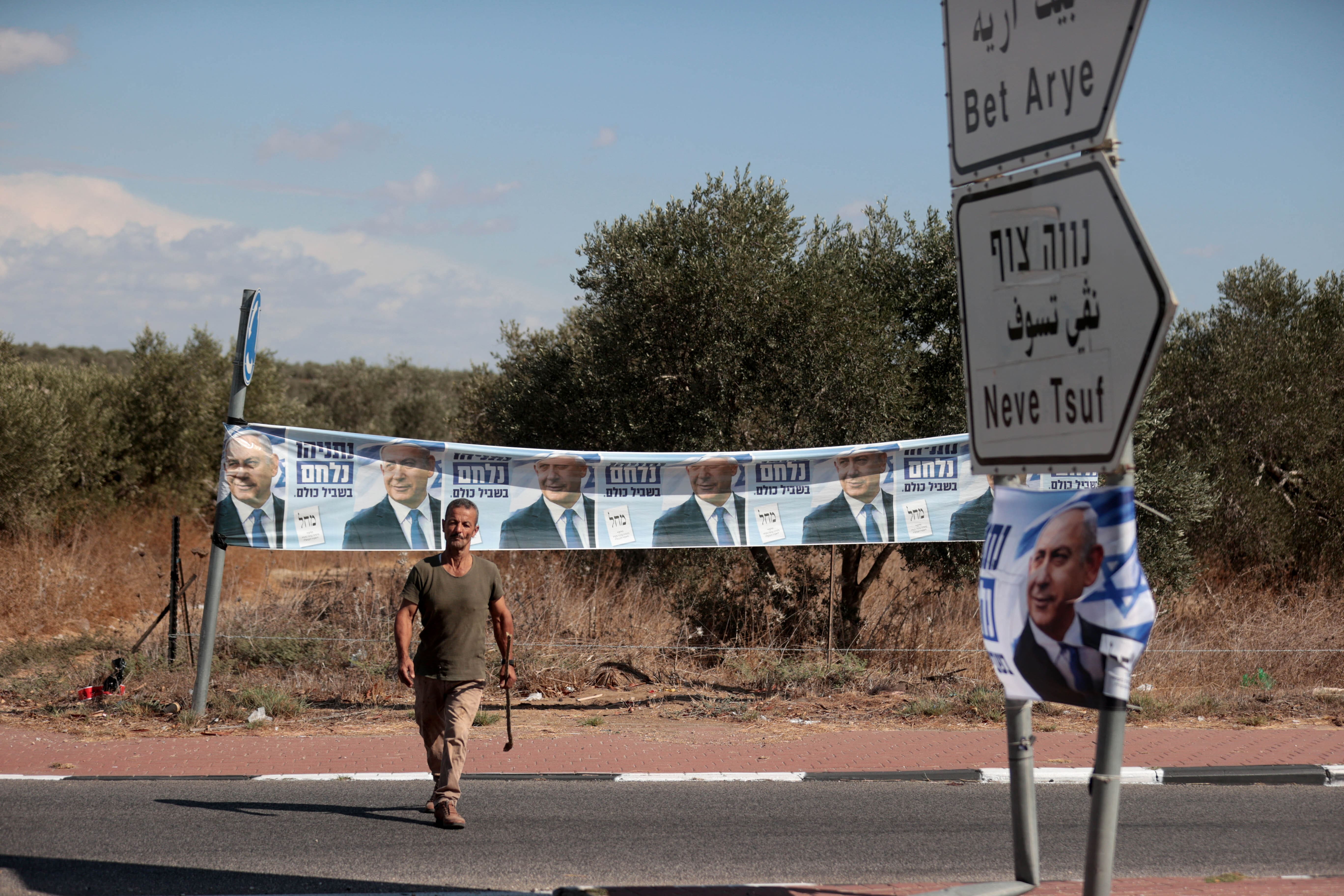
Israel enters the final run-up to the October 27 parliamentary elections embroiled in four intertwined crises that are feeding off each other: fragmentation in the ruling right-wing camp, despite efforts to settle matters before the deadline to register electoral lists; an escalation in the rift between Israel and the Board of Peace overseeing the Trump plan for Gaza—a rift that has practically frozen the plan to disarm Hamas until after the vote; accelerating settlement activity and an escalating security situation in the West Bank, which even the Israeli military establishment is warning could explode, and which is already creating a diplomatic crisis with Israel’s Western allies; and a Lebanese front that combines an American negotiating track based on “pilot zones” with a continuing military escalation in southern Lebanon that is consolidating an approach of imposing facts on the ground prior to any settlement.
This situation assessment examines these four dynamics and analyzes how they interact, based on a central premise: that domestic electioneering has become the driving force behind every Israeli political and security decision, including management of the Lebanon front, in a way that supersedes any coherent strategic logic.
Far-Right Chaos After Registration Closed
The deadline for submission of electoral lists for the Knesset—Israel’s parliament—closed in early September without any last-minute alliance emerging. The right thus entered the race divided into four major blocks: The Likud, led by Prime Minister Benjamin Netanyahu; National Security Minister Ben-Gvir’s Otzma Yehudit (Jewish Power), which Knesset member Tally Gotliv has joined after leaving the Likud; the Religious Zionism party of Finance Minister Bezalel Smotrich, which is in a technical alliance with the Zehut (“Identity”) party of Moshe Feiglin; and retired General Ofer Winter’s new Amcha Yisrael (People of Israel). Another addition to the map is the party of Yoaz Hendel and Yaron Zelekha, which hovers around the electoral threshold and is not clearly aligned with any camp.
Netanyahu’s policy failed to unite the right: Winter refused to merge lists with Smotrich, who accused the retired general of gambling with the future of right-wing rule. Ben-Gvir refused to merge with Smotrich’s list for complex reasons based on a poll he himself commissioned, which projected his party to win 11 seats, while polls by major media outlets give him between seven and nine. Netanyahu’s position remains precarious. Every ballot cast for a list that falls below the electoral threshold of 3.25% of the popular vote is a lost ballot and such a fate for right-wing lists would chip away at the narrow majority of Netanyahu’s bloc. This explains Likud’s efforts, right up until the registration deadline, to encourage smaller lists to merge.
Yashar Takes the Lead
Israeli polls had consistently placed Yashar, led by former General Gadi Eisenkot, in the lead, but that advantage narrowed after the lists were closed. An average of five polls projected about 22 seats for Yashar, compared to about 21 for Likud, roughly 12 for the B’Yachad (“Together”) list of Naftali Bennett and Yair Lapid, and nine for the Democrats. Projections ranged between 22 and 25 seats for Yashar, and between 18 and 22 for Likud, while other surveys published immediately after registration closed predicted 27 seats for Likud, compared to Yashar’s 22.
In terms of the distribution of blocs in the Knesset, polling suggests that neither of the two main camps will be able to reach a majority of 61 seats in the 120-seat legislature and thus form a government alone. Netanyahu’s camp, which consists of the right and the parties of the ultra-Orthodox (Haredim), may win 52-54 seats, while the opposition “change bloc” has lost its edge, receding from a projected 60-61 seats two months ago to some 51-54 seats. The Arab parties, which include 10-14 seats in total, comprise a tripartite joint list including the Democratic Front, the National Rally, and the Arab Movement for Change, and are projected to win eight or nine seats. Finally, the United Arab List representing the Islamic Movement is estimated to win four or five seats.
Scenarios for Government Formation
As the electoral lists closed, former interior minister Ayelet Shaked withdrew from the race, while a merger between Smotrich and Ben-Gvir’s lists was ruled out. The key question now became: Who holds the key to reaching a majority of 61 seats?
The possible scenarios would involve three main actors: the Arab parties, whose inclusion in any government coalition is rejected by some 55% of Israelis, and which the Central Elections Committee voted to prevent from taking part in the elections, although some reports suggest this decision may be reversed. Another possibility is the Hendel-Zelekha list, which may tip the balance by winning two to four seats (if it passes the electoral threshold), and the Yashar Party, one of whose leaders has hinted at forming a minority government if the election does not yield a clear outcome.
Polls suggest that a deadlock remains possible, with 35% of Israelis supporting a national unity government if no clear coalition emerges. However, 79% of opposition voters reject a national unity government headed by Netanyahu, while 57% of coalition voters reject one headed by Eisenkot. This risks reproducing the political deadlock that led to five rounds of elections between April 2019 and November 2022, during which Netanyahu served as caretaker prime minister for more than 17 months.
Board of Peace: Gaza Plan Suspended Until After the Election
The relationship between Israel and the Trump administration’s “Board of Peace” is turning from a temporary dispute over execution into a political impasse. At the end of July, the Board—along with mediators Egypt, Qatar, Türkiye, and the U.S.—announced a phased roadmap for disarming Hamas. The Palestinian movement agreed to it, but Netanyahu stressed that Israel did not, and that it would not withdraw from its current positions before the group’s complete disarmament. After a meeting between Netanyahu and the body’s High Representative Nikolai Mladenov, the Board of Peace clarified that withdrawal beyond the original “yellow line” would not take place until disarmament was complete.
In late July, Israel’s Security Cabinet approved the legal measures necessary for the deployment of an International Stabilization Force (ISF), with Israel retaining the right to decide which countries can be involved. It vetoed Turkish participation, while Morocco has agreed to take part. Yet the plan has yet to produce any substantial changes on the ground: the technocratic National Committee for the Administration of Gaza (NCAG) has not entered the Strip; Hamas has neither surrendered its weapons nor relinquished its governing role; and plans for the ISF—set to comprise around 2,500 personnel—are largely on hold, pending the election.
From Washington’s perspective, the U.S. and Israeli governments agree on the desired end state for Gaza, yet the elections have constrained the Israeli government’s ability to implement measures—a point underscored by Trump’s envoy and son-in-law Jared Kushner. A Board of Peace official has also noted that the body has limited leverage on Netanyahu prior to the election, given the likelihood it would return him to power. Mladenov has warned that a continuation of the status quo—and a failure to implement the plan, in tandem with developments in the West Bank—would render a two-state solution essentially impossible. On September 23, the Board of Peace held a briefing on the sidelines of the United Nations General Assembly, presenting a $2.45 billion recovery plan for Gaza. Meanwhile, Israeli opposition has become increasingly sensitive, with Israeli military and civilian officials refusing to cooperate with the Board, viewing it as aligned with the political leadership’s electoral agenda.
Gaza: An Expanding Status Quo and a Fragile Truce
Satellite imagery of Gaza has revealed earth berms and fortifications stretching approximately 30 kilometers, constructed by the Israeli military since November 2025 across the Strip’s five governorates. Estimates of the extent of Israeli control vary; in early September, Netanyahu announced that it held some 60% of the Strip—up from 53% at the time of the withdrawal to the “Yellow Line” in October 2025—while other sources cited a figure of around 70%. Netanyahu also declared that redeployment was not under consideration.
Between the start of the ceasefire in October 2025 and August 2026, the Palestinian death toll reached 1,254. July alone, the deadliest month, saw more than 150 fatalities. The Israeli army continued its operations in September, announcing several developments including the arrest of the head of Hamas’s internal security apparatus in Gaza City and the killing of Mohammed al-Yazouri, commander of the Khan Yunis Brigade. The army also reported 14 ceasefire violations between September 4 and 15. Meanwhile, Defense Minister Israel Katz revived the issue of Palestinian emigration from Gaza, claiming that approximately 80% of the population wished to leave, and asserting that such emigration was a prerequisite for resolving the situation in Gaza. This rhetoric raises questions about the consistency of Israel’s current policy with the Trump plan, which stipulates that Gaza should neither be occupied nor annexed, and calls for a phased Israeli withdrawal from the Strip.
The West Bank: Settlement Expansion and Diplomatic Crisis
Over recent months, the Israeli government has continued to expand settlement activity and deepen its control over the West Bank. In February, the Security Cabinet approved measures to strengthen Israeli control over the territory, and in March, the government authorized 34 settlements, a mix of new colonies and newly legalized existing outposts. In early July, the Security Cabinet approved the establishment of 13 settlements in the central West Bank; Finance Minister Bezalel Smotrich subsequently announced a “revolution” in settlement expansion, extending from the Negev in the south to the Galilee in the north. In August, the Ministry of Housing issued tenders for the construction of approximately 1,234 settlement units in the E1 zone east of Jerusalem. The deadline for bid submissions falls a week before the election, potentially signaling an attempt to lock the next government into contracts that would be difficult to reverse, thereby obstructing any attempt to cancel the project.
This trend has been accompanied by an escalation in settler violence. Approximately, 761 attacks were recorded during the first four months of 2026, an average of 190 per month. This puts the West Bank on track to experience more than 2,000 attacks this year, compared to 1,835 in 2025. The UN data indicates that over the first half of the year, 316 Palestinians were killed by Israeli forces or settlers, along with 20 Israelis killed by Palestinians.
This dynamic has fueled a nascent diplomatic crisis. On September 8, 12 countries—including Britain, France, and Canada—announced plans to consider or impose national restrictions, or to support European restrictions, on trade in goods from Israeli settlements. Britain also announced additional sanctions, including a ban on imports of settlement products and bringing to 38 the number of individuals subject to British sanctions linked to settlement activity. On September 9, Israel issued Britain a 30-day deadline to close its consulate in East Jerusalem, while Smotrich called for the British ambassador to be expelled.
Lebanon: Negotiations Without Withdrawal
Israel’s announcement in early September that it had achieved “full operational control” over the Ali al-Tahir heights in southern Lebanon—though the extent of this control remains disputed—offers another example of how it leverages actions on the ground to strengthen its negotiating position. Defense Minister Israel Katz has linked any withdrawal from the security zone to the complete disarmament of Hezbollah. This stance partially aligns with that of Gadi Eisenkot, who also expressed a willingness—under certain conditions—to maintain a security belt extending eight kilometers deep into Lebanese territory. This reveals that any disagreement between the government and the opposition concerns the management of this expansion rather than the underlying principle.
As part of the negotiations, Israel agreed to release five Lebanese detainees as a “goodwill gesture,” in exchange for the opening of an inquiry into the remains of Jews who died during the Lebanese Civil War. This move demonstrates how Israel deploys humanitarian issues as both negotiating and electoral tools, complementing military pressure. Israel and Lebanon have held seven rounds of direct negotiations to date, most recently in Rome in early August. The previous month saw implementation of the first phase of the “pilot zones” initiative, in the districts of Zawtar al-Gharbiyah, Srifa, and Froun. The Israeli army withdrew to the western outskirts of Zawtar, where the Lebanese Army then deployed; the latter also stepped up its patrols in the other two towns. Within the framework of the Rome negotiations, Israel refused to withdraw any further unless the Lebanese Army established its full control over the first two areas. The round of talks originally scheduled for September was postponed to October.
Leveraging Washington, Gaza, and Beirut in the Elections
It is difficult to separate these four tracks. The October 27 elections are poised to influence the Israeli government’s political maneuvers, directly impact the trajectory of Israel’s relations with the U.S., and shape the future of its cooperation with the Board of Peace and its effective control over Gaza, as well as the trajectories of the war and negotiations in Lebanon. A victory for the far-right coalition comprising Likud and its current allies could prolong the stalemate in cooperation with the Board of Peace, rather than help advance any process toward a resolution.
The contours of a new reality in Gaza are already emerging on the ground, but this process will likely accelerate, potentially serving as the first priority for the incoming government.
The question of Lebanon is also likely to be a key priority for the next Israeli government, particularly given the current administration’s insistence on linking any withdrawal to the complete disarmament of Hezbollah. This keeps in place the logic of gradual territorial expansion, contrasting with a U.S. position that favors an agreed framework involving pilot zones and a phased Israeli withdrawal.
If no single camp secures a majority, negotiations over forming a government could be protracted, raising the specter of a second election. With polls indicating obstacles to various formulas for breaking the deadlock, any attempt to form a cross-camp coalition would likely face significant political headwinds.
Even in the event of an opposition victory led by Eizenkot, it is important not to overestimate the magnitude of the shift. While Eizenkot might be more open than Netanyahu to resuming coordination with the Board of Peace and easing tensions with the Trump administration, this would not necessarily signal a substantive shift. Most candidates, Eizenkot included, share their rejection of a fully sovereign Palestinian state and advocate for a security zone within Lebanese territory, differing only in their styles of crisis management, rather than in their core objectives.
Consequently, the election’s significance vis-à-vis any actual change of course concerning Gaza, the West Bank, and Lebanon may be more limited than is suggested by the gaps in the polls. The true variable lies not in whether Israel will change course, but in the pace of its management and the public rhetoric around it—factors that carry direct implications for the timing and scale of any renewed American engagement.
Conclusion
The Israeli landscape, with its four intertwined crises, reveals a political system driven more by the logic of domestic electioneering than by a coherent strategic vision. The extreme right, having spent years uniting against a resolution, now finds itself unable to maintain unity within its own ranks. The issue of Gaza is being managed through a logic of calculated postponement until after the elections, rather than a drive for decisive resolution. The West Bank is being steered toward the cementing of irreversible realities, regardless of who governs after October 27. The Lebanon file is following the same logic: steadily entrenching facts on the ground south of the Litani River are being leveraged simultaneously as bargaining chips and electoral assets, rather than as steps toward a genuine settlement.
Most critically, the victory of any alternative to Netanyahu—including Eisenkot, who currently leads in the polls—would not necessarily signal a significant shift in stance regarding the Palestinian cause or the issue of Lebanon. Most candidates are united in their rejection of a fully sovereign Palestinian state and subscribe to the concept of a northern security zone, differing only in their approaches to crisis management and to dealing with Washington.
This leads to the conclusion that four factors will determine Israel’s trajectory over the coming months: first, Netanyahu’s ability to prevent the disintegration of his right-wing camp, which so far appears beyond his control; second, Washington’s willingness to enforce a genuine Israeli commitment to the Gaza roadmap, rather than cautiously managing the dispute; third, the ability of Palestinians in the West Bank to withstand an unprecedented pace of annexation that is accelerating rather than slowing down; and fourth, Netanyahu’s insistence on linking any withdrawal from southern Lebanon to the complete disarmament of Hezbollah, while leveraging continued military operations there as both a negotiating tool and an electoral asset.
Regardless of the outcome of the October vote, the interconnectedness of these four issues makes it difficult to decouple any future Israeli decision, military or political, from electoral calculations. This leaves the fate of Gaza, the West Bank, and Lebanon alike hostage to volatile domestic Israeli dynamics, rather than being situated within a clear negotiating framework.
Saoud El Mawla contributed to this Situation Assessment.
Related
Publications
view more

This situation assessment examines the strategic connection between Hormuz and Bab al-Mandab and its implications for Gulf energy trade and maritime security. It argues that a sustainable response requires re-establishing…
learn more

Linking Iraq’s Grand Faw Port to Türkiye and Europe, the Development Road promises trade, jobs and regional integration. Its success depends on financing, Iraqi governance, relations with Iran and progress…
learn more