

Paul Dyer
Nonresident Fellow
Bio
Paul Dyer is a nonresident fellow at the Middle East Council on Global Affairs. He has over 20 years of research and policy analysis experience on governance and economic development issues in the Middle East and North Africa (MENA) region.
Dyer’s work has focused on labor market policy and youth development, small and medium enterprise development, the promotion of access to finance, and broader issues of economic inclusion. Recently, he has worked on conflict resolution and post-conflict recovery in Libya, Syria, and Yemen, with attention to rebuilding institutional capacity; as well as the MENA region’s policy response to the COVID-19 pandemic.
In this capacity, Dyer has worked with the World Bank Group, the Islamic Development Bank, the International Labour Organization, and many government agencies and non-governmental organizations in the MENA region. He has published widely, contributing to numerous reports and edited volumes on economic development in the MENA region, as well as implementing several long-term impact evaluations.
In the past, Dyer served as managing associate at Maxwell Stamp, Inc. and knowledge program manager at the Silatech Foundation in Qatar. He was also a fellow at the Dubai School of Government and extended-term consultant at the World Bank. Dyer co-managed the Middle East Youth Initiative, a research initiative focused on understanding institutional barriers to youth economic inclusion in MENA and programmatic solutions to persistent challenges in terms of employment, entrepreneurship, and social development. He also was a founding advisor to the Taqeem Initiative, evaluating youth employment programs in the MENA region.
 contact fellow
Research Areas
- Youth transitions
- Labor markets
- Post-conflict recovery
- Institutional reform
Countries of Focus
- Gulf (GCC)
- Yemen
- Libya
Other Areas of Interest
- Demography
- Education reform
- Conflict resolution
- Governance
Education
- M.A., Arab Studies and Economics, Georgetown University, DC, 2002
- B.A., International/Global Studies, College of William and Mary, 1996
Articles
Paul Dyer
Mouin Rabbani, Rory Miller, Frédéric Schneider, Haid Haid, Paul Dyer, Dalia Ghanem, Özge Genç, Rashid Al-Mohanadi, Yahia H. Zoubir, Faozi Al-Goidi, Mahjoob Zweiri, Hamidreza Azizi, Nader S. Kabbani, Adel Abdel Ghafar
Paul Dyer
Ahmed Morsy, Mouin Rabbani, Tarik M. Yousef, Paul Dyer, Aisha Al-Sarihi, Galip Dalay, Robert P. Beschel Jr., Justin Dargin , Faozi Al-Goidi, Abdalftah Hamed Ali, Mahjoob Zweiri, Yahia H. Zoubir, Ranj Alaaldin, Nader S. Kabbani
Paul Dyer
Publications
view more
Industrial policy, which is the proactive effort by governments to support strategic industries, is experiencing a global resurgence after years of neglect. However, even when interest waned globally, industrial policy had continued to play a key role among Gulf Cooperation Council (GCC) governments.
learn more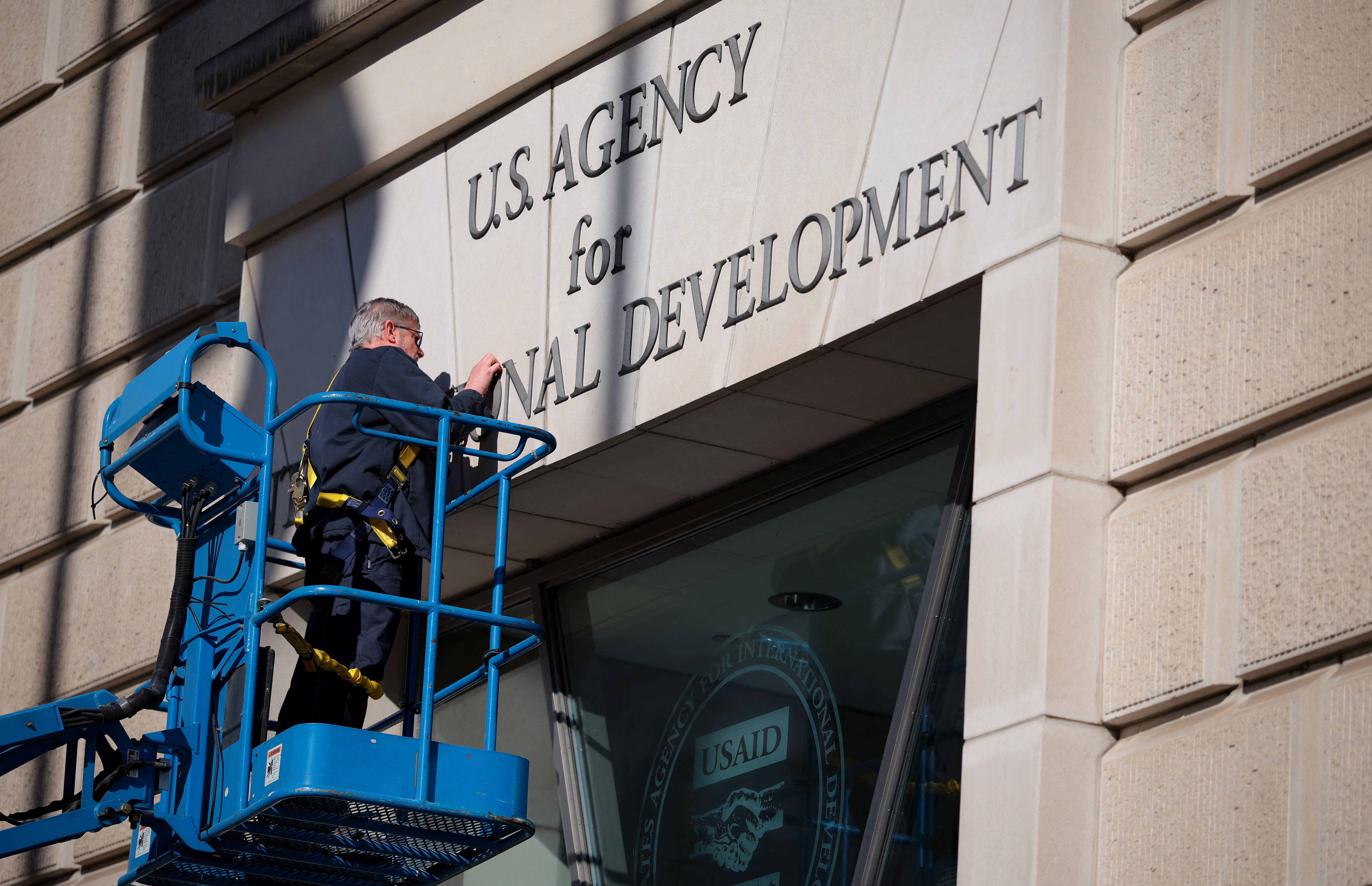
The Trump Administration began the morning of February 3, 2025, by telling staff and contractors of the United States Agency for International Development (USAID) to stay home. Elon Musk and his team at the newly minted Department of Government Efficiency (DOGE) spent the day digging through staff computers, digital records, and accounts seeking information on programs they felt were wasteful or not aligned with the new administration’s priorities.
learn more
Throughout the COVID-19 pandemic, public health specialists across the globe struggled with efforts to accurately count the number of COVID-19 cases and associated deaths.
learn more