

Syria’s Patchwork DDR:
Holding a Transition Together with Loose Threads
Policy Note, February 2026

Nonresident Senior Fellow
 download
Introduction
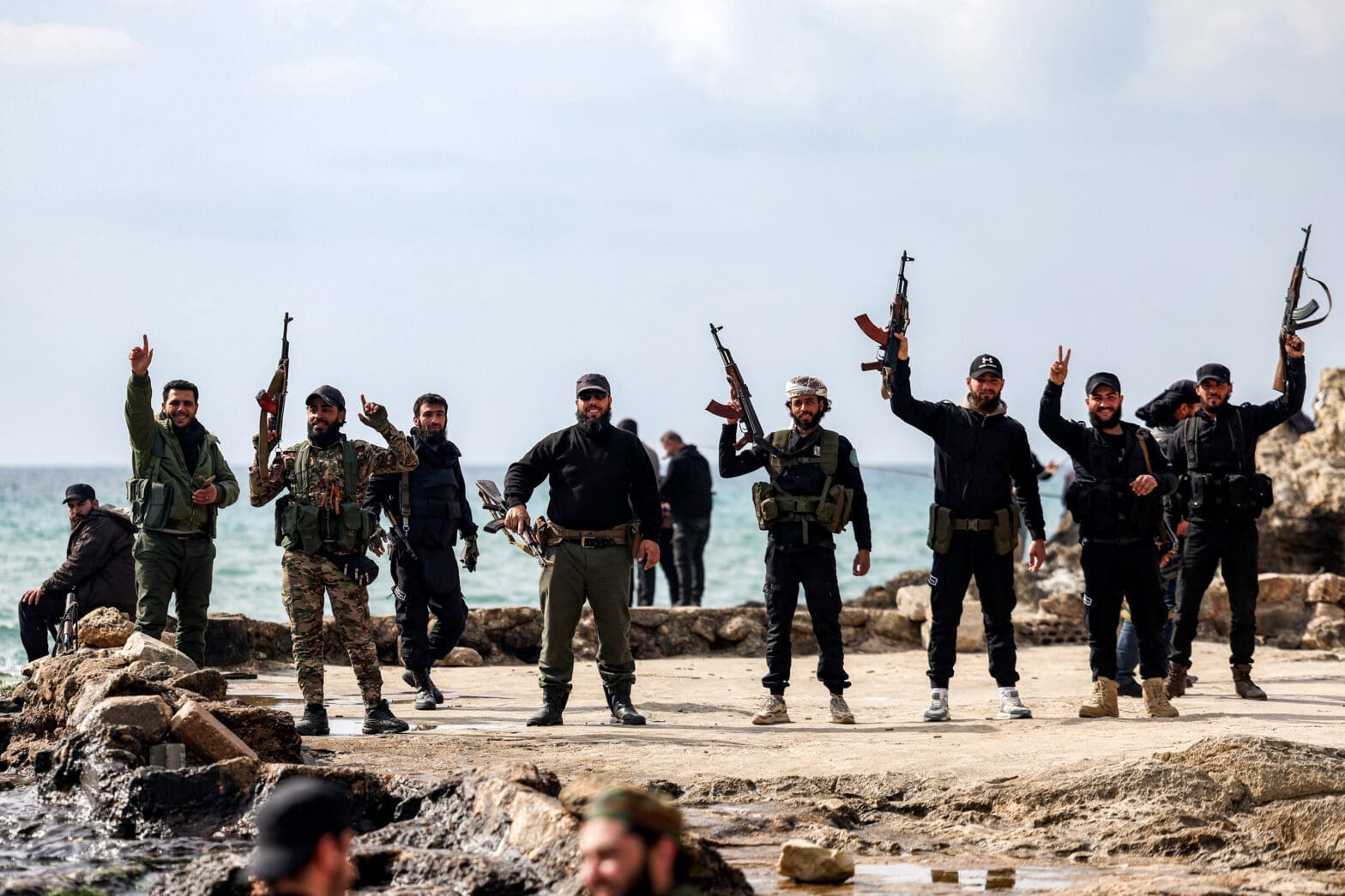
Since the fall of the Assad regime in December 2024, Syria’s transitional authorities have pursued an improvised form of security stabilization that resembles Disarmament, Demobilization, and Reintegration (DDR) in practice, even as they have avoided the label. Their disarmament efforts have focused on seizing arms stockpiles and encouraging voluntary handovers. They have demobilized and dissolved the military and security bodies of both the former regime and its armed opposition. Finally, they have pursued reintegration by absorbing armed factions into new state forces, while steering former regime personnel through a process aimed at regularizing their status.
These steps, led by the transitional government, have delivered a measure of short-term stability, but they remain insufficient and fragile. The core problem is not a lack of willingness by the authorities, but the absence of a coherent policy framework. DDR-related measures have been pursued in an ad hoc and uneven manner, treated largely as technical fixes rather than as part of a broader political, economic, and security strategy capable of addressing the structural drivers of violence. As a result, Syria remains awash with weapons, and burdened by entrenched factional loyalties and security challenges inherited from, and caused by, decades of regime rule.1 The consequences have been visible in bouts of violence in the coastal region violations in March and the southern province of Sweida in July, as well as a steady rise in assassinations, criminality, and vigilantism—developments that reflect systemic shortcomings rather than isolated flare-ups.
This policy note looks beyond the first year of DDR-related efforts to assess what must change for Syria’s fragile stabilization to endure. It argues that Syria’s early post-Assad gains will not be sustainable without a clear shift in policy direction: from fragmented, piecemeal security measures toward a nationally anchored DDR approach that is integrated with political reform, community protection, and economic recovery. Without such a shift, today’s security challenges risk hardening into long-term structural obstacles once the political landscape settles.
Patchy Disarmament in a Country Awash in Weapons
Syria’s disarmament efforts since Assad’s fall reveal both the necessity and the limits of current stabilization efforts. Largely localized and improvised, these measures may reduce the short-term risks from weapons proliferation, but fall short of the integrated, state-building approach required for durable security.
Syria’s transitional authorities inherited one of the worst weapons-proliferation crises in the Middle East. Before President Bashar al-Assad was toppled, Syria had more than 1.5 million small arms—some 8.2 firearms per 100 people.2 The regime’s collapse, followed by mass looting of military depots and unchecked trafficking, expanded this arsenal even further.3 To confront this, the authorities have adopted a mixed approach combining voluntary handing in of guns, negotiated handovers, and targeted enforcement. In former opposition areas, they have focused on integrating armed factions into official forces to place those groups’ weapons under state control.
The authorities launched the first major disarmament drive through taswiya (also referred to in English as “reconciliation” or “settlement” —a state-led, security-driven process through which security members of the former Assad regime regularise their status with the authorities in exchange for temporary security clearance). They required former regime members to surrender their weapons in designated centers as part of the taswiya process.4 Compliance has been patchy, and many regime-era caches remain hidden. In parallel, the authorities ordered Palestinian armed factions aligned with the former regime to hand over all their weapons except light personal arms.5
In formerly pro-regime areas such as Latakia, Tartus, and rural Homs, the authorities relied on local notables to help broker voluntary handovers in exchange for guarantees of stability and immunity from prosecution. Some communities surrendered assorted weapons, ammunition, and even drones on agreed dates.6 Although this reduced confrontation and signaled the state’s willingness to use mediation rather than force, the arrangements remain informal, small-scale, and unsupported by a national framework.7
Alongside soft measures, the authorities have conducted security operations targeting hidden depots and trafficking networks. Raids in Daraa, Deir Ezzor, and rural Damascus uncovered rifles, rocket propelled grenades, explosives, and anti-aircraft munitions, with more than 90 seizures recorded between December 2024 and March 2025.8 These operations have disrupted black-market flows, but uneven coverage, weak intelligence, and scarce resources still allow smuggling to persist.9
Demobilization by Decree
While anti-Assad forces have largely joined official military structures, the transitional authorities have imposed abrupt, full-scale demobilization on armed groups linked to the former regime, including Palestinian factions closely tied to Assad-era networks. These measures have been broadly successful in dismantling the targeted groups and ending their roles as organized armed groups. Immediately after Assad’s ouster on December 8, 2024, the new authorities moved to dissolve all regime-linked military and security institutions. Three days later, de facto leader Ahmad al-Sharaa announced the formal disbanding of Assad-era forces, a position he later reaffirmed as president in January 2025. The Assad-era Syrian Arab Army, intelligence agencies, police, and pro-regime auxiliary forces such as the National Defense Forces and Baathist militias were all declared dissolved.10 The aim was to neutralize the core pillars of regime repression and prevent them from reconstituting and staging organized resistance to the new government. Though precise figures are difficult to verify, available data suggest that the authorities had demobilized 100,000-250,000 individuals by the end of January 2025.11
The authorities also ordered all Palestinian factions operating in Syria to halt their military activity, dismantle their structures, and surrender their bases and training sites. Damascus assumed direct control of their offices, camps, and logistical networks, using coercive measures to compel compliance.12 By mid-year, the Palestinian armed presence in Syria had collapsed, with most personnel relocating to Lebanon or Iraq, and the remainder under strict state oversight.13
Stalled Reintegration: Old Loyalties and a Future on Hold
The transitional authorities moved quickly to bring major anti-Assad factions into new formal military structures. They dissolved independent chains of command, renamed units, and placed fighters under a central command. They also regularized the status of former regime personnel through a taswiya process.14 These steps reflect an urgent push for stabilization, but their uneven implementation exposes the limits of reintegration when pursued without a coherent, nationally anchored DDR framework. The merger of armed factions remains slow, and former regime personnel have received little support to transition into civilian life.
To avoid renewed confrontations and rebuild Syria’s military institutions, the authorities have absorbed opposition factions into a unified national army. Senior commanders have received posts within the new hierarchy, while others have assumed administrative roles to ease the transition. On 17 May, the Ministry of Defense announced the full merger of armed formations under state command, and gave holdouts 10 days to comply or face legal action.15 While these measures advanced formal unification, they prioritized organizational absorption over the deeper political and social reintegration required to build durably cohesive institutions.
Operationally, the authorities have set up military divisions to absorb fighters, along with a centralized command and control system to manage weapons, deployments, and appointments through one hub. They have also created mechanisms to unify ranks, and opened new academies to provide specialized training and strengthen professionalism. Additionally, the authorities have introduced clear mechanisms to reinstate officers who had defected during the Assad era.16 Yet these steps remain narrowly security-focused and detached from broader efforts to rebuild trust, clarify civilian oversight, or address the economic reintegration of former combatants.
Despite some progress, the process remains incomplete. Many former faction leaders still hold informal influence over their fighters, especially in long-held areas of operation. Trust between units remains limited, and local commanders continue to bypass in practice.17 These dynamics underscore how partial reintegration, absent a comprehensive DDR strategy, risks reproducing wartime power structures within nominally unified institutions.
The authorities have handled former regime military and security personnel through taswiya centers. 18 They have given the individuals concerned a set period to register at offices in key urban areas. Those who have completed the process have received documents confirming their non-combatant status and been granted temporary legal protection.19 Meanwhile, the authorities have warned of legal consequences for anyone who fails to register, and have carried out limited raids targeting people who have ignored the deadline or are suspected of war crimes and major abuses.20
Although the taswiya process introduced by the authorities has clarified the legal status of many former combatants, it has delivered little genuine reintegration. The authorities have barred former regime figures from joining the new military, though a small number of lower-ranking personnel with valuable technical or logistical skills have been admitted to the army or police, after vetting.21 Crucially, no parallel civilian reintegration or livelihood support mechanisms have been established, leaving this process disconnected from economic recovery and social reintegration—an integration deficit that must be addressed through a nationally anchored DDR approach.22 As a result of the current approach, former Assad forces remain economically idle, politically sidelined, and socially isolated, conditions that raise the risk of future unrest.
The Weak Links in Syria’s DDR Effort
Despite early progress on disarmament, demobilization, and reintegration, significant structural weaknesses persist in each pillar, creating risks that could undermine both security and the wider transition if left unaddressed. The authorities have made sustained efforts to consolidate control over Syria’s weapons stockpiles; however, progress on disarmament has been uneven and limited in scope. Efforts have focused heavily on former combatants, while widespread civilian gun ownership remains largely unaddressed. Likewise, enforcement is strict in former regime strongholds but far looser in long-standing opposition areas. This imbalance fuels distrust and discourages compliance. Weak intelligence and limited community cooperation, along with the absence of a nationwide audit, are restricting efforts to uncover hidden stockpiles.23
Poor incentives and weak deterrents compound these problems. With no compensation for surrendered weapons, and minimal enforcement of arms control laws, civilians see little reason to disarm. Persistent insecurity, sectarian tensions, criminal violence, and revenge killings are driving many civilians, especially minorities and residents of mixed areas, to keep their weapons or even acquire more, for protection.24
These gaps keep large numbers of weapons in circulation and sustain a cheap, accessible black market that moves arms easily across communities. High rates of civilian gun ownership, paired with easy access to inexpensive weapons, increases the risk of revenge attacks, criminal activity, intercommunal clashes, and vigilantism. Under these conditions, even small disputes can escalate quickly, leaving Syria vulnerable to renewed instability.
The authorities’ efforts to demobilize armed factions, especially those aligned with the regime, have progressed quickly. Yet they remain incomplete and fragile. Damascus still lacks a clear plan for dealing with groups that continue to operate outside state control. The largest of these are the Druze factions in Sweida, which continue to resist integration. With fighters numbering in the hundreds, these groups operate independently and have near-total control over the province.25
The authorities have absorbed most major anti-Assad factions into official forces, but have left smaller groups out. These groups have also refused to disarm, keeping their status fluid and unresolved. They include both Syrian and foreign groups, some of which operate autonomously or maintain informal arrangements that give them access to significant weaponry.26
The authorities tolerate some of these groups because confronting them could destabilize their respective areas, while others benefit from foreign protection that complicates intervention by Damascus. Their continued presence weakens the credibility of the demobilization process, creates parallel power centers, and gives local commanders room to challenge state authority. These groups also expose communities to extortion, coercion, and episodic violence. In the long term, if the authorities fail to address them, they risk reigniting local tensions, fueling wider instability, and obstructing economic recovery.
Despite the optics of progress, reintegration efforts remain shallow and uneven. The authorities have created a major gap by failing to provide socio-economic support for tens of thousands of dismissed regime-era personnel. They have barred these individuals from rejoining the armed forces, and offered no vocational training, job placement, or psychosocial support. As a result, they remain politically marginalized, economically idle, and socially isolated.27 At the same time, the authorities have failed to build justice and accountability into the taswiya process, which erodes public trust and fuels revenge killings and vigilante violence.
Reintegration challenges also surface in the stalled incorporation of the Syrian Democratic Forces (SDF). The United States-brokered March 10 agreement laid out a path for merging SDF units into the national army, yet implementation has barely moved. Command structures, territorial governance, and political arrangements remain unresolved, so the SDF continues to operate as a parallel force.28
The authorities have also struggled to unify opposition factions once they are within official institutions. Even after formal integration, informal loyalties persist, fighters bypass chains of command, and discipline remains weak. Many still take their cues from former commanders or local power brokers. 29Foreign fighters who joined these structures also lack a clear legal status, leaving them in limbo and creating long-term risks for accountability and control.30
These gaps have already produced serious consequences. Large numbers of demobilized officers of the former regime in the Alawite coastal mountains have preserved a loose network and remain capable of rapid mobilization, contributing to outbreaks of violence such as in March 2025. Their exclusion from formal structures and the absence of credible accountability mechanisms create a vacuum that increases the risk of future unrest, including remobilization, radicalization, and participation in organized crime or extortion networks. Their ties to foreign patrons further heighten fears of proxy escalation.
The stalled SDF merger is also fueling mistrust, raising the risk of armed confrontation, and exposing communities to renewed violence. Weak unification of the armed forces sustains parallel structures, sharpens local rivalries, and increases the likelihood of internal clashes. Fragmentation and poor discipline inside divisions that have been absorbed into state forces also hinder their ability to provide security without committing violations, as seen in the coastal unrest in March 2025 and the July violence in Sweida.
Conclusion
Post-Assad Syria’s first year of DDR demonstrates both what rapid stabilization can achieve and why partial success is not enough. The transitional authorities have shown that rapid action can dismantle large armed formations, dissolve regime-era institutions, and bring opposition factions under a unified command. Yet these gains remain fragile, because the process has been narrow, uneven, and insufficiently integrated into the broader transition. At this stage, failure to close these gaps risks turning early progress into a source of renewed instability.
The core policy imperative is clear: Syria must move from ad hoc, security-first measures toward a comprehensive, nationally anchored DDR strategy that is embedded in political reform, community protection, justice, and economic recovery. Without this shift, disarmament, demobilization, and reintegration will continue to advance unevenly, leaving weapons in circulation, loyalties divided, and former combatants without viable civilian futures.
Operationally, this requires national standards for disarmament that combine voluntary handovers with credible incentives and enforcement, alongside demobilization procedures that are transparent, consistent, and linked to protection and accountability. Reintegration must become the central component of DDR, providing livelihoods and psychosocial support to demobilized fighters while strengthening cohesion and discipline within the new security institutions. To sustain this effort, the authorities also need a national DDR coordination and funding mechanism capable of mobilizing domestic and international resources.
If pursued coherently, DDR can anchor Syria’s transition in a unified state that delivers security through institutions rather than force. If not, Syria risks replacing centralized coercion with a fragmented landscape of armed actors. As such, a nationally owned, integrated DDR framework is not a technical supplement to the transition—it is a vital element that will determine whether it succeeds or fails.
Endnotes
1 Syrian researcher 1, interview by author, Damascus, Syria, October 20, 2025.
2 Small Arms Survey, “Civilian Firearms Holdings, 2017” accessed December 12, 2017, https://shorturl.at/QqHVH.
3 Khaled al-Jeratli and Hassan Ibrahim, “Syria faces challenge of disarmament,” Enab Baladi, April 30, 2025, https://shorturl.at/SmpN1.
4 Al-Jeratli and Ibrahim, “Syria faces challenge.”
5 Syrian researcher 1, interview.
6 Al-Jeratli and Ibrahim, “Syria faces challenge.”
7 Defected military officer (Colonel), interview by author, Damascus, Syria, October 17, 2025.
8 Sarah Hartley, “Every Gun Was Taken,” Ink Stick Media, July 1, 2025, https://shorturl.at/FORDv.
9 Syrian researcher 1, interview.
10 “Syria appoints Sharaa as interim president, dissolves all armed factions,” TRT World, January 29, 2025, https://www.trtworld.com/article/18259388.
11 Defected military officer (Colonel), interview by author, Damascus, Syria, October 17, 2025.
12 Syrian researcher 1, interview.
13 Military commander (Captain), interview by author, Damascus, Syria, October 14, 2025.
14 European Union Agency for Asylum, 4.1.1. (Former) members of Assad’s armed forces and pro-Assad armed groups, Country Guidance: Syria (Valetta: European Union Agency for Asylum, December 2025), https://shorturl.at/zTXy4.
15 Rania Abushamala, “Syria announces merger of all military units under Defense Ministry,” Anadolu Agency, May 18, 2025, https://shorturl.at/dZTBj; Haid Haid, Syria’s Unruly Guns: Building a Unified Army in a Fractured State, Policy Note (Doha: Middle East Council, June, 2025), https://shorturl.at/PulfE.
16 Defected military officer (Colonel), interview.
17 Haid, Syria’s Unruly Guns.
18 Al-Jeratli and Ibrahim, “Syria faces challenge.”
19 Syrian researcher 2, interview by author, Damascus, Syria, October 19, 2025.
20 Syrian researcher 2, interview.
21 Defected military officer (Colonel), interview.
22 Syrian researcher 3, interview by author, Damascus, Syria, October 23, 2025.
23 Al-Jeratli and Ibrahim, “Syria faces challenge.”
24 Syrian researcher 3, interview.
25 Syrian researcher 3, interview.
26 Syrian researcher 2, interview.
27 Syrian researcher 3, interview.
28 Haid Haid, “Sweida must be a warning, not a blueprint for northeast Syria,” Al-Majalla, August 17, 2025, https://h7.cl/1kpy0.
29 Haid, Syria’s Unruly Guns.
30 Robert Bociaga, “From rebels to soldiers: Foreign fighters in Syria’s new army,” The New Arab, June 10, 2025, https://shorturl.at/cOnNX.
Related
Publications
view more
More than 13 years of armed conflict have left Syria a fractured patchwork of isolated regions controlled by rival factions. Yet the dramatic collapse of the Assad regime in December…
learn more