
The Sudan Humanitarian Fund
Ensuring the Efficacy of Humanitarian Financing in a Wartime Economy
Situation Assessment, March 2026
Introduction
Humanitarian financing in conflict-affected and fragile states is increasingly relying on pooled funding mechanisms to enhance aid flow, improve donor coordination, and increase flexibility in dynamic and volatile settings. Pooled funds allow multiple donors to channel unearmarked funds into a common pool that can then be allocated to implementation partners according to assessed needs and evolving operational priorities. However, while pooled funding mechanisms are widely regarded as effective tools for delivering coordinated assistance, they face challenges in conflict settings, including diversion, politicization, financial misuse, and reduced localization.
Among the most prominent of these pooled funding mechanisms are Multi-Partner Trust Funds (MPTFs) and Country-Based Pooled Funds (CBPFs), both managed by the United Nations. The Sudan Humanitarian Fund (SHF) illustrates how such funds can deliver needed assistance in contexts characterized by civil war and territorial fragmentation. Since the outbreak of war in April 2023, Sudan has become the world’s largest humanitarian crisis, with close to 12 million internally displaced people and 4.5 million refugees. This has greatly increased humanitarian needs at a time when global humanitarian assistance allocations are declining.
This article examines the SHF as a case study of pooled humanitarian financing in a country consumed by war. It assesses the fund’s structure and performance, reviews international experience with pooled financing in fragile states, and evaluates whether existing donor safeguards are sufficient to prevent misuse. The analysis finds that while noted challenges to pooled funding in conflict settings are valid, these challenges are endemic and apply to other funding mechanisms as well. Indeed, pooled funding is better able to mitigate challenges compared to other funding models. Furthermore, the analysis notes that if institutional safeguards are maintained, the benefits of pooled funding are substantially magnified in conflict settings, including increased levels of donor coordination and flexibility in responding to evolving humanitarian needs.
The Sudan Humanitarian Fund
Established in 2006, the SHF is a multi-donor, country-based pooled funding (CBPF) mechanism that facilitates the allocation of donor resources to support critical humanitarian needs and emergency responses across the country. A pooled funding mechanism operates by consolidating donor contributions into a single, unearmarked fund. This is especially useful when operating in conflict areas or fragile environments, as it reduces exposure for individual donors while providing administrative flexibility and critical oversight. This allows operators to streamline responses and manage high-risk conditions.
Pooled funds use risk-based management systems to ensure accountability in volatile conditions. Conflict zones often require flexible management procedures that allow humanization teams to adapt quickly to evolving security situations and changing population needs. Consolidating fund operations also reduces the compliance burdens and costs associated with Anti-Money Laundering (AML) and Combating the Financing of Terrorism (CFT) regulations, which can become prohibitive in conflict areas. They can also limit—if not eliminate—the diversion of aid flows by non-state actors, as well as currency arbitrage and procurement manipulation.
The SHF is managed by OCHA’s Humanitarian Financing Unit under the leadership of Sudan’s Humanitarian Coordinator. It is designed to complement other humanitarian funding sources, including bilateral funding and the Central Emergency Response Fund (CERF). The SHF works closely with national non-governmental organizations (NNGOs), international non-governmental organizations (INGOs), and United Nations agencies to allocate and distribute donor resources to the most critical humanitarian needs, as defined by the Sudan Humanitarian Needs Response Plan.
The SHF operates through two primary allocation windows. A standard allocations window aligned with the Humanitarian Response Plan and a reserve allocations window for rapid emergency response. The SHF is intended to provide rapid, predictable financing that can respond to emerging crises while strengthening coordination among humanitarian actors. This is especially important in the context of Sudan’s massive humanitarian needs.
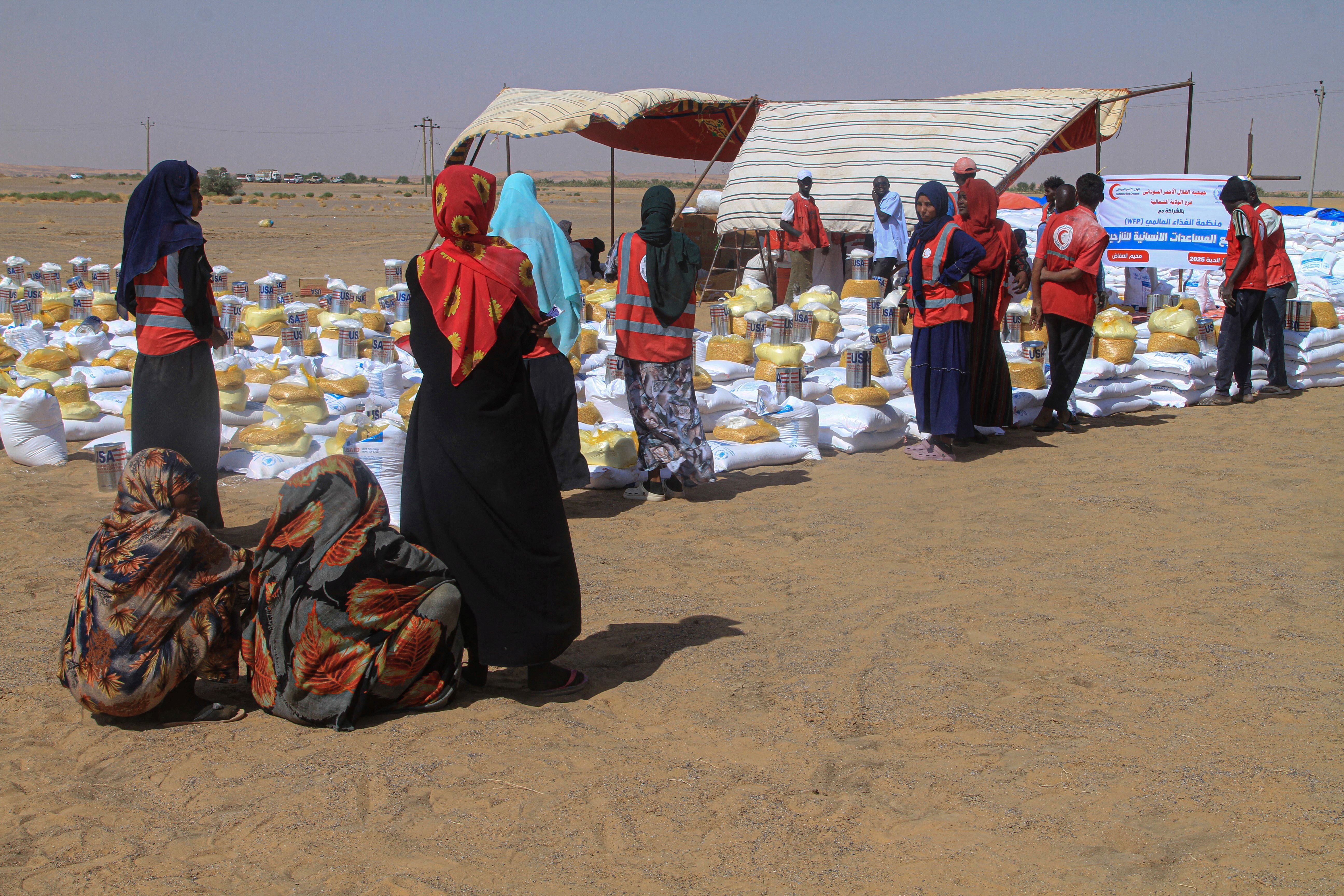
The SHF has become deeply integrated into Sudan’s humanitarian architecture. In 2024, it provided $181 million in direct funding to 35 partner organizations and indirect support to 63 other NGOs. It allocated funds across Sudan’s 18 governorates, with Darfur receiving the largest proportion (45 percent). SHF allocations cover food, health, water, sanitation, emergency shelter, and more. The SHF does not follow a fixed aid structure. Instead, its allocations adapt dynamically to the shocks and needs of different geographies and sectors, monitoring the humanitarian crisis in real time.
The SHF follows OCHA’s CBPF Global Guidelines. Given connectivity challenges, the SHF strengthened its remote call monitoring in 2023, the same year the ongoing conflict began. The monitoring process rests on sourcing triangulated data from OCHA sub-offices, cluster focal points, and community leaders to ensure robust project oversight. The SHF further improved its monitoring efforts in 2024 through field monitoring, financial spot checks, and peer monitoring through NNGO intermediaries. Additionally, in 2025, the SHF enhanced its Third-Party Monitoring (TPM) in coordination with donors and UN agencies by contracting with a dedicated firm.
Humanitarian Financing in Wartime and Fragmented Economies
It is inherently difficult to undertake humanitarian activities in conflict settings. Challenges include limited access to conflict-affected areas, the potential for funds to be misappropriated, heightened political sensitivities and pressures, reduced availability of expertise as skilled populations flee conflict areas, and increased risk to the physical safety of staff who remain. These challenges dissuade some donors from providing aid in conflict settings. The thinking is that it is best not to provide aid in contexts where allocations cannot be fully planned, controlled, and monitored.
However, protracted conflict is precisely the context where humanitarian aid is needed most. Staff in conflict areas are often at risk even if they are not distributing aid. It is better to manage the risks and challenges and support populations in dire need of assistance than to hide behind a veil of bureaucracy that allows populations to go hungry or become destitute. CBPFs have proven themselves to be an important mechanism for ensuring that humanitarian assistance continues to flow to areas that need it most. That said, there are challenges that need to be managed and mitigated:
The Dynamics of Conflict Areas
Armed conflict exacerbates difficulties inherent in humanitarian emergency contexts. Both the type and the location of humanitarian needs can change rapidly in these settings, requiring flexible, agile approaches to managing and distributing aid. Political pressures are magnified, as are financial pressures to divert aid to other uses. It is also difficult to conduct monitoring and evaluation to ensure that funds are being used effectively, creating opportunities for financial misuse.
CBPFs allow donors to appropriate funds to intermediary country-level institutions that understand the context and have the necessary pool of partners and expertise to minimize the resulting risks. Within this context, it is critical to put in place strong vetting and governance structures that give donors the necessary confidence to invest and allow the flexibility needed to respond to rapidly changing conditions on the ground. It is no wonder that Tom Fletcher, the Emergency Relief Coordinator, has stated that his goal is to see 50% of humanitarian financing channeled through such mechanisms.
To prevent the misuse of funds, Sudan can follow guidelines and best practices. For example, the Yemen Humanitarian Fund (YHF) increased field monitoring activities within OCHA sub-offices, including 186 monitoring missions. The number of financial spot checks was also increased, with 102% of the required checks. In addition, YHF has a dedicated in-country team that conducts rigorous monitoring of the funds and the projects. They also have an open, dedicated channel that aligns operations with humanitarian aid principles. This allows for checks and balances to ensure that the funds are not being misused or politicized.
Localization of Funding
Humanitarian assistance has historically tended to flow mainly through international institutions and INGOs rather than local institutions and national NGOs. This has raised concerns regarding equity, the effectiveness of aid distribution—given that local actors are often better placed to understand the state of need—and concerns that such practices limit the potential of local institutions to grow and develop. As such, localization of aid has emerged as one of the most prevalent global issues shaping humanitarian discourse. In 2016, the World Humanitarian Summit pledged to make humanitarian actions “as local as possible and as international as necessary.”
However, implementing localization in practice has been difficult in conflict zones. The limited ability to monitor implementation and outcomes, legitimate concerns about the politicization of funding, and concerns about implementation capacity have continued to skew donor preferences in favor of international implementation partners, leaving local NGOs limited to subcontracting roles. In the Sudan and SHF context, 96% of funding in 2024 went to INGOs, while less than 1% went to national NGOs. Furthermore, INGOs were responsible for nearly 70% of the implementation.
The Somalia Humanitarian Fund has already crossed the benchmark set in the 2016 Grand Bargain, channeling more than 78% of its funds directly to local NGOs or national partners. As a result, even individuals living in inaccessible areas were served. The Somalia Humanitarian Fund also collaborates with the UN Somalia Risk Management Unit (RMU), which provides access to information on risk-related issues, risk management, and best practices, as well as better detection of non-compliance from affiliated organizations. This type of practice safeguards the donors and ensures proper use of the humanitarian fund.
Ensuring the Adequacy of Donor Safeguards
Vetting Implementation Partners
In conflict contexts, where monitoring implementation and outcomes is difficult, it becomes necessary to rely on the reputations of implementing partners. CBPFs, including SHF, have global guidelines that carefully assess the eligibility of NNGOs and INGOs for funding. These include pre-screening, registration, due diligence and capacity assessment, and assignment of risk level. CBPF has been criticized for its cumbersome bureaucratic vetting processes. However, such screenings are necessary to allow for operational flexibility.
Supporting Localization through Higher Allocations
CBPF has brought about reforms and changes in the way policies have been implemented in recent years, such as the Grand Bargain in 2016, which established the benchmark that “at least 25 per cent of humanitarian funding in a specific context should go to local and national responders as directly as possible.” For SHF, this requires urgent improvement, as the risk management systems in this type of Humanitarian Fund appear to have compliance procedures that are difficult to meet. Donors should allow national NGOs and local institutions to include a premium that would facilitate capacity building, which can be justified as contributing to country development.
Localizing Advisory Boards
CBPFs in some conflict-affected countries have a much more balanced and nuanced engagement with international and national NGOs. In Myanmar, 65% of funding is directed through INGOs while 28% is directed through national NGOs. At the same time, national NGOs are responsible for 65% of the implementation. Part of this is due to the composition of the CBPF advisory board, which has a much more balanced local representation than in Sudan. Since 2023, the Sudan CBPF has implemented several approaches to channel more funding to national NGOs, including greater advisory board representation and a flexible funding modality, known as the Mutual Aid Group (MAG), that is designed to finance small‐scale, community-led initiatives.
Conclusion
Humanitarian crises in conflict settings such as Sudan present profound challenges for the delivery of international aid. Access constraints, political fragmentation, financial diversion risks, and weak institutional capacity complicate the delivery of aid precisely when humanitarian needs are greatest. In such contexts, pooled funding mechanisms, such as the SHF, offer important advantages compared with bilateral or project-based funding. By consolidating donor resources within a structured governance framework, they enhance coordination among humanitarian actors, allow resources to be directed toward priority needs, and provide operational flexibility to respond to evolving crises.
Ultimately, the effectiveness of pooled funding mechanisms depends on the strength of their institutional safeguards. Robust vetting procedures, risk-based monitoring systems, transparent processes, and improved third-party oversight are essential for maintaining donor confidence and ensuring the integrity of aid flows. Increasing the participation of national and local actors is also an important priority. With appropriate safeguards and continued reforms, pooled funds can play a critical role in sustaining humanitarian action in the world’s most fragile and conflict-affected environments.
Related
Publications
view more
A policy analysis exploring how the U.S.–Israel–Iran war is redefining Gulf neutrality, deterrence strategies, and regional security architecture.
learn more
The Lebanon front has become a central battlefield in a wider regional war, raising risks of state collapse, regional escalation, and threats to Gulf security.
learn more