
The Red Sea:
Divided by Water, United by Opportunities
E-book, February 2026

Senior Fellow and Program Director

Chair of Pan African Agenda Institute

Director of the Mediterranean Platform at the School of Government, Luiss Guido Carli

Associate Researcher at the Mediterranean Platform at the School of Government, Luiss Guido Carli
 download
Executive Summary
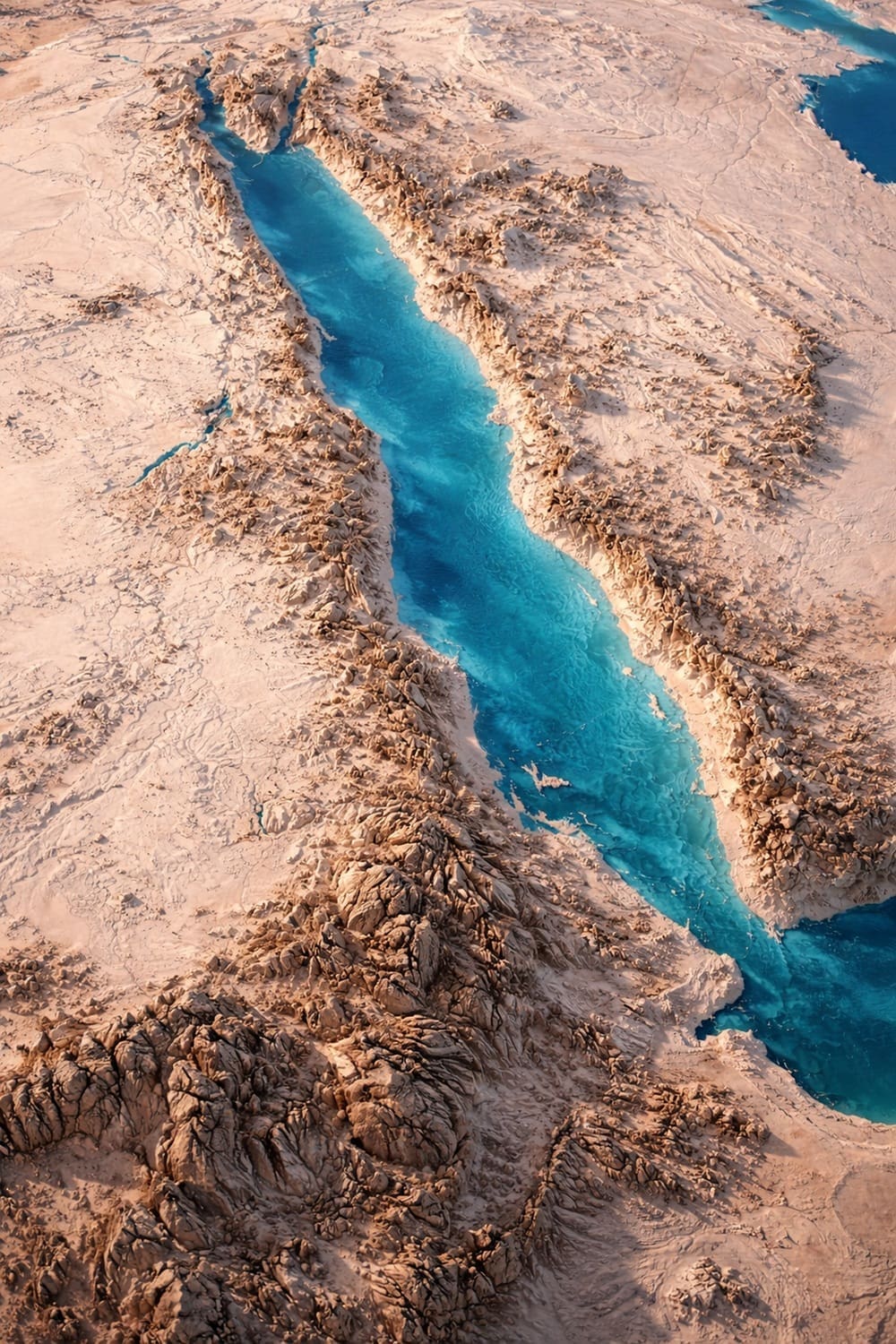
The Red Sea is back. But the old rules that governed this vital global waterway are gone, replaced by a volatile and crowded landscape of both old and new actors. The region’s future is no longer being decided by the distant chess moves of great powers; it is being shaped, right now, by the assertive and competing interests of regional middle powers. Middle Eastern countries (MECs), such as the United Arab Emirates, Saudi Arabia, Türkiye, and Qatar are not waiting for permission. They are actively rewriting the security and political map of the Red Sea and the Horn of Africa (HoA) with a mix of money, diplomacy, and direct military and other forms of intervention. At the same time, the HoA is no longer a passive recipient of MECs’ engagement. Its governments, elites, and local actors have learned to navigate and exploit MECs’ ambitions, using external competition to bolster domestic legitimacy, attract investment, and diversify partnerships.
A New Approach: Breaking the Silos, Aligning Visions
To understand this critical corridor, we must discard the old, one-sided analytical lens. This book provides the first comprehensive analysis that breaks down the silos between MECs and the HoA. It argues that it is impossible to understand the region’s trajectory by looking at one side of the water in isolation. By bringing perspectives from the Gulf into direct conversation with those from the Horn, this volume critically examines the interactions between the MECs and the HoA. It seeks to align visions and identify concrete steps toward realizing the vision of a Red Sea that, though divided by waters, is united by opportunities.
Core Drivers of the New Scramble
A New Geopolitical Game: The security boundaries have dissolved. Ideological and political fragmentation among MECs has turned the HoA into a proxy battleground, exploiting weak institutions for state-on-state competition. The collapse of states like Yemen and the war in Sudan are not isolated tragedies, rising tension between Ethiopia and Eritrea, their consequences, as seen in the Houthi attacks, and shifting alliances now pose a direct and tangible threat to global shipping and security.
Economics as Statecraft: This is not just about resources; it is about national survival. Water, food, and energy security form a strategic nexus that shapes policy on both shores of the Red Sea. From the GERD flashpoint to the Gulf’s structural dependence on desalinated water and land, these pressures elevate resource security to a central national and foreign policy priority. Combined with climate change, they drive extensive investments within and into the Horn’s transboundary basins, agricultural land, and energy corridors as governments seek to externalize or outsource production. Port investments are not merely commercial ventures but tools to control supply chains and project geopolitical clout. The strategic map is further complicated by Israel’s latest recognition of Somaliland; 2 The Red Sea: Divided by Water, United by Opportunities by exploring formal ties with Hargeisa, Israel seeks to secure its maritime flank against Houthi threats, effectively turning Somaliland into a pivotal node in the new Red Sea security architecture.
The Human Dimension: People are caught in the middle of this contest. The two sides of the Sea share the same migratory, religious, and cultural legacies. The Red Sea is the world’s busiest, most dangerous, but least reported migration route. This has given rise to the “militarization of migration”, where vulnerable people are exploited and forced to participate as combatants. Simultaneously, soft power, through schools and religious ideologies, is used as a tool to deepen influence and shape societies from the ground up.
This e-book, which offers forward-looking, actionable recommendations, is a sober look at a major shift in how power works. In this crowded and volatile sea, the next major conflict may be only a single miscalculation away.
This E-book is co-published by the Middle East Council on Global Affairs, the Mediterranean Platform, and the Pan-African Agenda Institute.
DISCLAIMERS: The content of this book was developed when the Mediterranean Platform operated under the name LUISS Mediterranean Platform. Any references reflect the name in use at the time of writing. The opinions expressed in this book are those of the authors and do not necessarily reflect the views of the Middle East Council on Global Affairs, the Mediterranean Platform, and the Pan-African Agenda.
Related
Publications
view more
Relations between Algeria and Morocco are passing through a critical phase of instability, fueled by deep-seated distrust, historical grievances, skewed perceptions of escalation, a rapid arms race, and competing regional…
learn more
This report examines the rising strategic significance of economic corridors, with a particular focus on the Gulf region’s growing role in shaping their development.
learn more
In the wake of the Syrian conflict, Algeria has emerged as an unexpected host for tens of thousands of Syrian nationals. While it has not positioned itself as a major…
learn more