


Central Asia in an Emerging International Order:
Shifting Strategic Partnerships with the GCC
Analysis Paper, September 2026

Editor-in-Chief, Arab Eurasian Studies Center
Key Takeaways
Rather than seeing a transfer of dominance from Russia to China, Central Asia is moving toward multipolarity: While Russia retains extensive security, economic, and human ties, China has become a structural component of the regional economy through trade, energy, and infrastructure. The deeper shift is that no single power monopolizes the region, creating greater room for maneuver for the Central Asian republics (C5) through multi-directional diplomacy.
The Gulf’s interest in Central Asia lies in investing capital and expertise without the geopolitical burdens affecting other powers: The GCC states are geographically distant from Central Asia and do not have a colonial legacy in the region; nor are they required to choose between competing powers. This allows them to pursue investments and partnerships without demanding political alignment.
Saudi Arabia, the UAE and Qatar should coordinate to target their investments: Greater coordination would help transform potential competition into functional complementarity and strengthen the overall Gulf presence in the region.
Gulf strategy in Central Asia requires differentiated engagement with the five republics, rather than a uniform approach: The region’s business environments pose challenges that differ by country. Gulf investors must also account for the risk of secondary sanctions arising from ties with Russian entities, necessitating careful partner vetting and transaction structuring.
Introduction
Central Asia is a vital strategic bridge connecting the Arab Gulf states to the wider Eurasian sphere. The region is re-emerging as a key arena of geopolitical competition and connectivity, driven by several concurrent shifts: the Russian-Ukrainian war, Moscow’s declining ability to monopolize influence across its former Soviet sphere, China’s economic rise, Europe’s search for alternative trade routes and energy sources, and intensifying global competition over energy, uranium, and critical minerals.
Central Asia’s geography further reinforces its strategic importance. Situated between Russia, China, Iran, Afghanistan, and the Caspian Sea, the region connects East Asia, Europe, South Asia, and the Arab world. Its five republics are home to approximately 84 million people and possess significant energy and mineral resources. Kazakhstan and Uzbekistan together account for more than half of global uranium production, while the Middle Corridor—a transportation network linking China and Europe via the Caspian Sea—is gaining importance as an alternative trade route.1
Recent developments do not signal Russia’s withdrawal from Central Asia, nor Beijing’s replacement of Moscow as the dominant power. Russia retains an extensive network of security, economic, and human ties across the region, while China has become a structural component of its economy through trade, energy, infrastructure, and the Belt and Road Initiative. Meanwhile, Türkiye, the European Union, the United States, India, Iran, Japan, and South Korea have expanded their presence. The Central Asian republics have, to varying degrees, pursued multi-vector foreign policies to diversify their partnerships and avoid dependence on any single power. The most significant transformation, therefore, is not a shift in dominance from one power to another, but rather the declining ability of any single actor to monopolize the region, and the corresponding expansion of the Central Asian states’ room for geopolitical maneuver.
This gives Arab Gulf states an opportunity to move from scattered investments toward a strategic partnership with Central Asia. The needs of these two blocs are largely complementary: the Central Asian states need capital, technology, infrastructure, and new access points to global markets, while Gulf states are seeking to diversify their investments and food sources while strengthening their footing in renewable energy, critical minerals, supply chains, and Eurasian corridors. Saudi Arabia, the United Arab Emirates, and Qatar have each already begun building a tangible presence, particularly in Uzbekistan and Kazakhstan, in the energy, infrastructure, logistics, and technology sectors. Launched in 2022, the strategic dialogue between the Gulf Cooperation Council (GCC) and Central Asian states also provides an institutional framework on which to build.
The Gulf’s comparative advantage lies in its ability to provide capital, expertise, and access to markets without imposing a significant geopolitical cost. The Gulf states do not border Central Asia, have no modern colonial legacy in the region, and do not require their partners to choose between Russia, China, and the West. This paper therefore proposes transforming the Gulf’s existing presence into a more integrated regional strategy spanning energy, critical minerals, food security, railways, and logistics hubs. This strategy would also seek to connect Gulf ports with Central Asia and the Caspian Sea, positioning the Gulf as Central Asia’s southern gateway to global markets, while making the region the Gulf’s gateway to the rest of Eurasia.
The paper also recommends establishing a GCC consortium—led by Saudi Arabia, the UAE, and Qatar—for projects of high geostrategic value. Such a consortium would be able to build flexible partnerships with major powers according to the requirements of each project, offering a link between the Gulf interests in Central Asia and the South Caucasus. Building this network would give the Gulf states greater geo-economic depth and additional deterrence and leverage vis-à-vis Iran, while keeping the door open to incorporating Tehran itself into a system of interests and corridors were it to commit to regional peace and stability.
The ultimate objective extends beyond increasing investment and trade. Rather, it amounts to transforming the Gulf’s presence at the heart of Eurasia into a new source of power, influence, and strategic agency in shaping the emerging international order.
Central Asia Returns to the Center of Geopolitics
Simply looking at maps can help explain much about international politics. A map of Central Asia reveals a vast landmass at the heart of the Eurasian continent and the intersection of four major arenas: the Russian and European spheres to the west and north, China and East Asia to the east, South Asia to the south, and the Arab world to the southwest. For millennia, this position has made it a point of connection and competition between different political, economic, and civilizational worlds.
Figure 1: Location of the Central Asian countries on the world map

It is therefore unsurprising that in the 19th century the region became the stage for the “Great Game” between the Russian and British empires.
Centuries earlier, the region had formed one of the most important sections of the Silk Road connecting East and West, as well as an arena for successive powers and empires. It was a center for rivalry between the pre-Islamic Sasanian and Byzantine empires,2 and later a theater for the conflicts waged by Arabs during the Umayyad and Abbasid periods against local powers in Transoxiana,3 eventually extending to rivalry with China’s Tang dynasty over influence in the region.4
Following the collapse of the Russian Empire and the Bolsheviks’ rise to power in October 1917, Soviet Russia was forced to relinquish the Baltic states, Finland, Poland, and western Ukraine under the Treaty of Brest-Litovsk. Yet between 1918 and 1924, it fought to retain control of Central Asia, even though the territories it had relinquished in Ukraine were culturally closer to Russia. This reflected the Bolsheviks’ recognition of the region’s geopolitical importance. Britain responded by supporting an insurgency in Central Asia known as the “Basmachi”5 movement, which brought together a range of local, nationalist, and Islamic currents seeking to remove the region, then referred to as “Western Turkestan,” from Soviet Russian control.6 Yet the region would remain under Soviet control throughout World War II and the Cold War. The Soviet-Afghan War from 1979-1989 dragged in a new superpower the other side of the world—the U.S.—further underscoring the region’s geopolitical importance at the global level.
After the dissolution of the Soviet Union in 1991, Central Asia briefly receded from international attention, being largely viewed through the lens of maintaining security and stability. This manifested in a security treaty signed in 1992 at Russia’s initiative, which later developed into the Collective Security Treaty Organization (CSTO)7, followed by the Shanghai Cooperation Organization (SCO),8 formally established in 2001 with the participation of China, Russia, Kazakhstan, Kyrgyzstan, Tajikistan, and Uzbekistan. Initially, the SCO focused on strengthening trust and security, while combating terrorism, separatism, and extremism, before expanding its political and economic scope.
Today, Central Asia comprises five republics, commonly referred to as the C5. Four have predominantly Turkic populations and languages: Kazakhstan, Uzbekistan, Turkmenistan, and Kyrgyzstan. The fifth, Tajikistan, has a predominantly Persian linguistic and cultural heritage.9 Together, they form a contiguous geographical bloc roughly comparable in area to the EU, but with a significantly lower population density. The overwhelming majority of the region’s population shares with the Arab Gulf states a common cultural and religious affiliation with Islam.
The region’s strategic position has begun to transform more rapidly in recent years. Following Russia’s invasion of Ukraine in 2022 and escalating tensions with the West—which imposed unprecedented sanctions against Moscow—alongside China’s continued economic and geopolitical rise, new incentives emerged to develop trade routes that bypass Russian territory. These developments increased the strategic importance of the Caspian Sea and the Middle Corridor, while also drawing greater global attention to the region’s strategic resources, including oil, gas, uranium, and critical minerals. These geopolitical shifts have, in turn, reinforced Central Asia’s geo-economic importance. Yet the region has not been able to capitalize fully on its vast natural resources. Under different circumstances and through different trajectories, these resources could provide the basis for an economic transformation somewhat comparable to that experienced by the Arab Gulf states, particularly if Central Asian countries succeed in converting resource wealth into infrastructure, capital, investment, and broader economic diversification.
Central Asia possesses substantial energy resources and significant reserves of strategic minerals. According to the latest available data, the combined proven oil reserves of Kazakhstan, Turkmenistan, and Uzbekistan stand at approximately 31.2 billion barrels, with Kazakhstan alone accounting for around 30 billion barrels. The three countries hold approximately 550 trillion cubic feet of proven natural gas reserves, including 400 trillion in Turkmenistan, 85 trillion in Kazakhstan, and 65 trillion in Uzbekistan.10
The region’s mineral wealth is no less significant than its oil and gas resources. Central Asia has reserves of 22 critical materials—notably in Kazakhstan, which has the capacity to export 21 of the 34 materials on the EU’s list of critical raw materials. Kyrgyzstan holds the world’s third-largest antimony reserves, while Uzbekistan ranks 11th globally in copper reserves, alongside significant lithium and molybdenum resources.
The region’s geological potential may exceed what has been exploited to date, partly because geological exploration has remained limited since independence, some reserve-reporting systems and geological datasets are outdated, and recent, reliable data on certain resources remain insufficient. These limitations continue to constrain efforts to fully assess Central Asia’s mineral wealth and attract investment into the sector.
These resources are complemented by Central Asia’s enormous uranium wealth. Kazakhstan alone holds around 14% of the world’s recoverable uranium, and has become the world’s largest uranium producer.11 By 2025, its production had reached approximately 25,800 tons, accounting for nearly 40% of global output.12 Uzbekistan is also among the world’s major producers. This gives Central Asia considerable weight nuclear fuel supply chains, alongside its coal and agricultural resources.
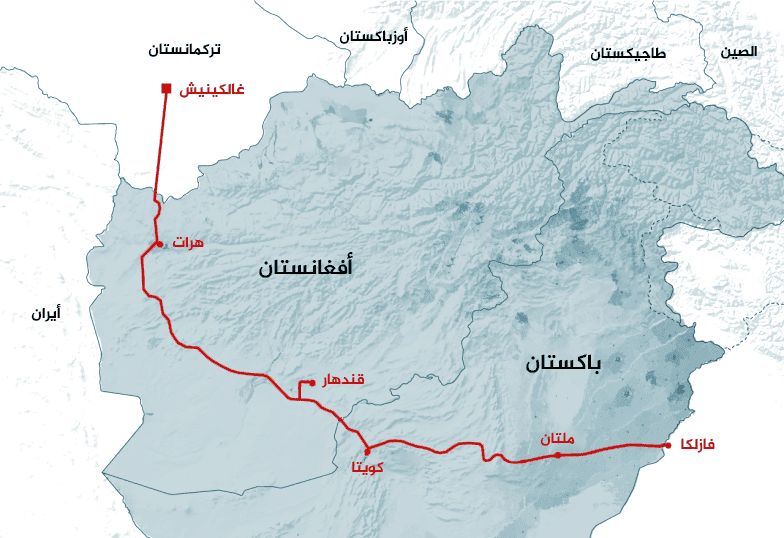
This combination of strategic location and abundant natural resources gives the region the potential to serve as an intermediary linking trade routes and oil and gas pipelines between Europe and Asia. An existing network of energy pipelines already spans the region, while several promising projects are under development. Among the most prominent is the Turkmenistan-Afghanistan-Pakistan-India (TAPI) gas pipeline, which extends approximately 1,800 kilometers and has a planned capacity of around 33 billion cubic meters (bcm) annually, providing Turkmenistan with an outlet for exports to South Asia.13
The viability of this project remains largely dependent on developments in Afghanistan, through which most of the proposed pipeline would pass. Since the Taliban returned to power in August 2021 after two decades of conflict following a U.S.-led invasion, the Afghan government has not received broad international recognition, while the country continues to face significant security and economic challenges that make infrastructure projects crossing its territory high-risk investments. Afghanistan therefore represents both a potential geographical bridge connecting Central Asia with South Asia and Pakistani ports, and a major vulnerability for any land connectivity project that passes through its territory. This is a factor Gulf states should consider when assessing the feasibility of future energy and transport projects involving Afghanistan.
Figure 2: The TAPI pipeline linking Turkmenistan, Afghanistan, Pakistan, and India
To the east, the Central Asia-China gas pipeline network has become one of the most important channels for transporting gas from the region to the Chinese market. China is developing the fourth pipeline, known as Line D, to run from Turkmenistan through Uzbekistan, Tajikistan, and Kyrgyzstan to China. It will be approximately 966 kilometers long, around 840 kilometers of which lie within Central Asia, with a capacity of 30 bcm per year.14 Its completion would raise the total capacity of the Central Asia-China gas pipeline network to approximately 85 bcm per year, strengthening the economic relationship between Central Asia and the Chinese market and giving Beijing an advanced position in the region’s energy sector.
The most important transformation, however, concerns transcontinental trade routes. Central Asia today represents one of the most important overland links between China and Europe. Investment here has become increasingly important since the outbreak of the Russian-Ukrainian war, as geopolitical risks associated with the Northern Corridor connecting China to Europe through Kazakhstan, Russia, and Belarus have increased. European sanctions on Russia have contributed to a decline in trade along this route.15
Figure 3: Illustrative map of the Northern Corridor (China-Kazakhstan-Russia-Belarus-Poland-Germany) and the Middle Corridor, which has become the main route between China and Europe (China-Kazakhstan-Azerbaijan-Georgia-Türkiye-Bulgaria)

This has accelerated the development of the “Middle Corridor,” also known as the Trans-Caspian International Transport Route (TITR), which connects China to Europe through Kazakhstan, the Caspian Sea, Azerbaijan, Georgia, and Türkiye—without passing through Russian territory.16 By the end of 2025, the corridor was no longer merely an alternative route created by the war, but had become a strategic project attracting growing international investment. Total freight transported through the Middle Corridor reached approximately 4.5 million tons in 2024, while freight transported through the ports of Kazakhstan and Azerbaijan located along the TITR reached approximately 3.3 million tons in the same year, an increase of 21% over 2023. Container traffic increased by 176% to reach 56,500 twenty-foot equivalent units.17 The EU and its partners have mobilized investment commitments worth €10 billion to develop sustainable transport networks in Central Asia, with the aim of reducing the transit time between Europe and Central Asia via the Trans-Caspian corridor to 15 days or less.18 The World Bank estimates that completing infrastructure projects and improving logistics services, digitization, and coordination among the countries along the route could halve transport times and triple trade flows through the corridor by 2030,19 further strengthening Central Asia’s position as a key hub in future trade routes between East Asia and Europe.
The region’s importance extends beyond its role as a trade corridor, due to developments elsewhere in the world. Africa’s Sahel region, which contains significant uranium resources, has experienced prolonged political and security instability, particularly following the military coup in Niger in mid-2023. Decades-old oil and gas links between Europe and Russia have also deteriorated sharply. As Europe seeks new sources and supply routes, while China looks to diversify its access to Western markets, Central Asia has emerged as part of the response to both challenges.
The region is also at the center of global competition over the materials considered essential to the transition toward alternative and renewable energy. The EU is seeking to strengthen its ties with Central Asia through its Global Gateway strategy, launched in 2021 to mobilize investment in transport, energy, digital connectivity, and other sectors. The strategy initially aimed to mobilize up to €300 billion in global investments between 2021 and 2027. In October 2025, the EU announced that it had reached this target and raised its ambition to €400 billion by 2027.20 Central Asia has emerged as an important region within this strategy.21
Yet this opportunity entails a major challenge. As a result of the region’s historical economic and security dependence on Russia, and its leaders’ conservative approach to maintaining balance and avoiding antagonizing powerful neighbors, Central Asia faces the challenge of diversifying its partnerships and using international competition to attract investment and technology in order to develop its infrastructure—without becoming merely a source of raw materials and a transit route serving major powers. The worst-case scenario would be that intensifying competition over the region turns into a struggle for influence that threatens its stability.
Thus, contemporary competition recalls the logic of the “Great Game,” but with the tools of the 21st century—investment, railways, dry ports, oil and gas pipelines, critical minerals, and supply chains—rather than armies alone. The geographical position that historically made Central Asia a buffer zone between empires has today become a potential source of strength, while the resources that remained trapped by geography for long periods are now in demand in the emerging global economy. The region is no longer merely a space situated between major powers, but one where competition could shape trade routes, energy flows, and influence across Eurasia in the coming decades.
The New Scramble for Central Asia
For years after gaining independence following the dissolution of the Soviet Union in late 1991, the five Central Asian countries remained relatively removed from broader international competition. They continued to be viewed largely as part of Russia’s traditional sphere of influence, alongside a gradually expanding Chinese presence. Unlike the regional frameworks that brought them together with Russia and China, their relations with other major powers were not yet highly developed on the institutional and economic levels.
The first major shift came after the September 11, 2001, attacks and the subsequent U.S. war on Afghanistan, when Washington established a military presence in Central Asia to support its operations there. This included a presence at the Karshi-Khanabad base in Uzbekistan, which U.S. forces used from October 2001 until their withdrawal in November 2005,22 and at Manas in Kyrgyzstan, where American forces deployed in December 2001. The latter was renamed the “Manas Transit Center” in 2009, before Washington ended its military presence there and transferred the facility to the Kyrgyz authorities in 2014.23
The second, and ultimately more consequential, shift came with Russia’s annexation of Crimea in 2014. Amid a wave of Russian nationalist sentiment, Liberal Democratic Party of Russia leader Vladimir Zhirinovsky made statements questioning Kazakh national identity, and called for the incorporation of Kazakhstan and Kyrgyzstan into the Russian Federation. That same year, President Vladimir Putin raised sensitivities in Kazakhstan when he questioned the existence of a Kazakh state prior to the establishment of the modern republic.24 His remarks brought renewed attention to concerns across the region about the implications of Russian nationalism for the former Soviet republics, several of which have significant Russian-speaking populations.25
Against this backdrop, the Central Asian states began expanding their external relations and seeking new partners. Although this process had begun before 2014, it gained significant momentum in the years that followed and entered a new phase after the outbreak of the Russian-Ukrainian war in 2022. The aim was not to distance themselves from Russia, which remains deeply connected to the region through security, economic, social, and cultural ties, but to reduce dependence on any single power and expand the governments’ room for maneuver.
Japan was among the first powers to recognize the value of engaging with the five republics through a regional framework. It launched the “Central Asia plus Japan” dialogue in 2004,26 followed by South Korea’s establishment of the “Central Asia-Republic of Korea Cooperation Forum” in 2007.27 The EU adopted its first strategy for Central Asia in 2007 and updated it in 2019,28 while the U.S. launched the “Central Asia Five plus the United States” (C5+1)29 format in Samarkand in 2015. The first ministerial meeting of the “India-Central Asia Dialogue” convened in the same city in 2019.30
The circle of external powers engaging with the region through such frameworks expanded further in the following years. In 2020, Beijing launched the “China-Central Asia Foreign Ministers’ Meeting”31 mechanism, before elevating the relationship to the leaders’ level at the first China-Central Asia Summit in Xi’an in 2023.32 Germany held the first “Central Asia plus Germany” summit in Berlin in 2023,33 while Italy held the first “Central Asia plus Italy” summit in Astana in 2025.34 The United Kingdom then launched the “Central Asian Five plus the United Kingdom” (CA5+UK) format at the foreign ministerial level in February 2026.35 The GCC joined this expanding network of institutional frameworks through the “Strategic Dialogue between the GCC and Central Asia,” which held its first ministerial meeting in Riyadh in 2022,36 followed by the first summit between the two sides in Jeddah in 2023.
Yet the proliferation of these initiatives has not diminished Russia’s central role in the region. It remains the power most deeply intertwined with Central Asia in historical, security, economic, and human terms. The Russian language remains widely used across the region, while several Central Asian economies continue to depend on the Russian market and on remittances from millions of migrant workers.37 The Collective Security Treaty Organization remains an important instrument of Russian security influence, while the Eurasian Economic Union (EAEU) represents Moscow’s most significant regional economic framework. Kazakhstan and Kyrgyzstan participate as full members alongside Russia, Belarus, and Armenia, while Uzbekistan holds observer status. Tajikistan and Turkmenistan remain outside the organization.38
The Russian-Ukrainian war, however, has altered the environment in which Moscow operates. Western sanctions and the diversion of significant Russian attention and resources toward the war, alongside the growing sensitivity of Central Asian states to issues of sovereignty and territorial integrity, have made the preservation of Russian influence more challenging. Russia has not disappeared from the region, nor has its longstanding network of relationships with the Central Asian states collapsed. However, its ability to dominate the political and economic space long regarded as its backyard has weakened compared with the past.
China has been the primary beneficiary of this shift. Its growing presence is not simply the result of a vacuum created by the war, but the continuation of an economic trajectory that began years earlier then accelerated with the launch of the Belt and Road Initiative, unveiled by Chinese President Xi Jinping during a 2013 visit to Kazakhstan.39 Since then, Central Asia has become a key component of China’s vision for overland connectivity with Europe and West Asia, alongside Beijing’s expanding purchases of oil and gas and its growing investments in roads, railways, infrastructure, mining, and industry.
China’s geography gives it an advantage over most of its competitors. It shares borders with Kazakhstan, Kyrgyzstan, and Tajikistan, and can reach the other Central Asian states by land. The Chinese market has also become one of the region’s most important destinations for exports of energy and raw materials. Through oil and gas pipelines, railway networks, industrial zones, and projects linked to the Belt and Road Initiative, China’s influence has evolved from a growing economic presence into a structural component of the regional economy.
Beijing has also moved beyond economic engagement to establish a political framework for its relations with the five republics. The foreign ministers’ mechanism launched in 2020, followed by the Xi’an summit in 2023, provided China with a direct platform for engagement with the Central Asian states, outside frameworks in which Russia also participates. This marks one of the most significant shifts in the regional balance: China is no longer simply an economic partner operating within Russia’s traditional sphere of influence, but a power with an independent political and economic channel to the region.
In contrast to Russia’s longstanding influence and China’s growing presence, Türkiye is pursuing a path based on linguistic, cultural, and historical ties. Its engagement has gained a clearer institutional framework through the Organization of Turkic States (OTS), which includes Türkiye, Kazakhstan, Kyrgyzstan, Uzbekistan, and Azerbaijan, while Turkmenistan holds observer status.40 The organization provides Ankara with a regional network stretching from Anatolia through the South Caucasus and the Caspian Sea to the heart of Central Asia, granting it direct influence in transport, trade, energy, and Middle Corridor projects.
The EU, meanwhile, is engaging with Central Asia primarily through trade, investment, technology, energy, critical minerals, and connectivity. The region has gained greater importance in Brussels over the course of the Russian-Ukrainian war, as the bloc seeks transport routes that bypass Russia and diversified sources of energy and raw materials essential to the green transition. This has reinforced the importance of the bloc’s Global Gateway strategic investment plan and investments linked to the Middle Corridor, alongside efforts to deepen direct political relations with the governments of the region.
The U.S. maintains a political, security, and economic presence through the C5+1 format, which has become its primary framework for collective engagement with the five countries. Its focus has increasingly included sovereignty, economic independence, critical minerals, and trade connectivity. While it does not enjoy the same geographical and economic depth as Russia or China, the U.S. presence remains an important element of the external balance for Central Asian governments, particularly as they seek to avoid excessive dependence on either of their two neighboring powers.
India is likewise seeking to expand its presence, but faces a fundamental geographical constraint due to the absence of direct overland connectivity with Central Asia. This makes Iran—notably its port of Chabahar on the Gulf of Oman—and northbound transport corridors particularly important to New Delhi. Alongside its interests in energy, markets, and trade connectivity, India views Central Asia as an extension of its continental security interests, an arena it does not want to see dominated entirely by China and Pakistan.
Iran presents a different case from most other external powers because it shares a direct border with Turkmenistan, while its position makes it one of the shortest potential southern routes for landlocked Central Asian states to reach the Gulf and international waters. Iran also maintains deep cultural and linguistic ties with Tajikistan, the region’s only Persian-speaking state. Since the collapse of the Soviet Union, these ties have provided Tehran with a degree of cultural and political influence that it does not possess in the other Central Asian republics.
Iranian-Tajik relations have, however, gone through periods of severe strain. For years, Dushanbe has accused Tehran of supporting the Islamic Renaissance Party in Tajikistan (IRPT), which the Tajik authorities banned in 2015 and designated as a terrorist organization.41 The crisis escalated when, in the same year, Iran hosted the party’s leader Muhiddin Kabiri at a conference in Tehran, which the Tajik government regarded as direct interference in its internal affairs.42 Relations did however begin to gradually improve during the following years, driven by changes in the regional environment and the two sides’ need for economic and security cooperation.43 This experience reveals the limits of Iran’s soft power in Central Asia: whilst linguistic, religious, and historical ties provide Tehran with important tools, they do not negate these countries’ sensitivities regarding interference in their domestic issues. At the same time, Iran’s geographical location provides a leverage that cannot be ignored, particularly when looking for routes that link Central Asia to the open seas, the Gulf, and Indian markets.
Amid this scramble, the Central Asian republics should not be viewed merely as a stage upon which external powers maneuver. Perhaps the most significant shift over the past three decades has been the development of these states’ own capacity to manage and capitalize on the competition between them. This approach has been particularly associated with Kazakhstan and the concept of “multi-vector foreign policy,”44 but it has, to varying degrees, become a common feature of most countries in the region.
This approach is based on avoiding dependence on any single power: maintaining Russia as a security partner, an important market, and a source of historical and human ties; utilizing China for trade, investment, and infrastructure; opening up to Europe to gain access to technology, markets and alternative routes; strengthening relations with Türkiye to capitalize on cultural and linguistic ties; and maintaining the U.S. as a tool for political balance. All this while simultaneously expanding relations with India, Japan, South Korea, Iran, and the Gulf states.
Consequently, the real shift in Central Asia is not that Russia is withdrawing and being displaced by China: Russia remains present, China is advancing, and other powers are expanding their footholds. The deeper transformation is that it has become harder for any single power to monopolize the region, whilst the Central Asian states themselves have become more able and willing to diversify their partners. It is precisely within this context that the Arab Gulf states can enter the region: not as substitutes for Russia, China, or the West, but as new partners that can capitalize on the multi-vector policy adopted by the Central Asian republics, whilst at the same time offering a model of relations less tied to considerations of hegemony and military conflict.
From Scattered Investments to a Strategic Partnership
The current moment seems more favorable than ever for building meaningful cooperation between the Arab Gulf states and the countries of Central Asia. In addition to their similarities—such as large reserves of natural resources and ancient societies rooted in deep-seated values and traditions—they also share the challenges of reassessing their position within a changing international system, as well as the landscape of their partners and their economic and strategic needs.
The Gulf states are seeking to diversify their economies, investments, partners, and sources of food security, whilst the Central Asian states are seeking to diversify their economies, partners, and access to the wider world. Consequently, the relationship is based on mutual interests and genuine potential for integration rather than on one party’s dependence on the other.
These interests intersect in areas directly linked to the transformations underway in the global economy. Central Asia possesses significant reserves of oil, gas, uranium, and critical minerals, alongside vast potential for solar and wind energy, whilst the Gulf states possess capital and long-standing expertise in managing the energy sector, dealing with international companies and transforming natural resources into value-added industries and investments. The opportunity here is not limited to investment in the extraction of oil, gas, and minerals, but extends to processing, manufacturing, renewable energy, hydrogen, and electricity storage, enabling the Gulf states to establish a foothold within the energy and minerals supply chains, for which global demand is growing.
Added to this is food security, one area that lends the relationship a strategic dimension extending beyond direct commercial investment. Kazakhstan is a major producer and exporter of cereals, particularly wheat and barley, and possesses vast areas for grazing and the production of meat and livestock.45 Meanwhile, Uzbekistan produces large quantities of wheat, vegetables, and fruit, as well as cotton and a variety of other agricultural products.46 Gulf funds and companies can move beyond simply importing these products to investing in agriculture, food processing, storage, transport and cold chains, and linking production areas directly to Gulf markets.47
It is impossible to discuss Gulf investment in agriculture and food security in isolation from the water crisis facing the region. The shared river system of the Central Asian states, based primarily on the Amu Darya and Syr Darya rivers, places the upstream countries (particularly Kyrgyzstan and Tajikistan, which rely on hydroelectric power), in recurrent conflict with agricultural downstream states (notably Uzbekistan, Turkmenistan, and to some degree Kazakhstan) over the timing and volume of water releases.
The intensive use of irrigation water since the Soviet era has led to a sharp decline in the size of the Aral Sea over recent decades, in one of the world’s most significant environmental disasters of the 20th century. Therefore, any serious Gulf strategy for food security in the region needs to incorporate water efficiency, modern irrigation techniques and agricultural wastewater treatment into any investment in agricultural land. Furthermore, Gulf investments may provide an avenue for mediation between upstream and downstream states by aligning their interests through joint projects in agriculture and hydropower, thereby enhancing mutual benefits, raising the cost of conflict, and helping to lay the groundwork for more sustainable settlements regarding water sharing and management.
The area that could take the relationship to a different level is infrastructure and logistics. The Central Asian states are geographically landlocked, whilst the Gulf states possess ports, transport companies and logistics services with a global presence. Consequently, Gulf ports could be linked to transport networks heading north via Iran and Turkmenistan, and from there to Uzbekistan, Kazakhstan, and the Caspian Sea, before connecting to the Central Corridor towards Azerbaijan, Georgia, Türkiye, and Europe. This would not only provide Central Asia with an additional outlet to the Gulf, the Arabian Sea, and the Indian Ocean, but would also give the GCC states a place within the new network of corridors through which trade between Asia and Europe is being re-routed.
This issue takes on even greater significance in light of the vulnerability inherent in relying on a limited number of maritime corridors, as starkly revealed by the U.S. standoff with Iran since February. Shipping through the Strait of Hormuz has been subject to repeated disruptions and attacks, reaffirming that the diversification of trade and energy networks is no longer merely an economic issue, but integral to the Gulf states’ concept of economic security. This does not mean that overland routes across Eurasia can replace the Strait of Hormuz, but they do provide the Gulf states with alternatives and greater room for maneuver in times of crisis.
Both sides have already recognized this potential. In September 2022, the GCC and the Central Asian states launched their strategic dialogue and adopted a joint action plan for 2023–2027, covering political, security, economic, and investment cooperation, as well as people-to-people and business-to-business ties, ahead of the first summit between the two sides in Jeddah in September 2022. This has effectively established an institutional framework, negating the need to build the relationship from scratch.48 Saudi Arabia, the UAE, and Qatar are the most active Gulf states in the region, although each has deployed its own tools across different sectors.
Saudi Arabia has placed a strong emphasis on renewable energy, infrastructure, and long-term investment, with Uzbekistan being the most prominent market. By October 2025, 56 Saudi investment projects with a total value of $27.2 billion49 were underway, involving major Saudi companies including ACWA Power, DataVolt, Roya Investments, Al Muhaidib Group, and others, whilst bilateral trade volume reached $142.4 million in 2024.50 ACWA Power is the most prominent Saudi actor, through its solar and wind energy projects and electricity storage initiatives.51 Yet a comparison between the sheer scale of the projects and the limited volume of bilateral trade reveals the nature of the relationship itself: the Saudi presence in Central Asia has, to date, been more about long-term investment than trade.
Saudi Arabia’s activities are not limited to Uzbekistan. Its cooperation with Kazakhstan is expanding to include renewable energy, infrastructure, agriculture, the pharmaceutical industry, and technology,52 whilst Saudi businesses are also making inroads into Kyrgyzstan and Tajikistan.53 This suggests that Riyadh is beginning to shift its focus from a limited number of projects and markets to a broader approach toward the region.
The UAE it is the most diversified Gulf actor in the region in terms of sectors and instruments. Masdar stands out in the clean energy sector, with an extensive portfolio in Uzbekistan and the development of a one-gigawatt wind power project in the Jambyl region of Kazakhstan, alongside energy storage systems.54 UAE investment in Kazakhstan alone totaled around $1.64 billion in 2025, placing the UAE among the country’s top five investors that year.55
The UAE’s presence extends to logistics and digital infrastructure. Emirati giant DP World is part-developing a multimodal logistics hub near Tashkent, alongside UAE-Kazakh cooperation in data centers and AI.56 This diversity reflects a shift from investing solely in raw materials toward participation in the energy produced by the region, its trade corridors, and the digital infrastructure that underpins its economy.
Qatar’s presence remains less extensive than that of Saudi Arabia and the UAE, but it is growing rapidly, particularly in Kazakhstan and Uzbekistan. In Kazakhstan, Qatari investment rose from around $13 million in 2022 to over $1.1 billion in 2025,57 whilst the value of announced joint investment projects exceeded $20 billion, in energy, agriculture, transport, finance, and technology.58 In Uzbekistan, Qatari cooperation is gradually shifting towards energy, infrastructure, industry, finance, and the digital economy.59
A quick comparison of the three sovereign wealth funds reflects the nature of the instruments each country deploys in this expansion. The Saudi Public Investment Fund (PIF), whose assets under management topped $1.2 trillion by the end of 2025, tends to focus on renewable energy projects and long-term infrastructure, often through operational arms such as ACWA Power.
In the UAE, roles are divided between the large and conservative Abu Dhabi Investment Authority; Mubadala, which combines financial returns with strategic positioning in sectors such as energy and technology; and the Abu Dhabi-based holding company ADQ, which focuses more on domestic assets and infrastructure. This distribution gives Abu Dhabi greater flexibility in selecting the appropriate vehicle for each project. In contrast, the Qatar Investment Authority, with assets estimated at over $600 billion, is increasingly relying on direct partnerships with host governments, as evidenced by the rapid growth of its investments in Kazakhstan. Whilst their sizes and strategies differ, the overall trend is the same: Gulf sovereign wealth funds are transforming from instruments for managing fiscal surpluses into active arms for shaping geo-economic influence in Central Asia.
The following chart provides a brief and approximate overview of the scale of Gulf investment in Central Asia. It should be noted that the figures shown are based on different metrics (cumulative values of projects versus annual investment inflows) and are therefore intended to illustrate relative proportions rather than precise comparisons.
Figure 4: Growth in Qatari investment in Kazakhstan (left) and a rough comparison of the presence of the three Gulf states (right). Various sources; see footnotes.
Yet the significance of these projects lies not only in their financial value, but also in the position that they grant the Gulf states within the Central Asian equation. Russia draws on a long-standing security, economic, and social legacy; China wields immense economic and geographical clout; the EU is seeking access to transport routes, critical minerals, and energy; and Türkiye relies on linguistic and cultural ties. The Gulf states are entering through a different gateway—capital, energy, sovereign wealth funds, infrastructure, ports, logistics, technology, and food security—without any direct link to a military or security structure that would force the countries of the region to reposition themselves politically.
Added to this is a historical and cultural heritage that the other powers lack. It was from the Arabian Peninsula that the Islamic conquests set out, reaching as far as Transoxiana, whilst Mecca and Medina have remained, throughout the centuries, part of the religious and spiritual sphere of the region’s peoples. Furthermore, groups of Muslims from Central Asia migrated to the Hijaz region of Arabia at various points in history, whether for religious reasons or as a result of the upheavals that accompanied Russian expansion and subsequent Soviet rule. Whilst these ties alone are not sufficient to build a strategic partnership, they do grant the Gulf states soft power and a level of acceptance upon which they can build economically and politically.
This historical legacy can be translated into more specific contemporary policy measures, such as facilitating Hajj and Umrah quotas for citizens of the five Central Asian republics, expanding scholarships at Gulf religious and secular universities for students from the region, and deploying the resources of institutions such as the Muslim World League and the Organisation of Islamic Cooperation in religious and cultural exchange programs, as well as supporting centers for Islamic and Arabic studies in these countries. It would also be possible to draw on the expertise of Saudi citizens of Central Asian origin—some of whom are known in the Hijaz as “the Bukharis”60—given their knowledge of local communities and their cultural and linguistic ties, thereby strengthening people-to-people relations between the Gulf states and the peoples of the region.
However, the success of these programs requires due regard for the religious and cultural specificities of Central Asia, the majority of whose Muslim populations have historically adhered to the Hanafi school of jurisprudence and the Maturidi school of theology, alongside a well-established presence of Sufism in religious orders and popular practices. These are not doctrinal choices; rather, they underpin the religious and historical identities of large sections of the region’s population. Consequently, presenting a religious discourse that fails to take this particularity into account, or seeks to replace it with imported doctrinal models, could generate social resistance and reinforce governments’ fears that religious cooperation programs will be turned into tools for sectarian or political polarization.
Russian security and media discourse has fueled these fears, repeatedly linking non-state religious education to jihadist Salafism, drawing on the legacy of the Afghan War, the two Chechen wars, and the activities of armed groups in the North Caucasus and Central Asia.61 This does not mean that security concerns are entirely fabricated; the region has played home to extremist groups. Consequently, building sustainable Gulf influence requires practical and media efforts to dispel the perception that equates the Gulf’s religious presence with extremism, through transparency, coordination with governments, respect for local sects, and a clear separation between religious education and partisan or political mobilization.
In this context, supporting the establishment of Islamic universities and institutes in Central Asia may be more effective and less likely to cause sensitivities than simply sending students abroad. Ideally, these institutions should be managed and taught by scholars, imams, and academics from the region itself, in partnership with reputable Gulf academic institutions, thereby ensuring an understanding of the region’s culture, languages, and sectarian history. Egypt’s influential Al-Azhar University can play an important role in this regard, given its institutional acceptance and historical standing as a representative of a moderate Sunni religious discourse—provided that cooperation is based on training local personnel rather than replacing them with foreign staff.
This includes support for Arabic language institutes, provided that such support is offered as part of a process of reconnecting with the region’s scholarly heritage, rather appearing to aim at supplanting its national languages. Arabic has always been the central language in Islamic scholarship, whilst the local Turkic languages and Tajik Persian were written for centuries using alphabets derived from the Arabic script.62 The Soviet authorities switched these languages to the Latin script in the late 1920s, and then to the Cyrillic script in the late 1930s and early 1940s,63 amid linguistic and political shifts that weakened the connection of subsequent generations to a significant part of their written heritage.
The religious and institutional vacuum that followed the Soviet era, coupled with the weakness of local institutions in the 1990s, helped pave the way for a variety of religious missions, most prominently Evangelical and Pentecostal groups. This is not so much a matter of freedom of belief—which must be respected—as one of cross-border religious activities that may at times overlap with cultural and political projects. The possibility remains that this may also be the case with certain strands of political Islam.
Relative legal liberalization, English-language programs, the internet, youth camps, social support networks, and the development of local church leadership have helped to make Kyrgyz capital Bishkek a regional hub for religious missions. This phenomenon, coupled with the growing link between Islam and national identity, prompted the authorities to tighten laws on registration and proselytization from 2008 onwards, culminating in further restrictions introduced in 2025.64
Kazakhstan has also seen a growing evangelical movement since independence, including amongst some Kazakhs and Uighurs.65 By contrast, Uzbekistan, Tajikistan, and Turkmenistan have imposed stricter restrictions on the registration of religious groups, proselytizing, the distribution of printed material, and unauthorized teaching. Christian communities comprising local converts do exist in these countries, but government censorship and family and social pressures drive some of their activities underground, meaning that figures on their size are limited and difficult to verify independently.66
Consequently, religious and cultural support from the Gulf states—through the construction of mosques, institutes, and universities, the teaching of Arabic, the training of imams, and cooperation with Al-Azhar and local institutions—can become a source of influential soft power, provided that it is not presented as a project to alter the sectarian structure of societies or to compete with the state in the religious sphere. While these tools may seem limited compared to the scale of investment in energy, transport, and infrastructure, in the long term they build a network of personal and institutional relationships, enhance popular acceptance of the Gulf presence, and reinforce the historical Islamic identity of the region’s peoples, characterized by diversity, tolerance, and the ability to coexist with their multi-religious and multi-ethnic surroundings.
The importance of this advantage is particularly evident in light of the dilemma facing the countries of Central Asia. So far, they have succeeded in building a network of balances that allows them to engage with the world without clashing with the major powers: maintaining their historic relationship with Russia, benefiting from China, engaging with the U.S. and Europe, and developing ties with Türkiye, India, Japan, South Korea, Iran, and the Arab world. However, as the region’s strategic value increases, so do the pressures that may in future force its governments to choose between competing powers.
At the same time, the region’s governments cannot rely solely on a policy of external balance. Population growth, a high proportion of young people, and the need to create jobs, improve living standards, and modernize infrastructure require them to translate international openness into tangible economic results. Furthermore, the heavy reliance of some countries in the region on remittances from migrant workers, particularly those working in Russia, represents a point of vulnerability in the face of any major economic or political upheaval. Consequently, the success of a multi-partner policy will not be measured by the number of summits and diplomatic forums, but by its ability to translate this engagement into factories, projects, energy, roads, jobs, and a genuine improvement in people’s standards of living.
Consequently, the Gulf states could become a different kind of partner. They do not border Central Asia geographically, have no recent colonial history there, do not compete with its countries for territory, and do not need to demand that they choose between Russia, China, and the West. On the other hand, they possess capital, sovereign wealth funds, expertise in wealth management, energy, infrastructure, ports, logistics, and markets, as well as Islamic and historical ties. They can thus offer what the countries of the region desperately need: substantial investment without a high geopolitical cost.
The next phase therefore requires a shift from successful but fragmented Gulf investments toward a more integrated Gulf strategy towards Central Asia. The institutional framework already exists in the Strategic Dialogue and the Joint Action Plan 2023–2027. What both sides need next is to expand its role to include governments, sovereign wealth funds and the private sector; building a Gulf investment network in minerals, energy, and food security; increasing engagement in transport corridors, railways, and logistics hubs; developing links between Gulf ports and Central Asia and the Caspian Sea; and increasing air travel and educational, cultural, and technological exchanges.
Ultimately, the goal is greater than simply increasing the volume of trade or the number of projects. The real opportunity lies in the Gulf becoming Central Asia’s southern gateway to global markets, and Central Asia becoming the Gulf’s gateway to the heart of Eurasia. At that point, the relationship can shift from investments seeking returns to a strategic partnership that grants both parties a more prominent position in the international system currently taking shape.
The Gulf Strategy in Central Asia: Risks and Challenges
As the Gulf presence in Central Asia expands, a range of risks are emerging, not solely linked to international competition for influence in the region, but also to the nature of the domestic environment in these countries and that of the Gulf presence itself. On the political front, some Central Asian republics continue to face sensitive issues regarding internal stability and the transfer of power. In January 2022, Kazakhstan witnessed widespread unrest that prompted the government to request the intervention of CSTO forces to restore security. Succession issues in Tajikistan and Turkmenistan—where power is concentrated in the hands of two long-serving presidents—remain a source of uncertainty in the long term. Any major Gulf investment in these countries needs to price in these risks accurately, rather than treating the region as a single, homogeneous bloc in terms of stability.
On the economic front, Central Asian business environments continue to suffer from a lack of transparency, complex bureaucratic procedures, and varying levels of investment protection and contract enforcement, alongside the relative dominance of state-owned enterprises in strategic sectors. Furthermore, any commercial or financial entanglement with Russian entities, whether through supply chains or joint ownership in certain projects, carries risks relating to secondary Western sanctions, which requires Gulf investors to exercise particular care in vetting partners and structuring deals.
Added to this is the risk of competition amongst the Gulf states themselves for the same markets and projects in the region, which could weaken their collective negotiating position if it devolves into separate bidding wars rather than being mitigated by coordination. This gives added significance to the concept of a Gulf consortium, as proposed above, as a means of transforming potential competition into functional integration amongst the three states.
Conclusion
For the Arab Gulf states, the question is no longer whether Central Asia merits attention, but how their current presence there can be integrated into a broader strategy to diversify sources of power and influence. The region’s location between Russia, China, Europe, and South Asia, its reserves of energy, uranium, critical minerals, and agricultural resources, and the trade routes and corridors that pass through it, mean that investment there is directly linked to the Gulf’s standing within a nascent international order.
The next step could be the formation of a Gulf consortium led by Saudi Arabia, the UAE, and Qatar, not with the aim of merging the three countries’ investments or eliminating their natural competition, but to coordinate their participation in projects of high geostrategic value whose costs or risks would be difficult for a single country to bear. This consortium could pool capital, sovereign wealth funds, and Gulf companies, then build flexible partnerships around each project with other outside actors, depending on the sector and the expertise required.
The timeline for this strategy can be organized into three overlapping phases. In the short term (one to two years), the Gulf states need to expand the scope of the strategic dialogue to include a permanent track for the private sector and sovereign wealth funds alongside the government track, and to launch the consortium’s first pilot projects in a specific sector, such as critical minerals or logistics. In the medium term (three to five years), the aim is to link Gulf ports to Eurasian transport networks through bilateral and multilateral transport and transit agreements with Iran, Turkmenistan, and Azerbaijan, and to build logistics centers and joint free trade zones within Central Asia itself. In the long term (beyond five years), the strategy should be geared toward linking this network to the South Caucasus and consolidating the Gulf’s position as a key player in defining the rules and corridors for trade and energy across Eurasia, rather than merely acting as an external investor or financier.
In this way, the Gulf shifts from the role of financier or investor in individual projects to designing projects and bringing together partners in the sectors of critical minerals, nuclear and renewable energy, railways, dry ports, food processing, and technology. This could grant the Gulf states a more influential position in shaping the major projects that will link Central Asia to global markets over the coming decades.
The scope of this strategy should not be limited to the five Central Asian republics. Rather, it could be viewed in the future within a broader geo-economic sphere encompassing the South Caucasus, given its role as a crucial link between Central Asia, the Caspian Sea, Türkiye, and Europe, as well as for its direct link to Iranian interests and national security. Azerbaijan, Georgia, and Armenia lie at the intersection of Russian, Turkish, Iranian, and European interests, and the region is traversed by energy and trade routes and corridors linking Central Asia to Western markets. Therefore, the question of how to integrate the South Caucasus into a broader Gulf strategy toward Eurasia merits a separate study, particularly if the aim is to build an interconnected system stretching from the Gulf to Central Asia via the Caspian Sea and the South Caucasus.
Furthermore, this system takes on added significance in relation to Iran. The fact that the Gulf states have investments, interests, and long-term partnerships in Central Asia and the South Caucasus, and are linked to energy, trade, transport, and port networks, affords them geo-economic depth and an additional deterrent against Tehran. Iran has direct interests in the South Caucasus and Central Asia, and is affected by the balances of power and the corridors passing through these regions. Consequently, a coordinated and influential Gulf presence in this arena would broaden the range of tools available to the Gulf states and makes their ability to counter Iranian pressure more flexible than relying on military balances or relations with major international powers.
The aim is to build a deterrent capability through interests and alternatives. By controlling roads, transport routes, and partnerships, the Gulf states can leverage the weight of these investments should Tehran revert to a policy of pressure or threaten regional security. Such a capability would raise the cost of escalation for Iran and give the Gulf states an additional bargaining chip to ensure Tehran’s commitment to any future framework agreement on regional peace and stability.
At the same time, this framework must remain open to Iran itself, providing the Islamic Republic demonstrates its commitment to such an agreement. Its geographical location makes it a vital land bridge between the Gulf and Central Asia, whilst its interests in the Caspian Sea and the South Caucasus give it a natural place within a broader Eurasian economic network. This could facilitate a gradual move from a clash to an interweaving of interests, so that the cost of returning to conflict rises for all parties, and a network of interests is formed that stretches from both shores of the Gulf through Iran to Central Asia, the Caspian Sea, the South Caucasus, and Türkiye.
In this sense, deterring Iran is not incompatible with integrating it into the system later on. A sustainable partnership requires a balance that prevents any party from using its geographical position or military capabilities to impose its will on others. If the Gulf states succeed in building this economic and strategic depth to the north, they will simultaneously acquire leverage to exert pressure when necessary, and incentives to offer when cooperation is possible.
As such, the Gulf states’ focus on Central Asia goes beyond the search for new investment opportunities. In an international system whose balance of power is being reshaped, a country’s standing will not be determined solely by its oil reserves and capital, but by its position within global networks of critical energy, minerals, food, technology, transport corridors, and supply chains. If the Gulf states can channel their financial capabilities and balanced relations with the major powers into a joint venture in Central Asia, then gradually link it to the South Caucasus, they will not only secure a foothold at the heart of Eurasia, but also add to their traditional strengths a new source of influence, deterrence, and clout within the emerging global order.