

Asia and the Iran Conflict:
Energy Vulnerability and the Imperative for Action
Situation Assessment, March 2026
Introduction
The joint U.S.-Israeli assault on Iran that began on February 28, 2026, has triggered one of the Gulf’s most dangerous crises in decades. For energy-importing countries in Asia, the conflict is not a distant war; it is a direct threat to their security. East Asian powers import roughly 60% of their oil from the Middle East, and risks to global energy supply chains are rising significantly as the war escalates and expands.
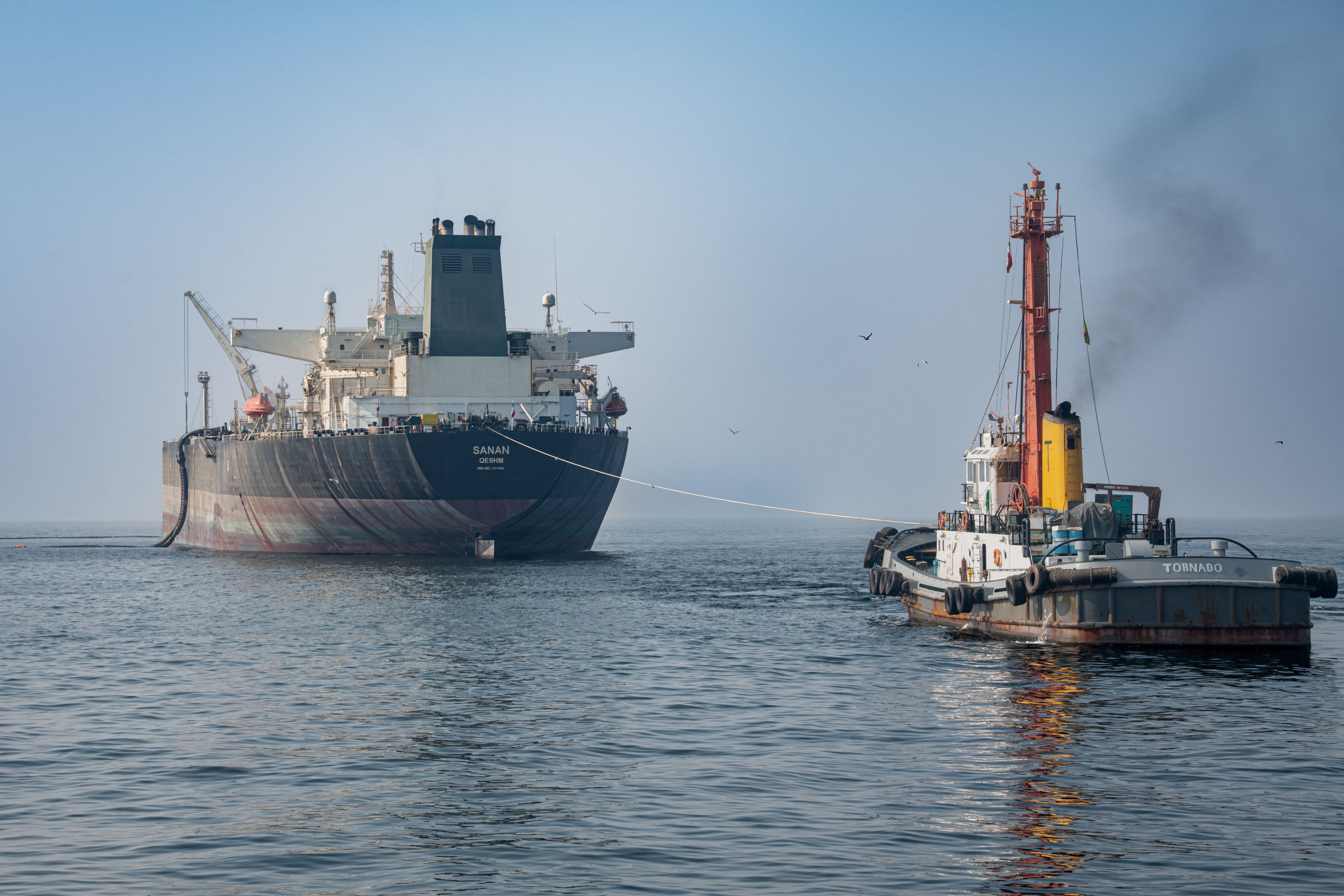
Two developments, in particular, have underscored these risks. First, the Iranian Revolutionary Guard Corps’ (IRGC) move to block the Strait of Hormuz has virtually halted the passage of one-fifth of global oil and liquified natural gas (LNG) trade. Second, disruptions to the Gulf’s energy production capabilities resulting from Iranian attacks on key energy facilities. Across the Gulf, major energy companies were forced to declare force majeure, including QatarEnergy, the Bahrain Petroleum Company (BAPCO), and the Kuwait Petroleum Corporation (KPC). The UAE’s energy giant, the Abu Dhabi National Oil Company (ADNOC), also ceased production at the Ruwais refinery, the UAE’s largest oil refinery, following attacks on critical infrastructure. This dual shock has rattled global markets and left Asian importers seeking alternatives.
Despite their heavy reliance on Middle Eastern energy, however, Asian countries have historically played only a limited role in the region’s security architecture. Geographic distance, limited power projection capabilities, and the longstanding dominance of the United States as the region’s primary defense partner have meant that Asian states function largely as economic actors rather than security providers. This paper analyzes Asia’s response to the ongoing conflict and argues that although Asian states lack direct leverage to shape political outcomes in the Middle East, their economic exposure demands a more assertive stance.
China’s Vocal Opposition and Limited Options
Beijing has emerged as Asia’s most vocal critic of the U.S.-Israeli offensive in Iran. In addressing the assassination of Supreme Leader Ali Khamenei, Chinese Foreign Minister Wang Yi condemned the “blatant killing of a sovereign leader” as “unacceptable.” Foreign Ministry spokesperson Mao Ning echoed this sentiment shortly after the operation’s launch, stating China “firmly opposes” the use of force against sovereign nations and demanded an immediate cessation of hostilities.
Beijing’s response reflects several overlapping geopolitical and geoeconomic considerations. China is Iran’s largest trading partner, and the Comprehensive Strategic Partnership signed in 2021 positioned Iran as a component of China’s Belt and Road Initiative (BRI) through the China-Central Asia-West Asia Economic Corridor. Despite massive economic investments and deep political ties, however, Beijing was unable to shield Tehran from either the 2025 or 2026 U.S.-Israel attacks, exposing the limits of its cautious approach to regional security.
While avoiding direct intervention, Beijing has mobilized to protect its nationals by arranging the evacuation of more than 3,000 Chinese citizens from Iran. At the same time, prolonged disruptions in the Strait of Hormuz pose a direct threat to China’s energy security, a vulnerability compounded by Qatar’s LNG shutdown. China is the world’s largest LNG importer, with Qatar and the UAE supplying approximately 30% of its total LNG imports. Stable energy flows from the Gulf are therefore critical to China’s economic interests.
From Beijing’s perspective, U.S. actions in both Iran and Venezuela may also be interpreted through the lens of great-power competition, given that both countries are major energy suppliers to China. Significant political change in either country will likely force China to rely more heavily on Russia for its energy security, further reshaping global energy alignments.
China’s broader Middle East engagement has followed a consistent pattern: deep economic integration combined with a reluctance to incur the political or military costs associated with shaping regional outcomes. Nevertheless, the war may create strategic opportunities for Beijing. First, the continued erosion of international law and norms surrounding sovereignty and the use of force could lower the political costs of coercive diplomacy in other theaters, including Taiwan. Second, if the conflict extends into a prolonged war, the U.S.’s sustained deployment of major military assets in the Middle East could divert Washington’s attention, pushing China to consolidate its position and primacy in the Asian theater.
Japan and South Korea: Energy Dependence Combined with Diplomatic Caution
Japan and South Korea face a complex dilemma. Both rely on the United States for security while simultaneously depending on the Middle East for a substantial portion of their energy supplies. Their responses to the current crisis in the Middle East have reflected the resulting balancing act.
Tokyo’s response has been cautious. Prime Minister Sanae Takaichi expressed “grave concern” and urged de-escalation, but stopped short of endorsing the strikes on Iran. This retrained approach demonstrates Japan’s attempt to maintain a pragmatic working relationship with Iran, while preserving its strategic alliance with Washington.
South Korea has adopted a similarly careful posture. Seoul’s Foreign Ministry emphasized “serious concern” and called for dialogue. President Lee Jae Myung ordered the establishment of an emergency response system under Prime Minister Kim Min-seok to manage the war’s economic and security implications. Defense Minister Ahn Gyu-back convened senior officials to review the safety of South Korean troops deployed overseas, which include units stationed in Lebanon and the UAE.
The economic stakes for both countries are enormous. Japan imports roughly 75% of its oil from the Middle East, much of it from the Gulf. The LNG disruption poses a more immediate threat given that Japan is the world’s second-largest LNG importer. Although Qatar supplies only around 4% of Japan’s LNG imports, higher energy prices may significantly burden Japan’s economy, driving up power generation costs and exacerbating trade deficits.
South Korea’s import dependence is equally severe. Seoul relies largely on LNG for electricity generation. Qatar and the UAE account for more than 14% of Seoul’s LNG imports. In addition to energy disruptions, airspace closures across the Middle East have stranded South Korean citizens in the region, while the country’s stock exchange suffered considerable losses on the first day of operations following Israeli-U.S. attacks on Iran.
India’s Balancing Act
India’s response to the conflict has been measured and restrained as it balances competing strategic partnerships. New Delhi maintains significant economic ties with Iran, including energy imports and its investments in Iran’s Chabahar Port, which had already faced pressure from the United States before the 2026 war began. At the same time, India has developed an increasingly robust relationship with the United States, and U.S. sanctions previously forced India to replace Iranian oil with supplies from Arab Gulf states such as Saudi Arabia and the UAE.
Still, diversification does not insulate New Delhi from turmoil and disruptions in the region. India’s close ties with the Gulf Arab states are also rooted in the presence of millions of Indian citizens living and working in the region, whose remittances represent an important source of income for India’s economy.
Energy security remains the central driver of India’s cautious posture, given that it imports over 55% of its crude oil from the Middle East. The LNG dimension is equally critical, with Qatar and the UAE accounting for more than 50% of India’s imports, which fuel electricity generation and fertilizer production. A prolonged disruption of both oil and LNG supplies would considerably impact India’s economic growth, increase inflationary pressures, and potentially trigger power shortages during peak summer demand.
ASEAN’s Divided Response
ASEAN has demonstrated its characteristic disunity in responding to crises. Member states have adopted divergent positions reflecting their varying relationships with the United States, China, and countries across the Middle East.
Malaysia issued the strongest condemnation, with Prime Minister Anwar Ibrahim describing the Israeli strikes as “a vile attempt to sabotage ongoing negotiations,” and calling for “immediate and unconditional cessation of hostilities.” The statement underscores Malaysia’s traditional support for Muslim causes and its relatively independent foreign policy stance.
Indonesia, Thailand, and other ASEAN states limited their responses to travel advisories, while avoiding strong political statements. Australia (an ASEAN dialogue partner) expressed support for U.S. actions, with Prime Minister Anthony Albanese stating that Canberra backs “the United States acting to prevent Iran from obtaining a nuclear weapon.” These divergent responses reflect ASEAN’s longstanding difficulty in forming unified positions on major geopolitical crises. Nonetheless, a prolonged conflict would directly affect the ASEAN bloc, given that several member states import substantial volumes of oil and LNG from the Middle East.
From Vulnerability to Agency
The first few days of the conflict exposed a fundamental asymmetry: Asian economies are deeply exposed to Middle Eastern energy markets, yet Asian states wield minimal influence on de-escalation dynamics and wider regional instability. The dual energy shock—oil disruption resulting from halted shipping through the Strait of Hormuz and Qatar’s current LNG production halt—threatens catastrophic economic consequences.
The scale of this vulnerability suggests that Asian governments may need to reconsider their traditionally limited diplomatic and security role in the region. Asian states collectively represent the world’s largest energy import market and a massive share of global economic output. A more coordinated position among the Asian powers could enhance their diplomatic leverage and allow them to exert greater influence over de-escalation efforts.
Individual countries can also act to safeguard their interests. China’s status as a global economic powerhouse and its vested interests in regional stability prime it to play an important role in managing regional tensions. Beijing for example can mediate between Riyadh and Tehran to salvage the détente it brokered in 2023. Seoul and Tokyo maintain good relations with Washington, and they can cautiously encourage the United States to de-escalate, leveraging their trade deals and agreements with the Trump Administration. India can also leverage its growing ties with Israel to pressure its ally to avoid further escalation.
The alternative, continued fragmentation and reactive crisis management, leaves Asian economies perpetually exposed to the shocks emanating from a region whose stability is essential to their prosperity. The current conflict should be a wake-up call: if Asian states want reliable energy supplies, they will need to assume a more active role in de-escalation and conflict resolution efforts.
Related
Publications
view more

A month into the conflict, the number of displaced persons across Lebanon has reached 1 million people. Displacement orders are estimated to cover approximately 14 percent of Lebanon’s territory covering…
learn more
A policy analysis exploring how the U.S.–Israel–Iran war is redefining Gulf neutrality, deterrence strategies, and regional security architecture.
learn more
The Lebanon front has become a central battlefield in a wider regional war, raising risks of state collapse, regional escalation, and threats to Gulf security.
learn more