

The Gulf Between Two Names: Identity, Geography, and Power
September 3, 2026
Summary
The longstanding debate over whether the body of water separating the Arabian Peninsula and Iran should be called the “Arabian Gulf” or the “Persian Gulf” extends far beyond linguistic preference or historical nomenclature. At its core, the dispute reflects competing understandings of identity, sovereignty, historical memory, and regional power. The two names embody different narratives of belonging and competing claims about the place of Arab and Persian influence in this strategically vital space. The debate carries particular significance given the Gulf’s enduring strategic importance to global energy security, maritime trade, and regional and international power dynamics. In this context, the politics of naming are also intertwined with broader questions about who defines the region, how influence is distributed, and how competing narratives of history, security, and sovereignty shape the Gulf’s regional order.
Against this backdrop, the Middle East Council on Global Affairs organized a webinar to examine the political and historical significance of the competing names and what the debate reveals about identity and power in the Gulf. The discussion addressed key questions: How do geographical terms become instruments for constructing political and national identities? How has the political significance of the two names evolved over time, and how is historical memory mobilized to reinforce competing claims of legitimacy and belonging? To what extent can the naming dispute be separated from wider competition among national and regional identities? How does this symbolic contest intersect with contemporary geopolitical rivalries, struggles for influence, and competing visions for regional security? And can competing historical narratives be accommodated in ways that recognize different identities without allowing symbolic disputes to impede efforts toward greater regional stability and cooperation?
—
Haider Saeed
- The dispute over the naming of the Persian Gulf and the Arabian Gulf began when the term shifted from a geographical designation to an expression of national identity for the sea, coinciding with the rise of nationalism. From there, the name acquired political and identity-related dimensions that were absent from the term’s original Arabic use.
- The term “Arabian Gulf,” in its early stages, was linked to state-building and the formation of Gulf political entities, which found in Arab identity a broader framework for consolidating their political identities.
- In light of their limited geographical and demographic size, Arab identity became an essential element for the emerging Gulf entities. Therefore, association with an Arab identity represented an important part of the process of building the state and defining the political self.
- Symbolic structures and names are part of the conflict, not separate from it. Therefore, it is difficult to understand the insistence on naming the Gulf in isolation from the history of Arab-Iranian relations and the competition over influence, identity, and regional standing that they have witnessed.
- The continuation of the dispute in Arab-Iranian relations has helped keep the disagreement over the name alive. Arab states overlooking the Gulf have the right to use the name that expresses their identity, without attempting to impose a single name on them.
- A calmer Arab-Iranian dialogue on naming and other cultural issues is possible, but this first requires a normal and stable political relationship. In light of the current tensions, symbols and names remain part of the broader political competition.
Fahd Al-Harthi
- Geography is not a museum, and names evolve with the evolution of states, identities, and balances of power. We do not need to deny historical evidence to defend the right of Arab Gulf peoples to express their identity and their geographical and civilizational space.
- The Arab states overlooking the Gulf have transformed from marginal entities to globally influential economic, investment, and diplomatic centers. Given this, the name “Arabian Gulf” is also associated with the rise of a new Arab Gulf reality with growing political and economic weight.
- Establishing the concept of the Arabian Gulf cannot be achieved through political and media discourse alone. It requires integrated intellectual and cultural production, beginning with research centers, atlases, and maps, passing through university programs and the documentation of maritime history, ports, and Arab coastal communities.
- Iran is an important neighboring state, and there is a Gulf and Arab interest in establishing beneficial relations with it, but being neighbors does not mean accepting hegemony. A stable relationship must be based on mutual respect and multilateral conceptions of identity or regional space.
- We do not have to choose between identity and security. An identity not protected by strength is vulnerable to marginalization, and strength not grounded in an identity and a shared project is vulnerable to fragmentation. Therefore, the Gulf states need the will and ability to determine the future of their region.
- Naming should be accompanied by the ability to protect its security and consolidate development and stability within it. More important than the disagreement over the name is for the states of the region to hold the reins of the Gulf’s security and future.
Daham Al-Qahtani
- The disagreement over the Gulf’s name is part of the context of Arab-Iranian competition. Therefore, the name acquires political and symbolic dimensions that go beyond language and geography to issues of identity and influence.
- The dispute over the name of the Gulf dates back decades, underscoring that the naming has remained tied to political transformations in the region. It is therefore difficult to separate the debate over the name from the regional context.
- Iran addresses the issue of naming with clear political seriousness, while the Arab Gulf states did not give it the same level of attention until recently. This difference made naming a tool for expressing identity and political influence.
- There is no historical issue that is settled in an absolute manner, for modern history is based on a multiplicity of sources, interpretations, and readings. Therefore, a geographical name should not be treated as a fixed truth unaffected by transformations in states, societies, and political contexts.
- The Gulf Cooperation Council should play a greater role in issues related to identity and names and give them institutional priority. Establishing the name ought to be an expression of an independent Gulf vision.
- International organizations represent an essential arena for establishing the terms and maps that express the vision and identity of Arab states. Therefore, the issue of naming requires a more effective diplomatic and institutional presence, and efforts to ensure it is not limited to media discourse.
Moderator
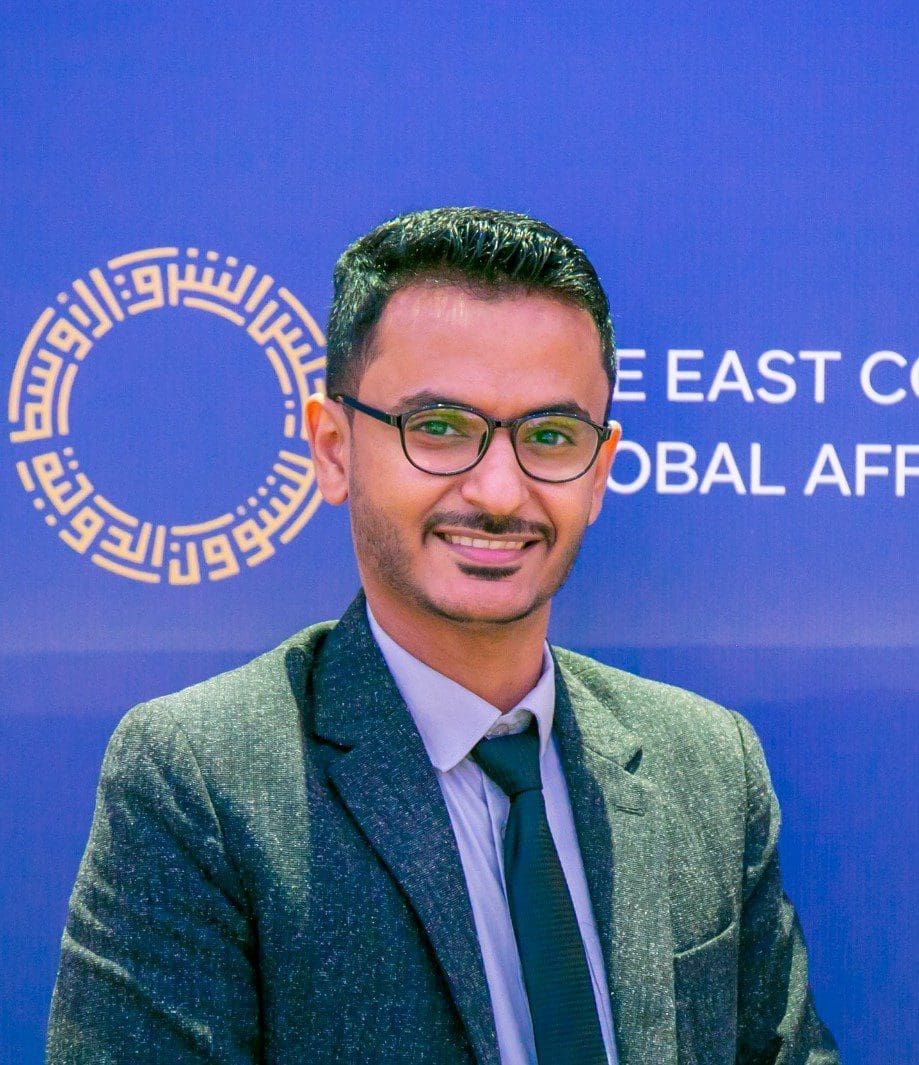
Visiting Fellow
Speakers

Fahad Al-Orabi Al-Harthi
President, Asbar Center for Studies, Research and Communications

Dahham Al-Qahtani
Kuwaiti Journalist and Political Analyst
