

The Repercussions of War on Iran and Regional Transformations
March 4, 2026
Summary
The Middle East has entered a volatile new phase following a major escalation triggered by joint U.S.–Israeli strikes on Iranian territory that killed several senior Iranian officials. Iran’s retaliation has extended beyond U.S. military installations in the Gulf to include strikes affecting strategic infrastructure and economic sectors inclding oil, gas and manufaturing sectors across the region. At same time, the conflict has expanded geographically, with increased involvement from Iran-aligned actors, foremost among them Hezbollah, while Israel’s northern front has become an active theater. The potential participation of Ansar Allah (the Houthis) and Iraqi militias further highlights the risk of a broader regional escalation. In light of these developments, the conflict has become inseparable from broader regional and international dynamics. It can no longer be viewed as an isolated crisis, given its far-reaching strategic, economic, and security implications, consequences that may ultimately reshape the Middle East.
Against this backdrop, the Middle East Council on Global Affairs will convene an expert panel to examine the broader implications of the war for regional order and security architecture. The discussion will address critical questions, including: How might the latest escalation reshape the regional order? How could the conflict accelerate new alignments or deepen existing fault lines between state and non-state actors? What are the implications for regional institutions and collective security mechanisms? How will sustained attacks on energy infrastructure and strategic industries affect economic interdependence and the political economy of the Gulf? To what extent are global powers likely to recalibrate their regional strategies, and how might this war redefine the Middle East’s evolving security architecture and broader regional order?
Moderator

Visiting Junior Fellow
Speakers

Chafic Choucair
Researcher at Al Jazeera Center for Studies
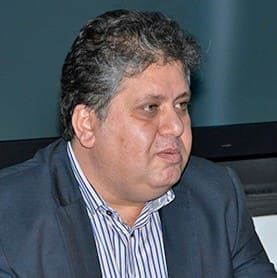
Haider Saeed
Head of the Gulf and Arabian Peninsula Studies Unit