
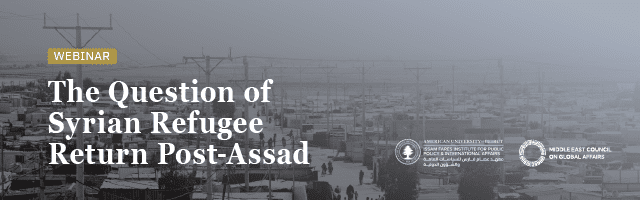
The fall of the Assad regime has brought back to the fore questions around Syrian refugee return, including in neighboring countries, where refugees have long faced discrimination and restrictive legal and regulatory frameworks.
Event Type: Webinar
Shaping a Post-Assad Syria: Lessons from the Arab Spring
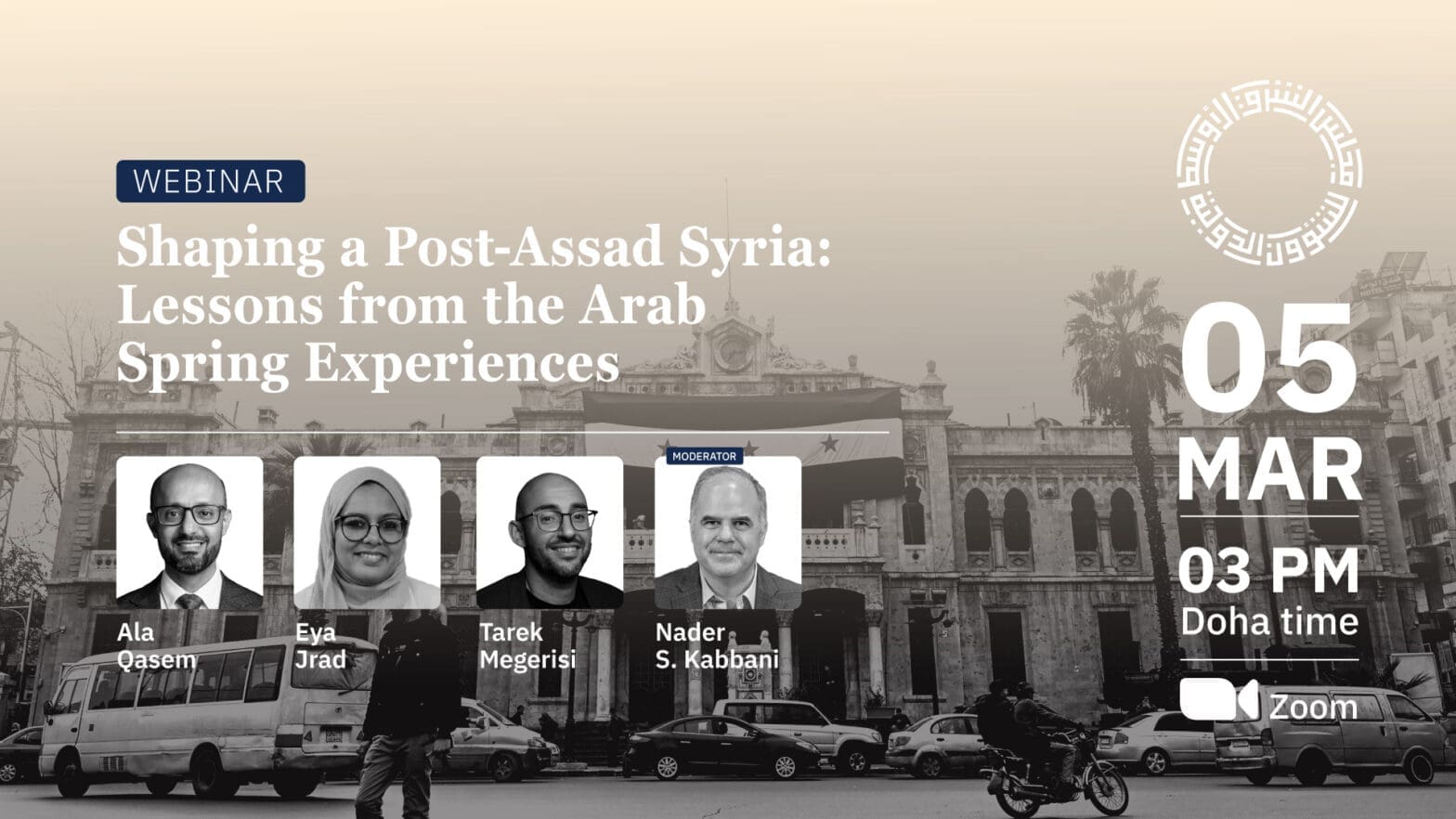
The fall of the Assad regime follows a 14-year civil war that has severely impacted Syria, resulting in mass displacement, economic collapse, and institutional erosion. While this post-Assad transition marks a significant turning point, the country faces considerable economic and social challenges. The experiences of other countries in the MENA region that have undergone leadership changes or regime collapse since 2011 highlight the difficulties of political transitions. In several cases, including Yemen, Libya, and Sudan, instability has led to prolonged civil conflict and state fragmentation, with devastating human costs. These precedents suggest that Syria’s recovery will be complex, requiring careful political and economic strategies to mitigate risks and create sustainable peace and stability.
The Gaza Genocide and the Erosion of Global Order
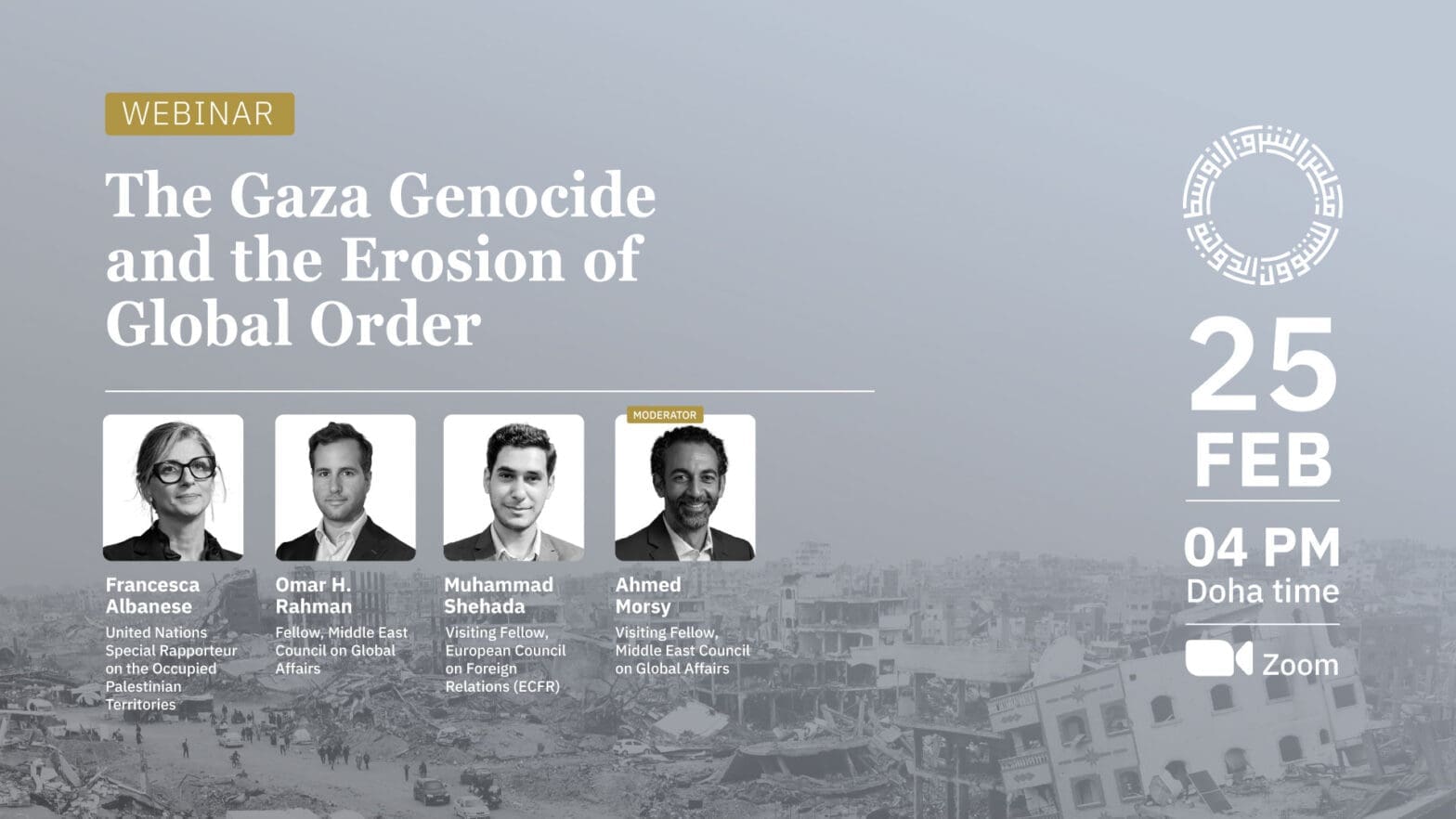
Over the past 16 months, the international system has struggled to cope with the far-reaching consequences of Israel’s destruction of Gaza, which has shaken the very foundations of international law and the so-called rules-based order.
Navigating the Digital Frontier: Cybersecurity and Geopolitics in the Middle East
In response to these evolving challenges, the Middle East Council on Global Affairs is organizing a webinar featuring a panel of experts to explore the intersection of cybersecurity and geopolitics in the region.
Building a New Syria After the Assad Regime
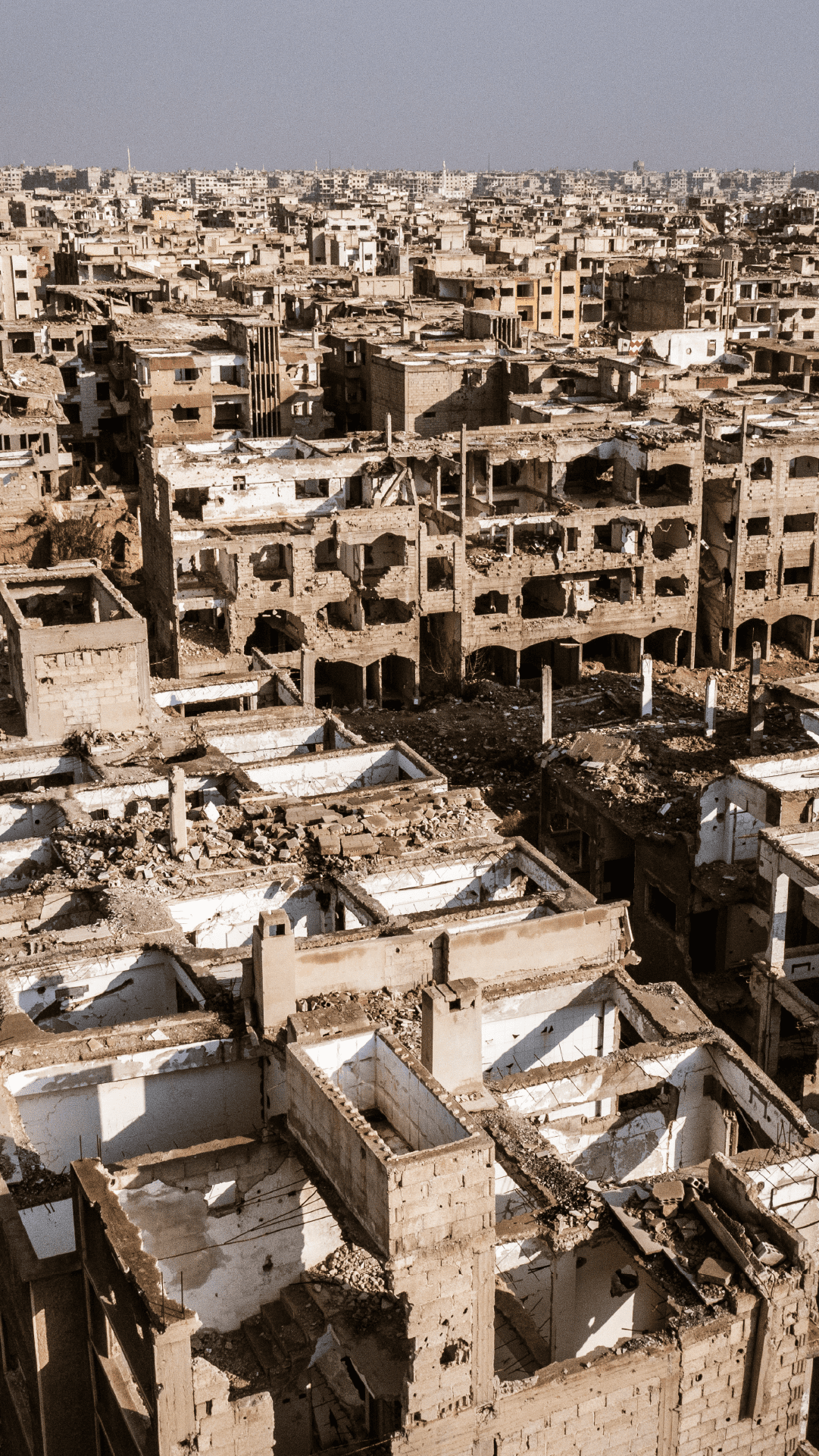
The Middle East Council on Global Affairs (ME Council) is organizing a webinar to explore how Syria can navigate the challenges of fostering security, state-building, inclusive governance, minority protection, humanitarian relief, and economic recovery, despite decades of Ba’athist rule and the lasting impact of a 13-year civil conflict since 2011. This webinar will also examine the implications on Palestine and Lebanon, emphasizing Iran-backed resistance to Israel’s territorial ambitions contributing to rising regional tensions. It will also address regional relations with Syria’s Northeast and border security with Jordan, Iraq, Türkiye, and Israel.
MENA Youth Voices on Climate Change

As regional leaders from the Middle East and North Africa (MENA) prepare to attend COP29 in Baku, Azerbaijan, young scholars, journalists, and community leaders are hoping to make their voice heard about the host of pressing climate challenges facing their countries and communities. Among the issues raised by youth activists in MENA are the insufficient action on… Continue reading MENA Youth Voices on Climate Change
The War in Sudan: Unfolding Humanitarian Crisis and Diplomatic Impasse

The Middle East Council on Global Affairs is organizing a webinar with a panel of experts to discuss the unfolding humanitarian catastrophe and the regional and international implications of the war. The discussion will convene leading experts to discuss most pressing challenges civilians face, strategies could be employed to protect vulnerable populations, especially in Darfur, key factors influencing mediation efforts, and the role of external actors playing in the conflict.
Natural Disasters and Climate Change in the MENA Region
The Middle East Council on Global Affairs is bringing together leading experts to explore the causes, impacts, and long-term consequences of these disasters.
Digital Deception: Disinformation, Elections, and Islamophobia
A recent report by disinformation researchers Marc Owen Jones and Sohan Dsouza revealed a multi-platform global influence campaign promoting anti-Muslim hate and sectarianism. Jones and Dsouza’s report highlights the use of disinformation to spread a broadly neoconservative agenda, including xenophobic, anti-immigration, and anti-Muslim propaganda and disinformation. The campaigns also sought to promote sectarian division in… Continue reading Digital Deception: Disinformation, Elections, and Islamophobia
A Region at War: Views from Lebanon, Iran, and Palestine

the Middle East Council on Global Affairs (ME Council) will host a webinar to unpack these major escalations and their regional aftershocks. The discussion will convene leading experts to analyze the impact of the recent assassinations and retaliations on the strategic calculations of Hezbollah, Hamas, Israel, and Iran.
Iran’s Elections: Domestic and Regional Implications
ME Council is holding a webinar to discuss with a panel of experts the results of the presidential elections in Iran following the death of former President Ebrahim Raisi.
The Middle East Reset Amid the War on Gaza

The Middle East Council on Global Affairs is hosting a webinar to analyze the shifting regional order amid Israel’s brutal military campaign in Gaza and in the wake of Iran-Israel escalation.
Iran in the Middle East: Building Bridges or Expanding Influence?

In collaboration with the Middle East Studies Forum (MESF) at Deakin University, the Middle East Council on Global Affairs (ME Council) hosted an online panel discussion on “Iran’s role in the Middle East: Building Bridges or Expanding Influence?” The event marked the launch of an ME Council dossier encompassing the same topic, edited by Shahram Akbarzadeh, a nonresident senior fellow at the ME Council, and Hamidreza Azizi, a nonresident fellow at the ME Council. Shahram Akbarzadeh moderated the event and highlighted the session’s significance against the backdrop of escalating regional tensions amid the ongoing war in Gaza. The panel featured Hamidreza Azizi alongside experts Mehran Kamrava, professor of government at Georgetown University in Qatar, and Azadeh Zamirirad, deputy head of the Africa and the Middle East division at the German Institute for International and Security Affairs (SWP).
Unfolding Tragedy: Gaza’s Humanitarian Crisis

More than six months into the war between Israel and Hamas, the humanitarian situation in the Gaza Strip is every day more severe. More than 33,000 Palestinians have been killed, and over 75% of the total population has been displaced. Aid agencies agree that a famine is now imminent. Aid delivery has long been hindered by restrictions and concrete challenges on the ground, while the lives of humanitarian workers are endangered. This event delves into the crisis affecting the Gaza Strip, focusing on the humanitarian impact of the conflict, the management of aid in the Strip, and the politisation of humanitarian efforts since the outbreak of the conflict.
Gaza’s Unfolding Tragedy: Palestinian and Regional Perspectives

In response to these tragic events, the Middle East Council on Global Affairs (ME Council) in partnership with the Issam Fares Institute for Public Policy and International Affairs at the American University of Beirut hosted a webinar to offer Palestinian and regional perspectives. What is Israel’s endgame as it begins a military ground invasion? Does Hamas and the larger Palestinian national movement have a strategy? Is the regionalization of this conflict inevitable? How will the broader international community respond, and what are the geopolitical implications beyond the region?
A Pending Crisis? Global Economic Slowdown in the MENA Region

To examine the potential impact of the global economic slowdown on the MENA region, the Middle East Council for Global Affairs (ME Council) will hold a webinar bringing together a panel of esteemed regional experts in finance, banking, and economics.
Refugees in the Middle East: Navigating an Uncertain Future

In recognition of World Refugee Day, the Middle East Council on Global Affairs (ME Council) and the Issam Fares Institute for Public Policy and International Affairs at the American University of Beirut invite you to a discussion on the future of refugees in the MENA region, with a focus on Syria and lessons learned for Sudan.
AI and Policy Making in the MENA Region: Impact and Risks

the Middle East Council on Global Affairs (ME Council), in collaboration with the Gulf Studies Center (GSC) at Qatar University, will host a webinar to discuss the opportunities and threats posed by AI for policymaking and think tanks in the Middle East and North Africa (MENA) region.
The Battle for Sudan: Drivers and Ramifications
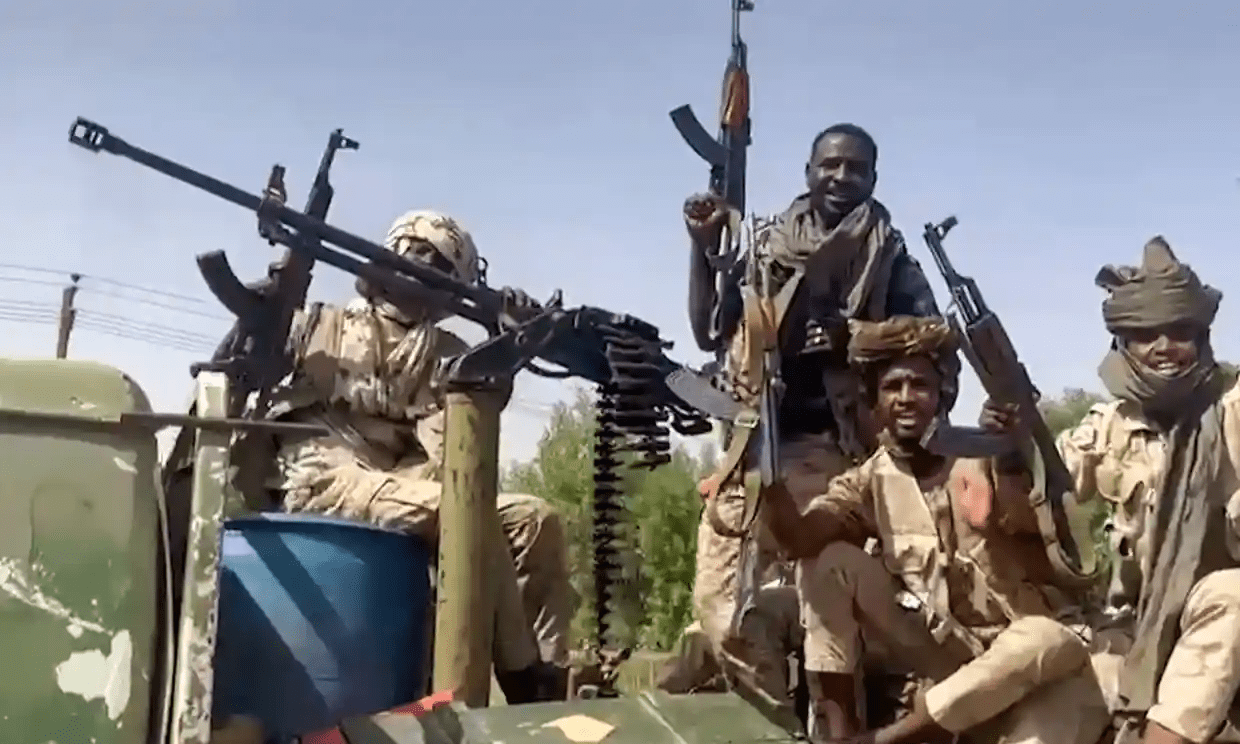
One month after the outbreak of violence, the Middle East Council on Global Affairs (ME Council) will convene a panel of experts to discuss the ongoing conflict in Sudan.
The Second Intifada: Reflections and Implications for Palestine Today

The Middle East Council on Global Affairs (ME Council) hosted a webinar on April 12, 2023 to discuss the implications a critical juncture in Palestinian history, the Second Intifada, and address its legacy and influence on recent developments and the present reality. The discussion was moderated by Omar H. Rahman, fellow at the ME Council and editor of Afkār. The distinguished panelists included Ramzy Baroud, editor of The Palestine Chronicle, and Nour Odeh, a political analyst and journalist.
Saudi-Iran Agreement: Implications for the Middle East

The ME Council and the Issam Fares Institute for Public Policy and International Affairs (IFI) held a webinar to examine the significance and implications of the Saudi-Iran agreement. The discussion addressed vital questions: what are the drivers behind this historical agreement? What obstacles remain in terms of implementing the agreement and how might they be addressed? How have China’s mediation efforts shaped the agreement, and how might this affect Saudi and Iranian relations with China and other global powers, namely Russia and the United States? And what implications might the warming of ties have for ongoing conflicts in the region, particularly the wars in Yemen and Syria?
One Year in: How the Ukraine War Is Reshaping Russia’s presence and policy in the MENA region?

The Middle East Council on Global Affairs (ME Council) hosted a webinar on March 15, 2023, in collaboration with Kedge Business School, examining how the war in Ukraine has impacted Russia’s presence in the Middle East and North Africa (MENA) region. Experts examined key issues pertaining to the war, including regional states’ geopolitical posturing, evolving Russian economic relations with the region, and the emerging risks and opportunities for the region as the war continues. Galip Dalay, nonresident senior fellow at the ME Council, moderated the discussion. The expert panelists included Andrey Kortunov, director general of the Russian International Affairs Council; Hannah Notte, senior research associate with the Vienna Center for Disarmament and Non‑Proliferation (VCDNP); and Hamidreza Azizi, visiting fellow at the German Institute for International and Security Affairs (SWP).
Türkiye – Syria Earthquake: How Far Will the Tragedy Reverberate?
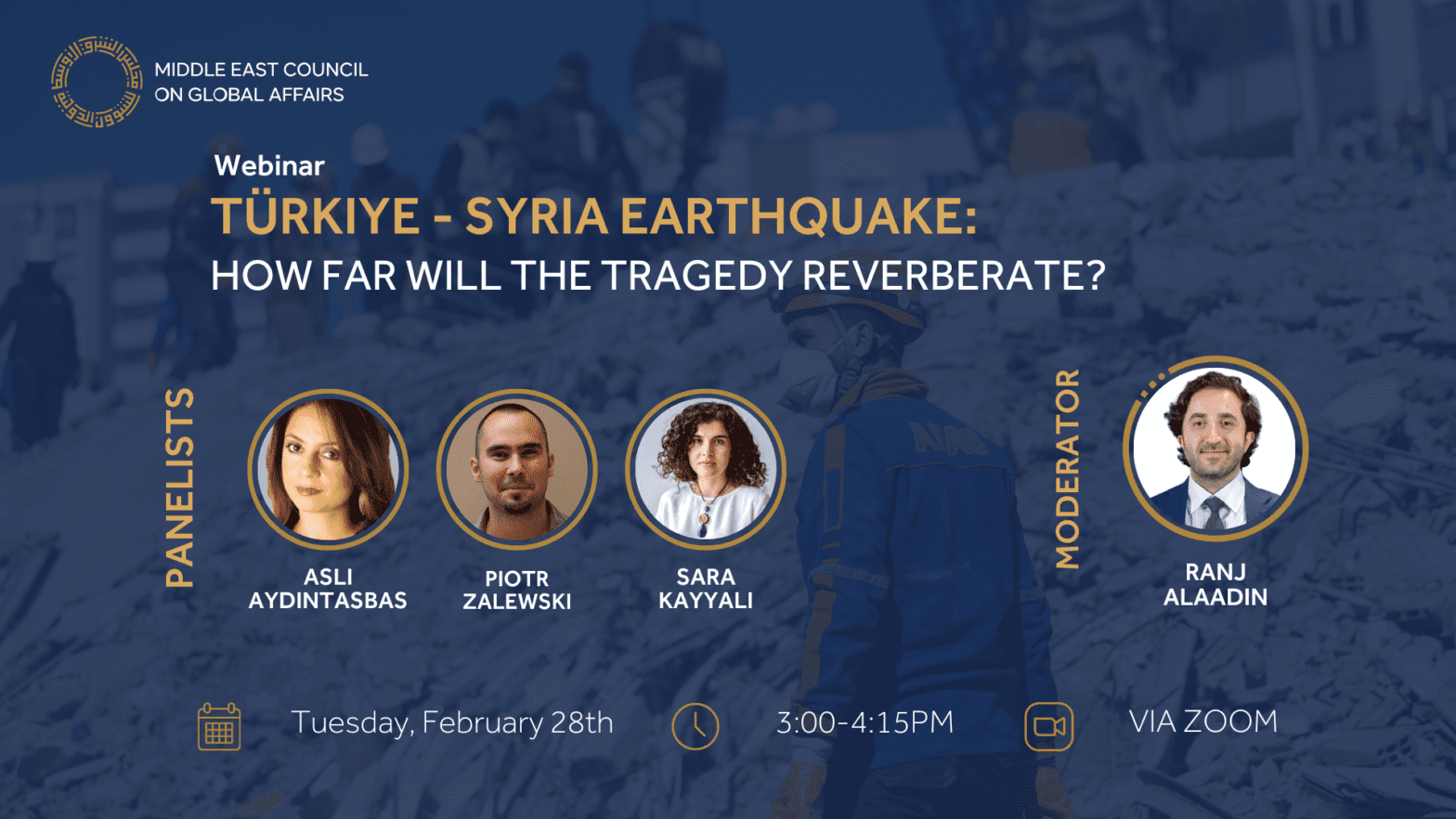
The Middle East Council on Global Affairs (ME Council) hosted a webinar on February 28, 2023, examining the extent to which the devastating earthquakes that struck Türkiye and Syria on February 6 will shape the domestic and regional political orders in the period ahead. The webinar convened a panel of Turkish and Syrian domestic and foreign policy experts to address key issues, including the impact of the crisis on regional security and how the international community can accelerate the reconstruction process. Ranj Alaaldin, fellow at the ME Council, moderated the discussion. The expert panelists included Sara Kayyali, a human rights lawyer and analyst; Piotr Zalewski, Turkey correspondent for The Economist; and Aslı Aydıntaşbaş, visiting fellow at the Brookings Institution.
Turkey’s New Regional Policy: Reset or Escalation?

Turkey is recalibrating its regional policy. On the one hand, Ankara is pursuing a policy of de-escalation and reset towards its erstwhile antagonists, namely Arab-Gulf states and Israel. On the other hand, the dynamics of escalation are clearly on display in Turkey’s policy towards Iraq, Syria, and regional Kurdish geopolitics. Furthermore, more confrontation appears to be looming on the horizon in Turkey’s relations with Iran and Greece. Finally, these policy trends are unfolding against the backdrop of upcoming elections and an economic downturn in Turkey.
World Cup 2022: How Is the Media Shaping Migrant Rights Issues in Qatar?

Since Qatar won the bid to host the 2022 FIFA World Cup, the country has faced relentless international scrutiny of its labor policies. Major media outlets have called on both Qatar and FIFA to better safeguard migrant worker welfare. Over the past decade, Qatar has enacted a series of significant reforms and established a cooperation programme with the International Labour Organization (ILO) in 2018, placing it at the forefront of regional efforts to improve the lives of migrant workers. Yet, despite these efforts, international organizations continue to mount criticism of the reforms’ implementation and to question their durability after the World Cup. From within the country, citizens have expressed concern about media misinformation and portrayals that hold Qatar to a different standard than previous World Cup hosts.
What will it take to overcome food insecurity in MENA?

The Middle East Council on Global Affairs in Doha (Council), in partnership with the Arab Barometer, hosted a webinar discussion on October 31, 2022 about the growing challenge of food insecurity in the Middle East and North Africa (MENA) region.
The Battle for Iraq: Can Re-escalation Be Prevented?

The webinar will examine ongoing efforts to form a government, the future of the post-2003 political order, and the role outside actors, like the United States and Iran, can play to de-escalate tensions.
Gaza’s Unending Nightmare
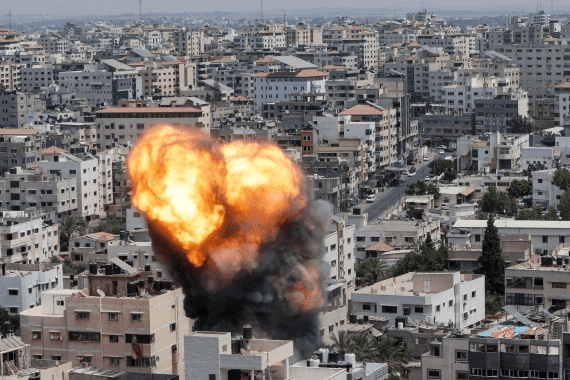
The Middle East Council on Global Affairs convened its first webinar with a panel of experts to discuss the present and future of the Gaza Strip.
Twenty Years of Governance Reforms in MENA: A Retrospective Analysis with Prospective Implications
The Middle East Council held a virtual workshop on June 30, 2022, to reflect on shifting governance dynamics in the MENA region since the publication of the 2002 Arab Human Development Report (AHDR).