Syria in Transition:
Between Stability and State Fragmentation Online Experts Discussion
February 17, 2026
Summary
Syria’s political transition continues to unfold as the Sharaa government seeks to consolidate control across the country. Despite these efforts, significant challenges persist. Active conflict in northern Syria, alongside rising tensions with Alawite and Druze communities in the south, continues to complicate efforts to establish centralized authority and achieve durable stability.
The regional and international context further adds to this complexity. Regional powers remain deeply influential in shaping Syria’s domestic dynamics. At the international level, the Trump administration’s gradual engagement with Sharaa’s government has created cautious optimism regarding Syria’s economic recovery and political reintegration. However, the country’s recovery remains constrained by ongoing sanctions, which continue to hinder reconstruction and broader economic stabilization.
These developments raise critical questions about Syria’s future trajectory. To examine these issues, the Middle East Council on Global Affairs (ME Council) convened a panel of experts to provide regional and international perspectives on Syria’s evolving landscape. The discussion addressed key questions, including: Can Sharaa’s government effectively consolidate authority nationwide? Will the Syrian Democratic Forces (SDF) and the central government find a sustainable path toward reconciliation? How will Syria manage the role of external actors and competing regional interests? And what role can international actors play in supporting Syria’s long-term stabilization?
Moderator
Senior Fellow and Program Director
Speakers
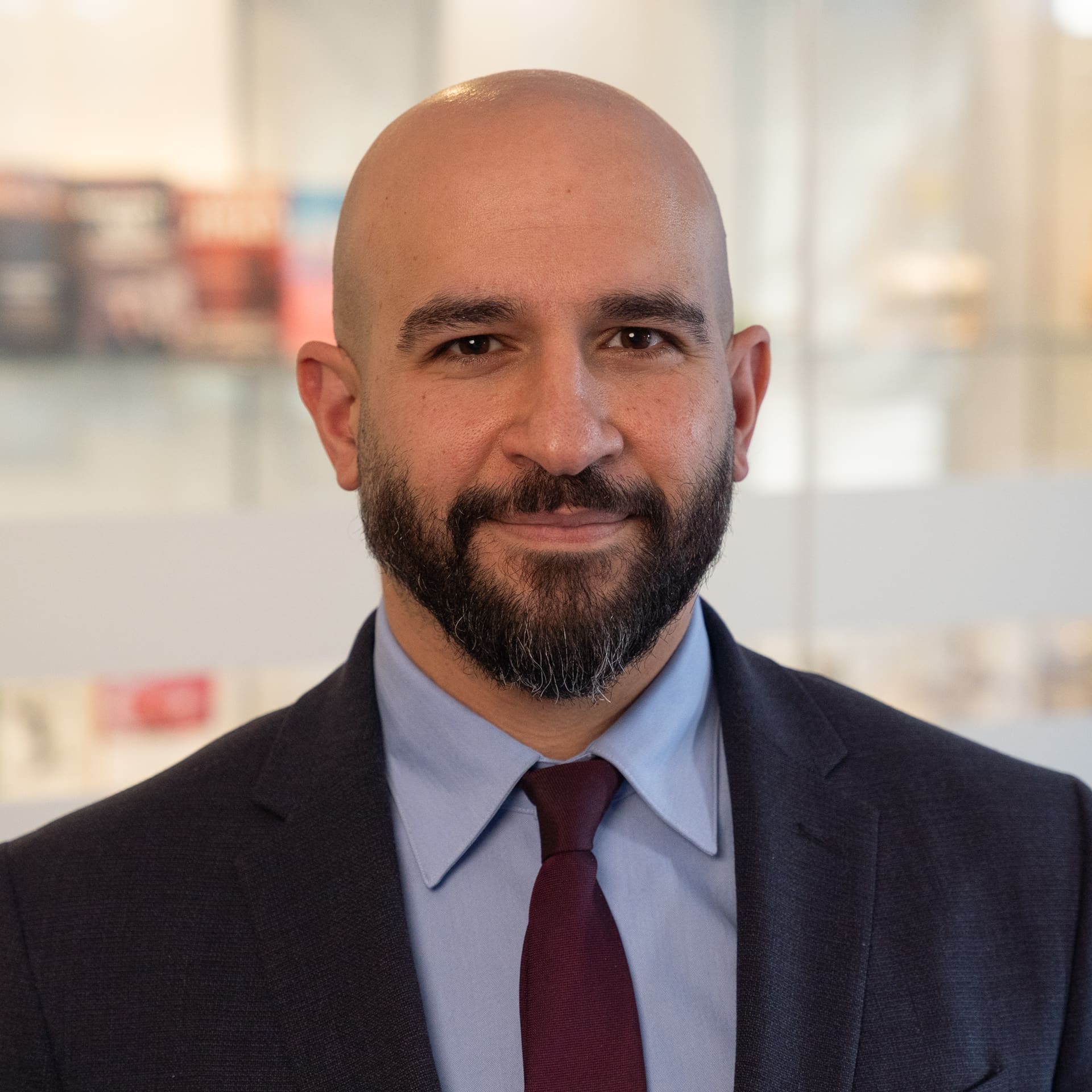
Ibrahim Al-Assil
Senior Fellow and Foreign Policy Program Director, ME Council

Dareen Khalifa
Senior Advisor, International Crisis Group